
Subsea Infrastructure Removal and Site Remediation
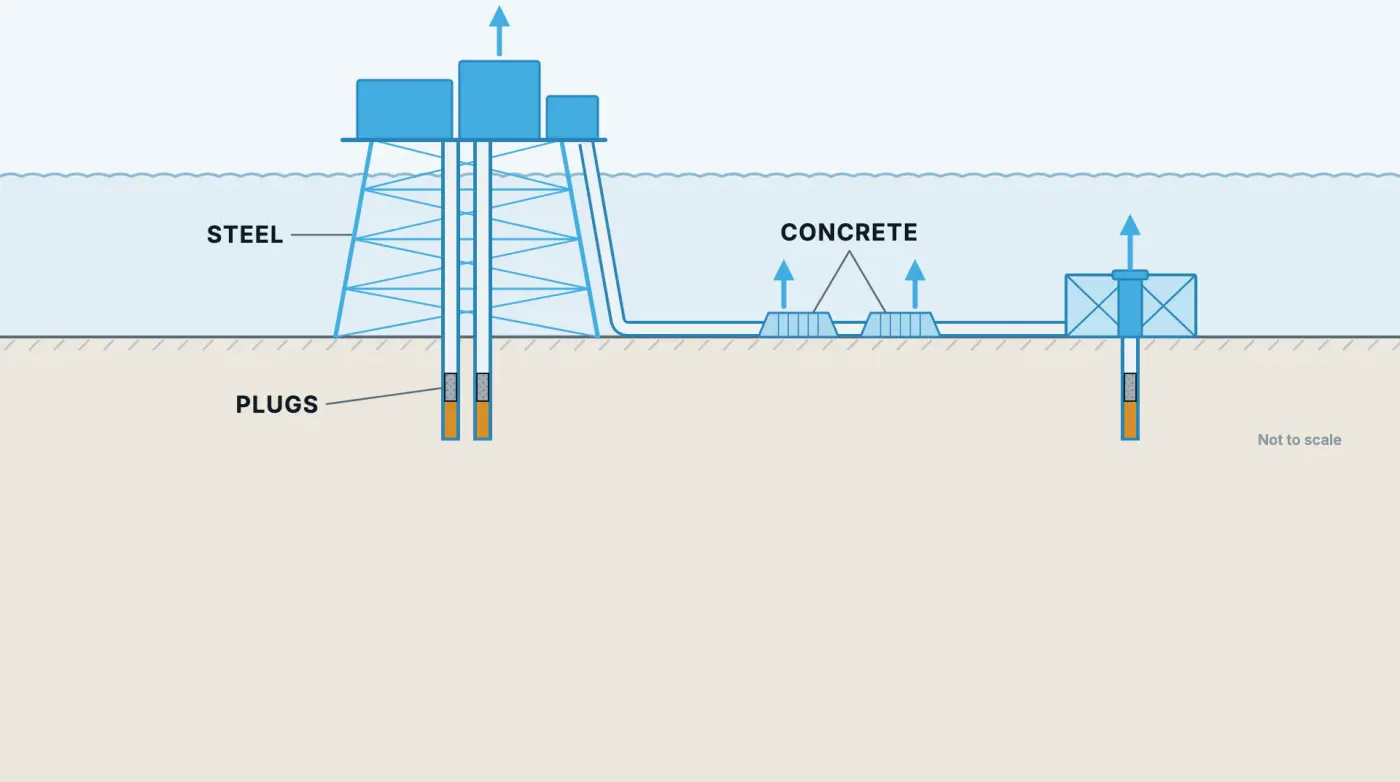
Subsea infrastructure removal recovers the equipment on the seabed at the end of a field’s life, from concrete mattresses to Christmas trees.
of forecast UK decommissioning spend from 2026 onwards is subsea infrastructure. The share of actual spend in 2023 to 2025 was 6%.
NSTA, UKCS Decommissioning Cost and Performance Update 2026may be the weight of the subsea infrastructure on an average-size North Sea field.
Lean Decom trainingconcrete mattresses an hour may be recovered with a mattress recovery tool, depending on water depth.
Lean Decom trainingis the range given for subsea Christmas trees, from lighter to heavier trees.
Lean Decom trainingWhat is subsea infrastructure removal?
Subsea infrastructure removal is the recovery of the equipment on the seabed at the end of a field’s life: concrete mattresses, flexible flowlines and risers, umbilicals, pipelines, Christmas trees, manifolds, midwater arches, bundles, towheads, mooring lines and anchors. Items are cut where needed, recovered to a vessel and taken ashore. Some items, such as buried pipelines, may stay in place where the regulator agrees. Site remediation follows: the remaining debris is recovered, and a survey confirms a clear seabed.
Where this applies: The recovery methods on this page are used in offshore fields in any region. The regulations, the Offshore Energies UK (OEUK) work breakdown structure and the cost figures are UK North Sea examples. Other countries have their own regulator, rules and terms.
Key points
- In the UK, subsea infrastructure is 12% of forecast decommissioning spend from 2026 onwards (NSTA, 2026).
- A mattress recovery tool may lift 5 to 6 mattresses an hour.
- Lighter subsea Christmas trees may weigh approx. 30 tonnes, heavier trees 50 to 60 tonnes.
- One towhead recovery in the training was over 300 tonnes.
- Items that carried production fluids are checked for NORM (naturally occurring radioactive material) before the crew approach.
- A multibeam or over-trawl survey can confirm a clear seabed.
What does subsea infrastructure removal cover?
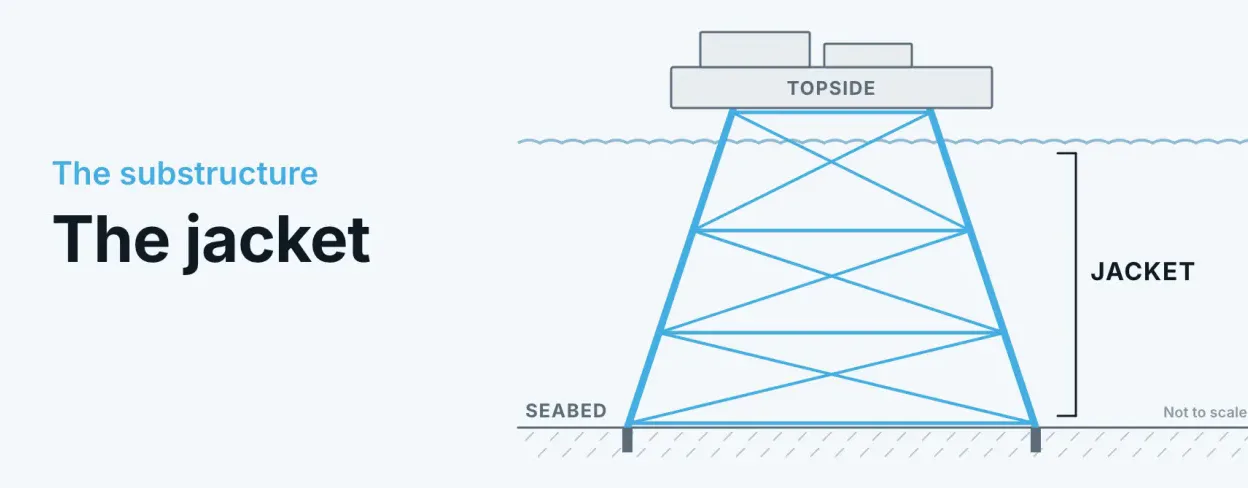
In the training, subsea infrastructure means anything subsea except the substructure, the jacket that supports the topside.
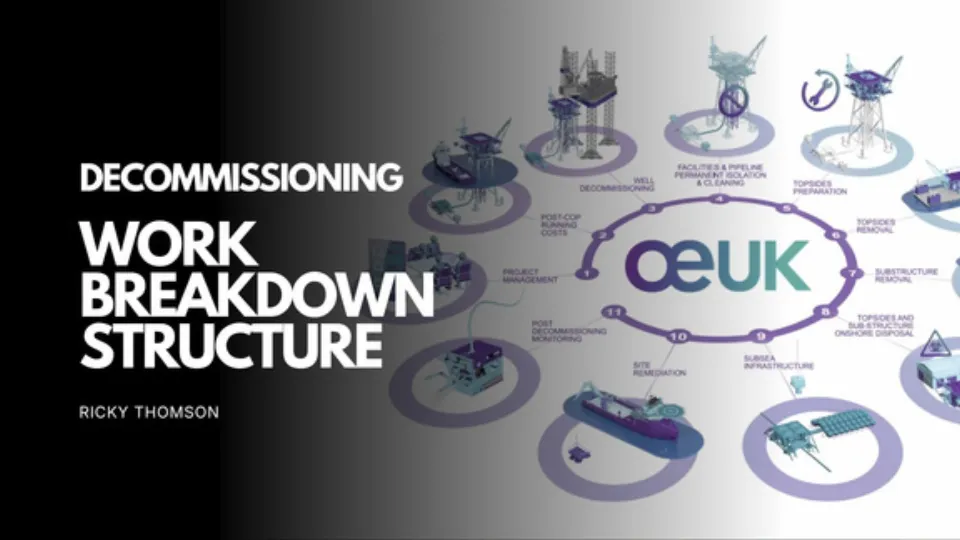
UK example: in the OEUK work breakdown structure (WBS), a common description of decommissioning scope used for cost estimates, subsea infrastructure decommissioning falls under two elements. Element 9, Subsea Infrastructure, covers the removal or remediation of elements such as pipelines, cables, bundles, risers, mattresses and subsea structures. Element 10, Site Remediation, covers debris clearance and over-trawl surveys. See the OEUK work breakdown structure.
Much of the equipment has been on the seabed for decades, and the condition is often unknown until the lift.
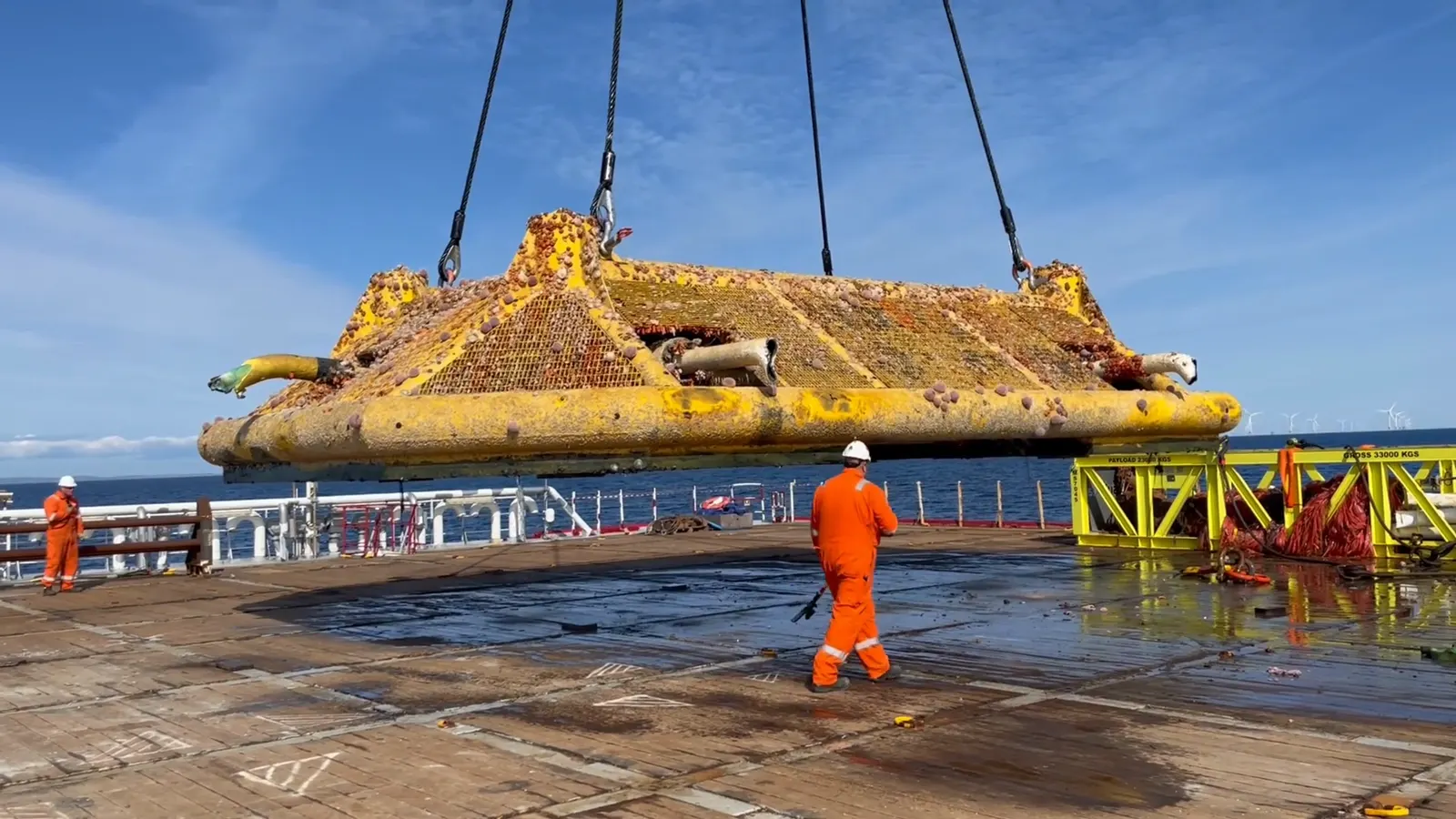
Examples of subsea infrastructure
- Concrete mattresses, grout bags and other stabilisation material
- Flexible flowlines, risers and umbilicals
- Rigid pipelines
- Christmas trees and wellheads, with protection structures and glass reinforced plastic (GRP) covers
- Manifolds and riser bases
- Midwater arches, bundles and towheads
- Mooring lines and anchors
In the OEUK WBS, wellhead and tree services are costed under element 3, well decommissioning.
UK policy is that decommissioning should aim for a clear seabed, accepting that a clear seabed is not always achievable. OSPAR Decision 98/3, which applies in the North-East Atlantic, prohibits leaving disused offshore installations in place, with limited derogations. Pipelines are not part of the Decision: in the UK, each pipeline is decided case by case. See comparative assessment and derogation.
How are concrete mattresses recovered, and how long does recovery take?
Concrete mattresses protect pipelines, umbilicals and power cables, and protect against scour and free spans on soft seabed. Polypropylene ropes run through the concrete, and the rope loops are used for lifting.
| ROV and lifting hoops | Mattress recovery tool (MRT) | |
|---|---|---|
| How | A remotely operated vehicle (ROV) connects hoops to the rope loops on each side, as at installation | Hydraulic rams with tines land on the mattress and grab underneath |
| Recovery rate | Connecting the rigging may take two hours per mattress | May recover 5 to 6 mattresses an hour, depending on water depth |
One efficient practice is to stack recovered mattresses offshore. Depending on size, weight and thickness, 10 to 12 mattresses may then come ashore in one lift, so the waste offload needs fewer, safer lifts. Mattresses are heavy: in one project example in the training, each mattress weighs over 6 tonnes.
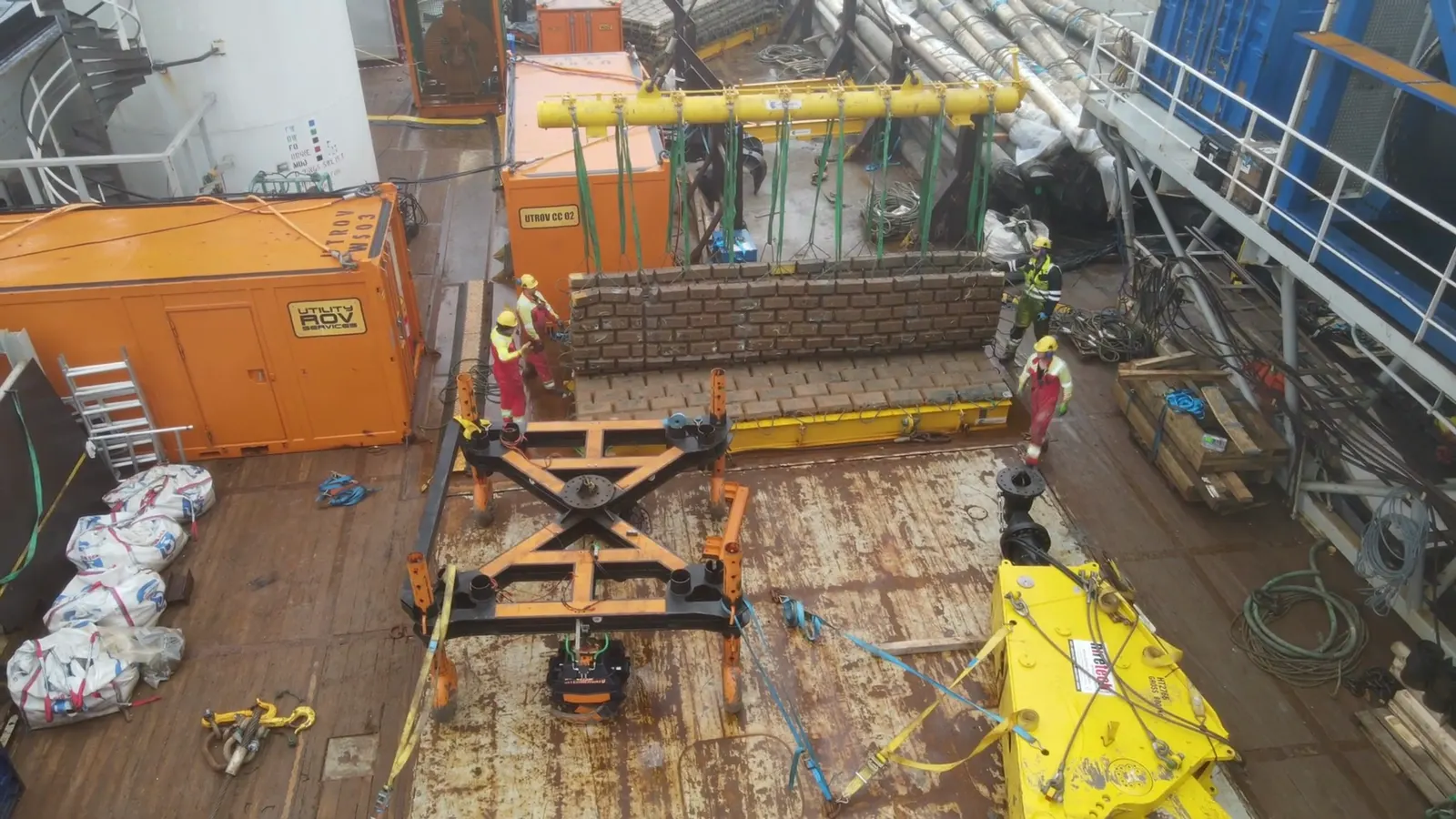
Buried mattresses
A controlled flow or mass flow excavator, which works like a subsea leaf blower, clears the sediment first, so the lift does not carry the extra weight.
Unknown integrity
Some mattresses have been subsea for 30 to 40 years. Blocks may fall off during the lift, so no one stands under a lift.
Plan the contingency
For 100 mattresses, the plan may assume that 20 have poor integrity. A subsea basket encloses a mattress that is breaking up, so no blocks can drop.
Choose the vessel
Mattress recovery needs a crane: on an anchor handler, a dive support vessel or a construction vessel. For 100 or more mattresses, a large back deck is needed.
How is a subsea Christmas tree recovered?
A subsea Christmas tree is the assembly of valves and instruments on a subsea wellhead that controls the flow of fluids from the well. Trees are generally disconnected and recovered to a rig, as part of the plug and abandonment (P&A) scope, or to a construction vessel.
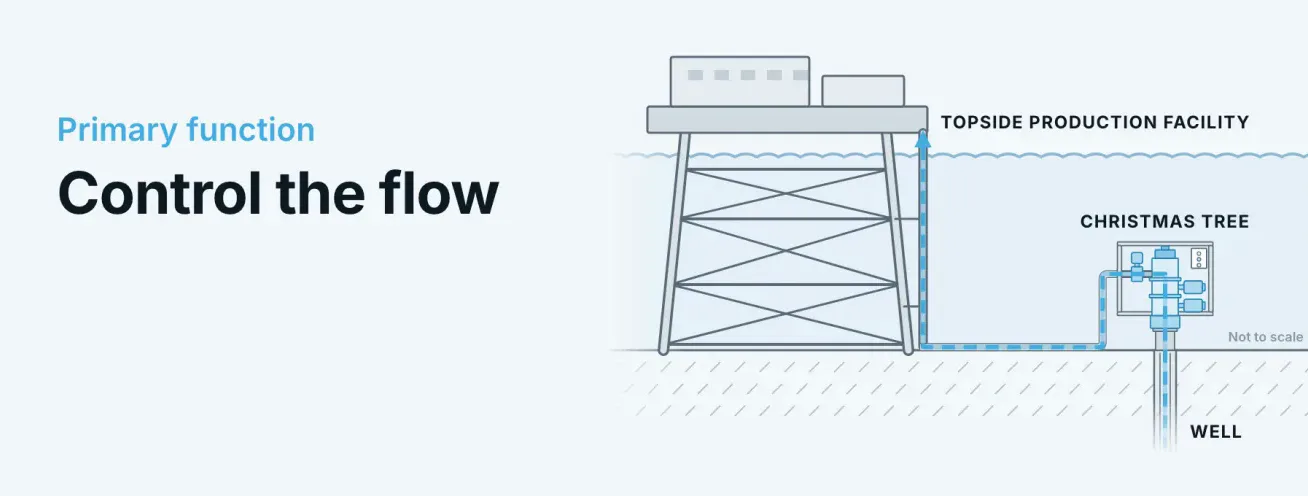
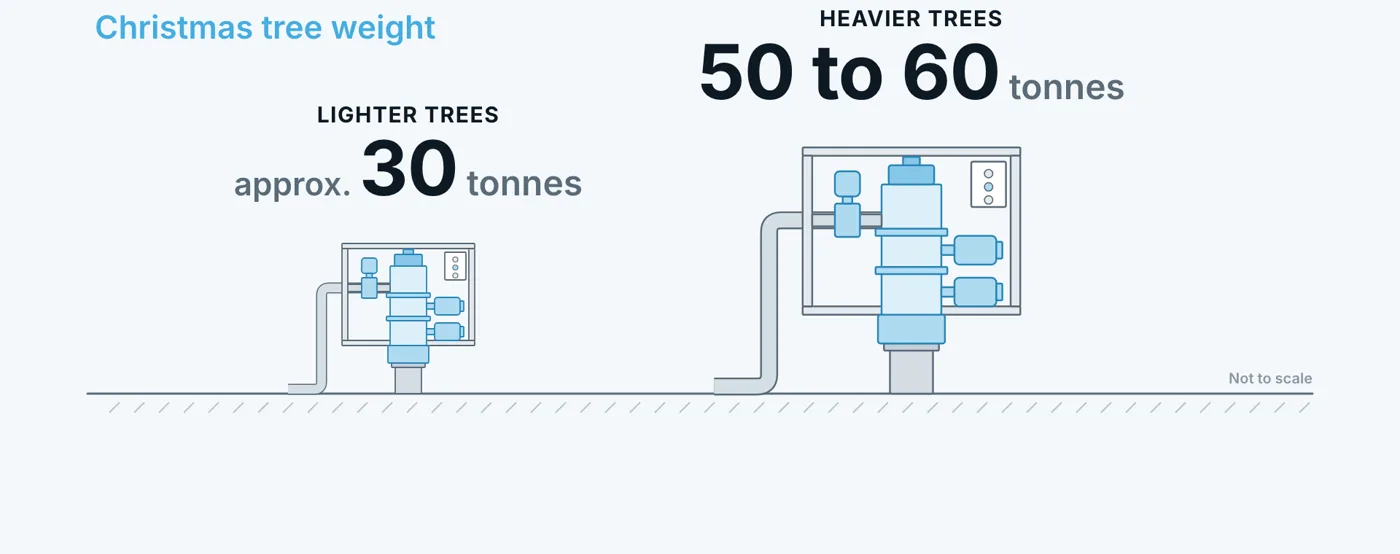
These are the key steps highlighted in one of the modules in the Lean Decom training, for recovering a subsea Christmas tree to a vessel.
Plan the lift
Confirm that the rigging is suitably rated and easy to attach, and that the crane has the capacity and hook height to bring the tree inboard.
Clean the interface
In the training example, the lifting tool locks onto an H4 interface, one common type of grooved profile on top of a tree. Other interfaces are also used. After long exposure subsea, the interface is cleaned first, for example with a high-pressure water jet.
Clamp and overpull
The tool clamps hydraulically, indicators show the clamp, and the tool provider verifies. An overpull test confirms that there is no movement.
Recover and land
Tugger winches control the orientation, which matters in marginal weather and where the sea fastening fixes the landing position.
Check before anyone approaches
A radiation protection supervisor (RPS) checks for NORM before the deck crew go near the tree. The procedure follows the NORM regulations of the country and names who gives the all-clear.
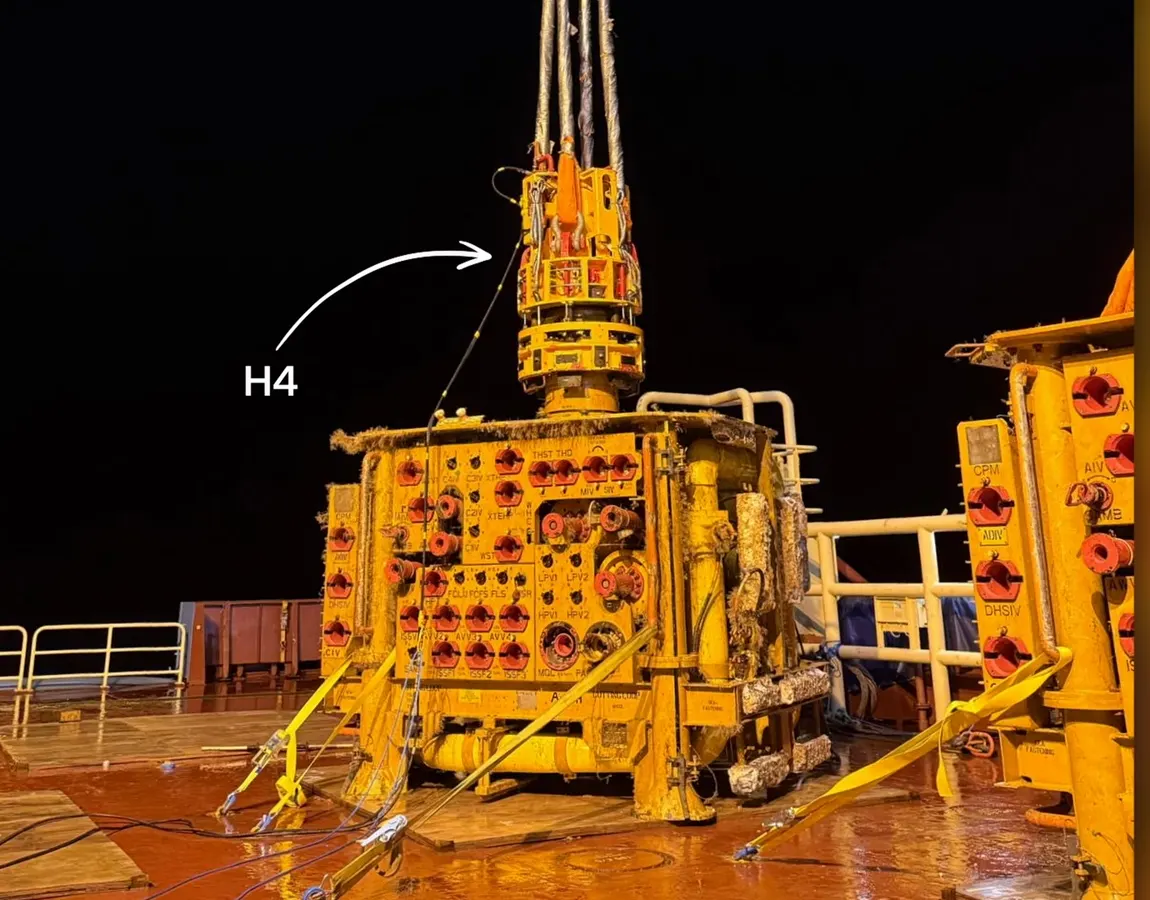
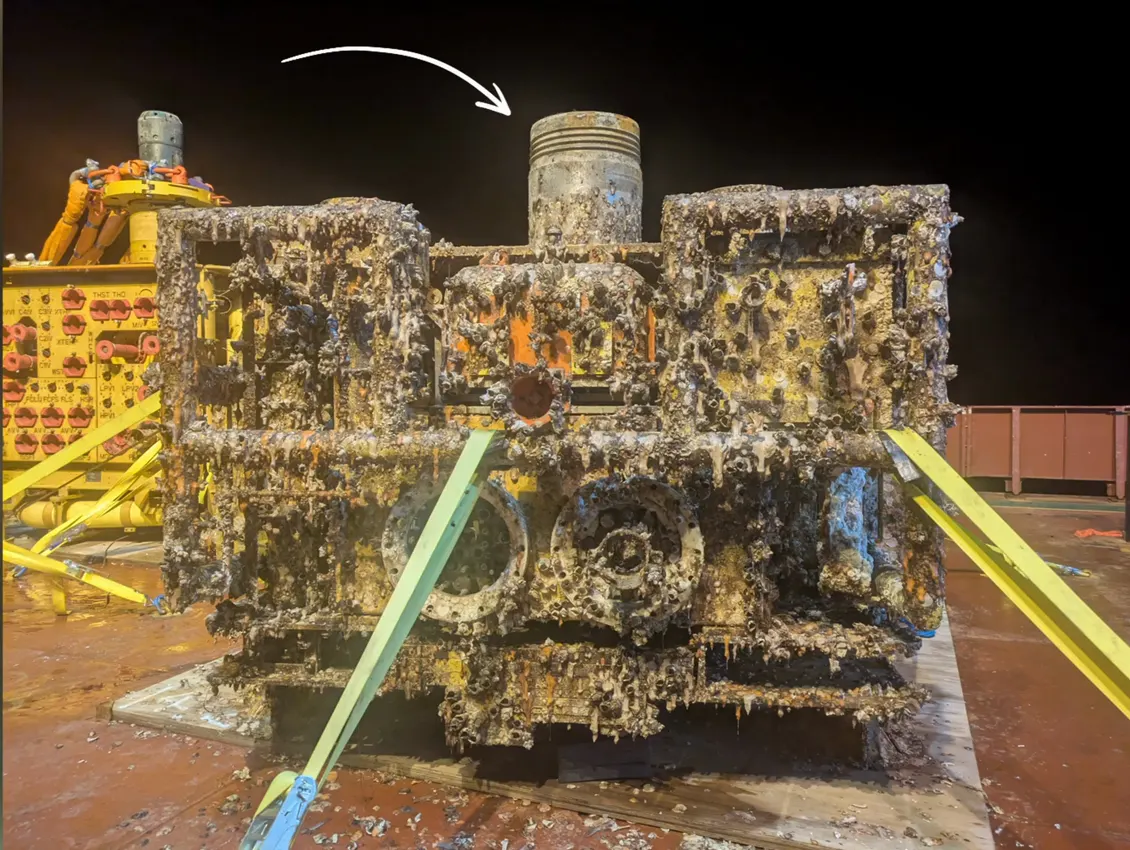
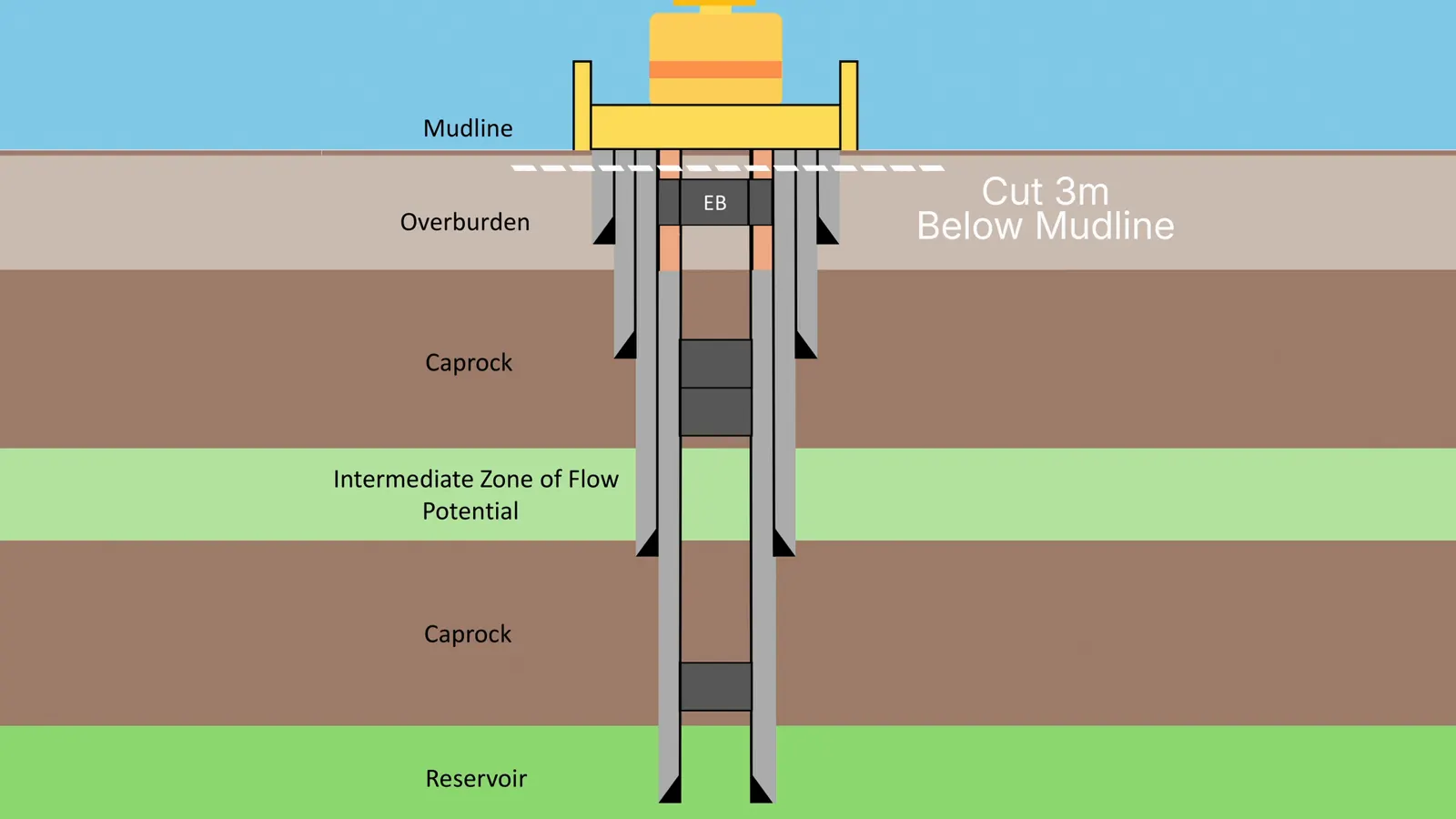
Once the well is plugged, the wellhead is cut below the mudline and recovered. One method in the training is an abrasive water jet tool that lands on the wellhead and severs every casing in a single trip. The training example is a cut 10 ft (approx. 3 m) below the mudline, using water and grit at 14,500 psi (approx. 1,000 bar). See wellhead and conductor removal.
How are flexibles, umbilicals and risers recovered?
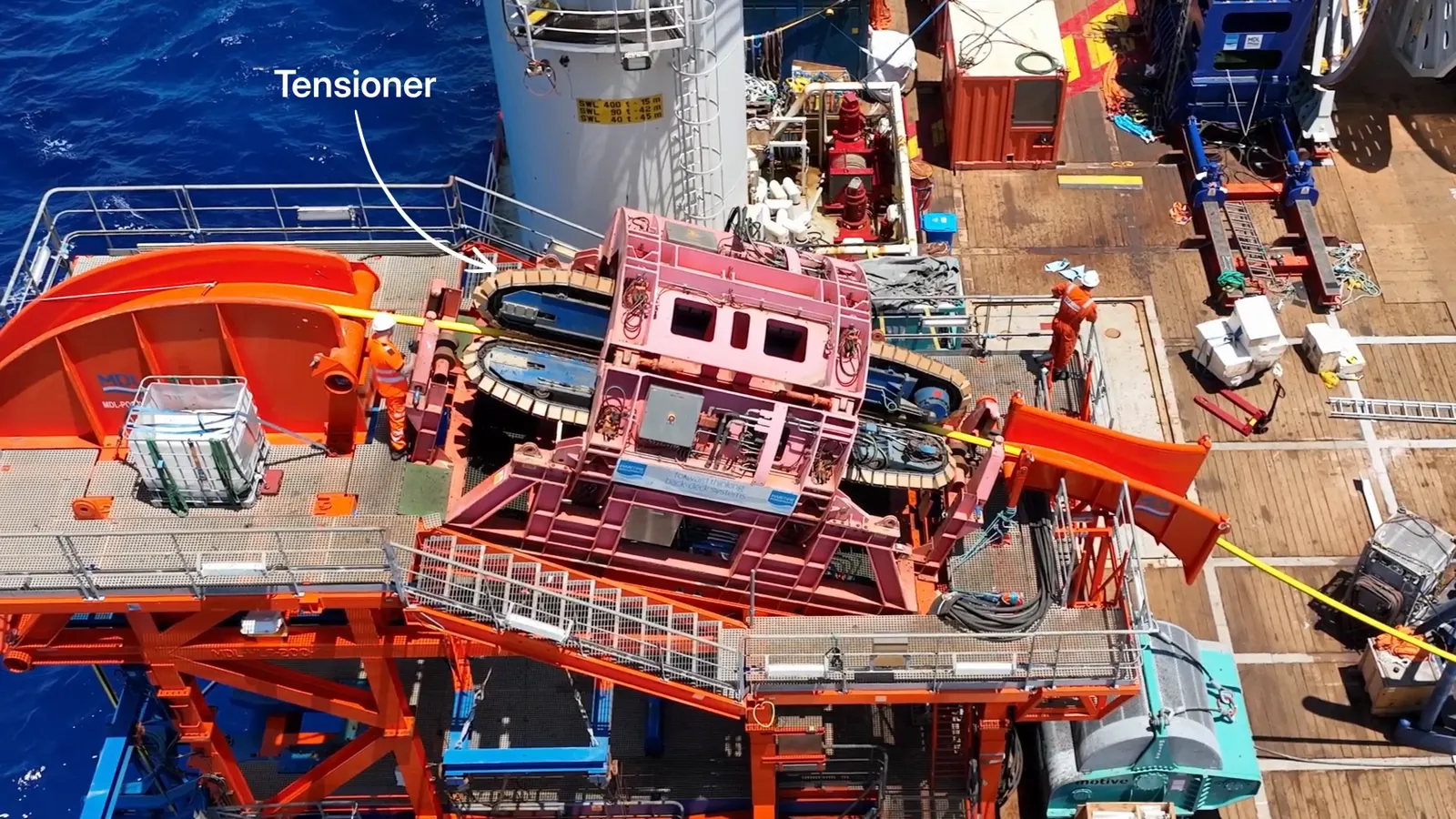
Flexibles are flexible pipes, such as the flexible flowlines and risers between the seabed and a floating facility. In the training, the term also covers umbilicals. Two recovery methods are reverse installation with a lay spread, and reeling onto the drums of an anchor handler.
| Lay vessel | Anchor handler | |
|---|---|---|
| Method | Horizontal lay spread: a tensioner pulls the product onto a reel, or a hydraulic shear cuts sections after the tensioner | The product comes on deck with a clamp or rigging, then is reeled onto the drums |
Before choosing an anchor handler, compare the diameter and minimum bend radius (MBR) of each flexible with the drum diameter. The method suits products going to scrap, where integrity is not a concern.
As each section of a flexible that carried production fluids comes on deck, a radiation protection supervisor checks for NORM, and the section is also checked for hydrogen sulphide (H2S), before the crew work on the section.
Subsea structure removal: manifolds, midwater arches, bundles and towheads
Large structures bring different challenges: weight, buoyancy, length, and the number of lines inside.
Manifolds
A manifold houses valves and instrumentation, collecting fluids from several wells before directing the flow to the production facility. Manifolds can be very heavy and may be piled like a jacket. The piles are dredged internally and the external pipes and cables cut away before internal tools cut the piles.
Midwater arches
A buoyant structure, generally tethered to a clump weight, that supports flexibles in the water column. The arch is commonly a steel vessel filled with gas, such as nitrogen. One method is to cut and release the arch and tow the arch to shore. A released arch could strike the underside of a vessel, so vessels stay clear.
Bundles and towheads
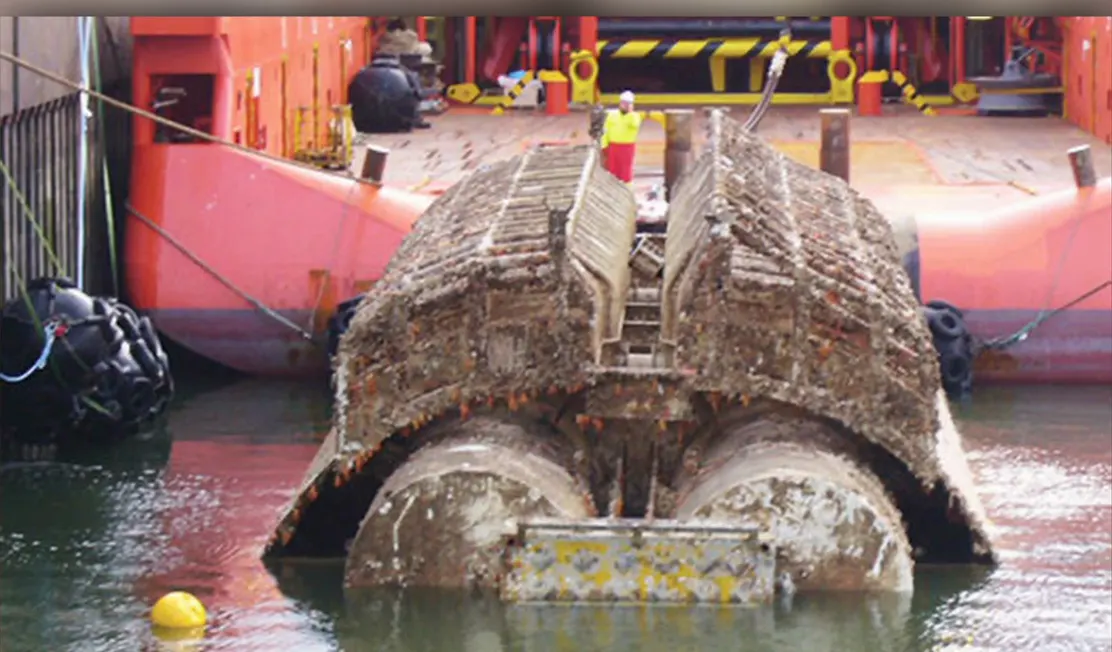
A bundle houses flowlines and umbilicals in one carrier pipe, with a towhead at each end. Cutting a large-diameter bundle with many lines inside is difficult. Towheads are generally heavy, which limits the choice of vessel: one in the training was over 300 tonnes. Bundles may be kilometres long.
Are subsea pipelines removed or left in situ?
A pipeline may be removed, or decommissioned in situ where the regulator agrees. The rules differ by country. The UK approach is the example here.
UK example: pipelines are decided case by case, with a comparative assessment of the options against five criteria: safety, environmental, technical, societal and economic. The starting principle is a clear seabed. As a general guide, a pipeline that is adequately buried and trenched, and expected to stay buried, may be a candidate for decommissioning in situ. Where a pipeline stays, the operator agrees a risk-based monitoring programme with the Offshore Petroleum Regulator for Environment and Decommissioning (OPRED). See OPRED and UK decommissioning regulation.
Where a pipeline is removed, one method is to cut the pipeline into sections with hydraulic shear cutters, then recover the sections to the vessel deck with pipe grabs for transport ashore.
UK pipeline references
- Guidelines on Decommissioning of Pipelines in the North Sea Region, Issue 1 (OEUK): the North Sea pipeline inventory, decommissioning experience so far, and the technical challenges that remain.
- Guidance Notes: Decommissioning of Offshore Oil and Gas Installations and Pipelines (OPRED, 2018): the UK process, including comparative assessment.
- OSPAR Decision 98/3 on the Disposal of Disused Offshore Installations: covers installations in the North-East Atlantic, not pipelines.
Regulation 14 requires the operator to ensure that a pipeline which has ceased to be used for the conveyance of any fluid is left in a safe condition, and that the work to achieve this is performed safely.
The regulation does not prescribe a method.
Why does the materials inventory matter? Grout bags, rock and seabed permits
During field life, pipeline spans and exposures are remediated with rock, mattresses or grout bags. All of that material must be counted before removal: in the UK, the materials inventory in the decommissioning programme drives both the environmental permits and the vessel scope. The examples are from the training and reflect UK permitting.
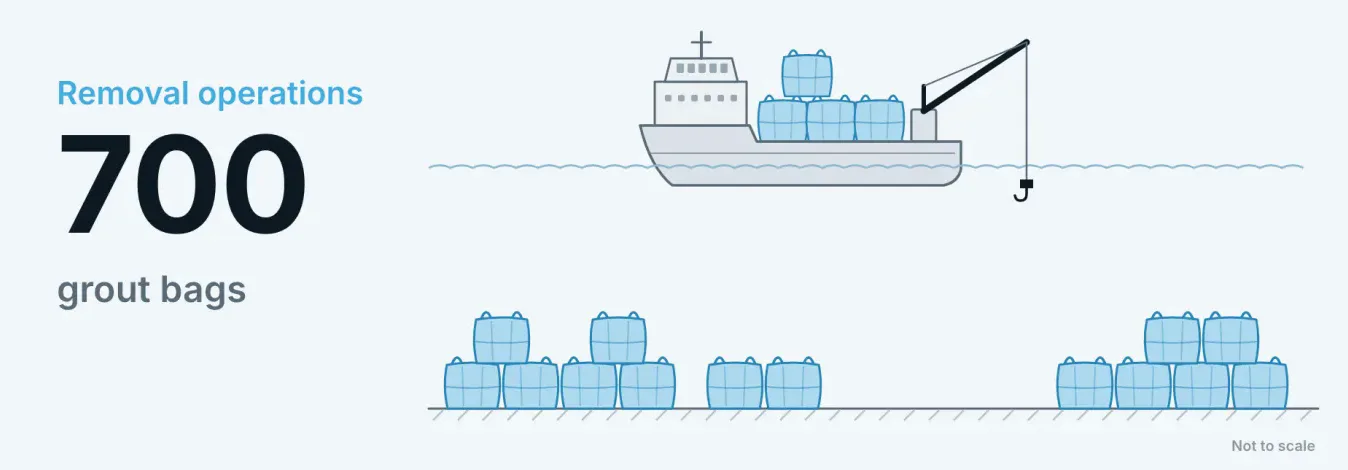
An illustration from the training: the inventory states 400 grout bags, but the field holds 700. The permit assessed the impact of removing 400. In a protected area, the regulator may not approve the larger footprint, with a delay of two to four weeks, or as much as six months, while the vessel waits or is cancelled.
Anchors left from installation, and anchor blocks used to start pipelay, are also often missed. Both lie inside the 500 metre zone, where vessels generally do not enter during operations without approval.
Examples of permitting lessons learned
The piles that could not be found
On an anchor pile removal for a floating production, storage and offloading unit (FPSO), pile positions from a previous operator were slightly wrong. Exploratory dredging for one or two piles used almost all of the area permitted for 12, and a new permit took two to three weeks.
Lesson: survey first, carry a magnetometer, or permit contingency dredging.
Rock without consent
In one example from the training, a jack-up accommodation vessel needed approx. 100,000 tonnes of rock at each of approx. seven platform locations, in a designated site. A permitting error created a delay of approx. six months.
Lesson: involve the environmental team from the start.
A new vessel, a new permit
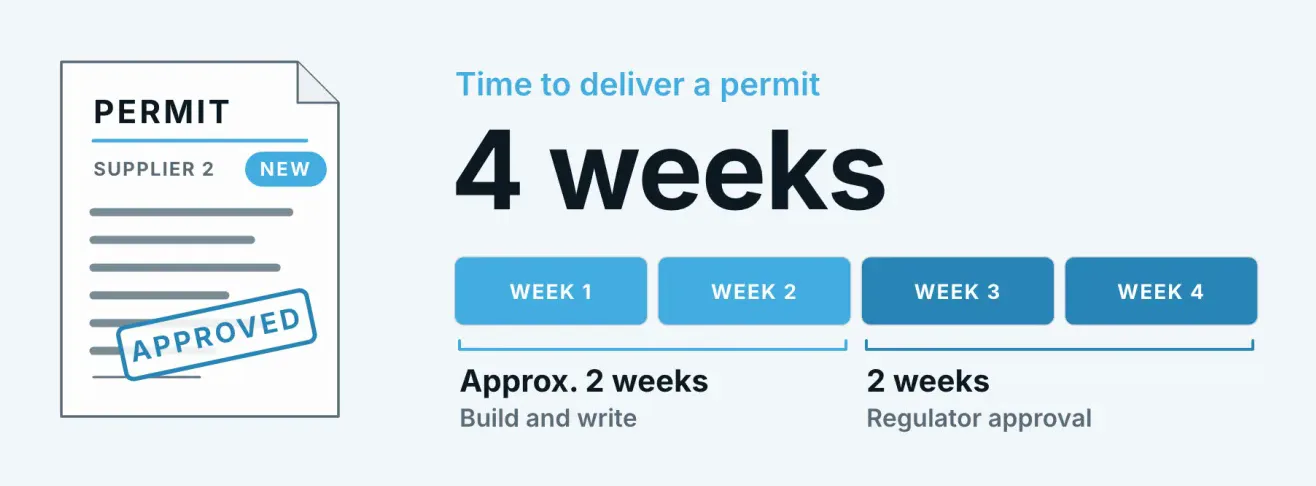
A substitute vessel with different chemicals needs a new permit. The original permit may have taken four weeks.
Get your information pack
Course details and free sample lessons, emailed to you.
What tools are used for subsea infrastructure removal?
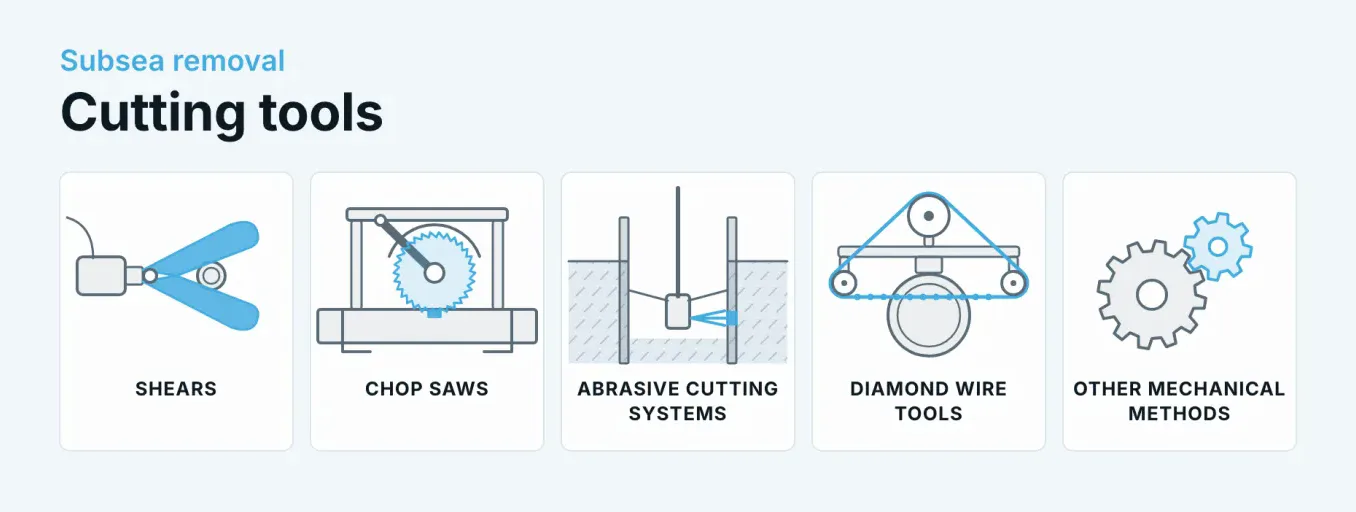
Subsea structures vary widely in size and complexity, so a field decommissioning project needs several types of tool. Subsea infrastructure recovery tools fall into three groups.
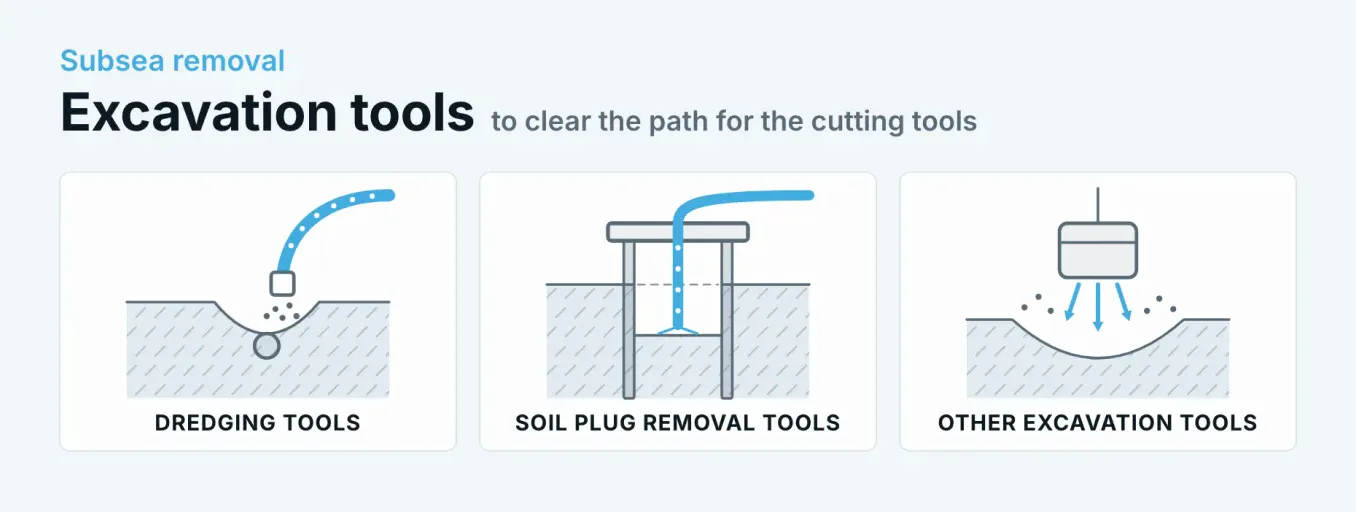
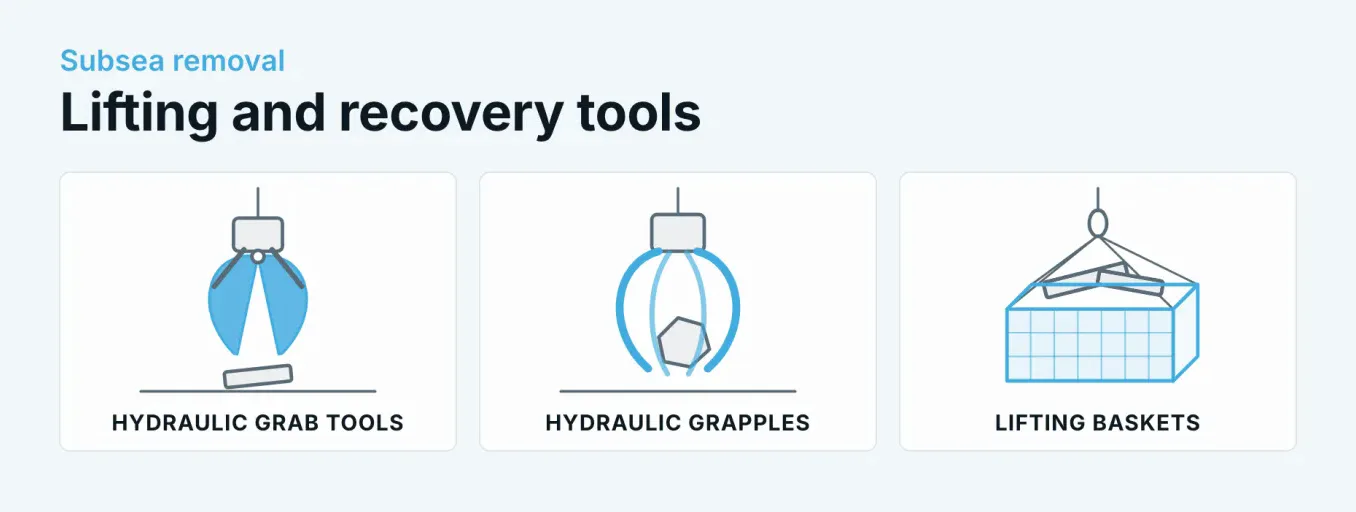
| Tool | Typical use |
|---|---|
| Shear cutters | Pipelines, umbilicals and flexibles. A project may need thousands of cuts without the shear being recovered for maintenance |
| Diamond wire saw | Large diameters and mixed materials, such as bundles, thick pipe and grout |
| Abrasive water jet | Cuts from inside piles, legs and wellheads, below the mudline |
| Flow excavators and dredging tools | Clearing sediment and soil plugs before a lift or cut |
| Pipe grabs | Recovering one or several cut pipe sections in one lift |
| Mattress recovery tool | Recovering a concrete mattress in one lift |
| Orange peel grab | Picking up debris into subsea baskets |
| Christmas tree lifting tool | Clamping hydraulically onto the tree interface |
Where a structure is piled, an internal abrasive water jet tool enters the top of the pile and cuts at the required depth. Internal cutting needs less dredging, which saves time and cost and avoids disturbing a nearby drill cuttings pile. UK example: OPRED guidance says operators should aim for a cut 3 m below the natural seabed level, depending on seabed conditions and currents.
What are the main hazards in subsea infrastructure removal?
Subsea removal means lifting equipment that has been on the seabed for decades, in a condition that is often unknown. Dropped objects are one of the greatest risks, so the plan assumes that something may break.
Unknown integrity
Lifting points have not been rated or inspected while subsea. Equipment can decouple, crack and fall apart.
Unstable loads
Loads landed on deck can move unexpectedly with the motion of the sea. Tugger winches and a planned landing position help.
Hazardous substances
The deck is sometimes the first place that NORM or benzene is met. A radiation protection supervisor checks for NORM before the crew approach.
Buoyant items
Buoyant items under tension can behave unpredictably when released, so vessels stay clear.
Unknowns in the field
Records may not show everything on the seabed. Good data and early surveys reduce the risk.
Potential complacency
Debris recovery comes last and can be treated as less important. Dynamic risk assessment continues to the final lift.
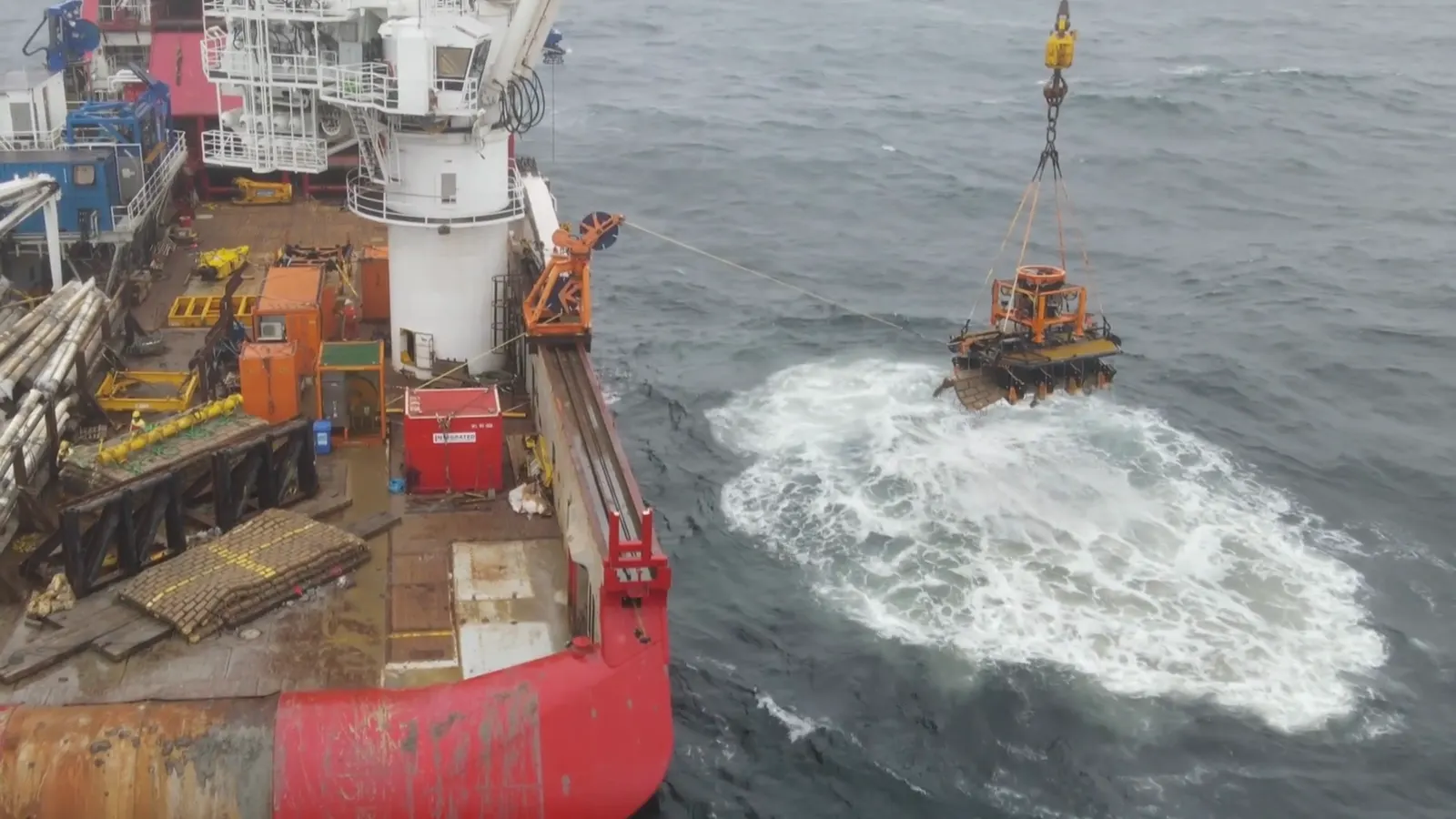
Loading equipment onto the deck is sometimes the first time that risks such as NORM and benzene are met. Those risks must be identified and passed down the supply chain to the people who handle the equipment onshore.
What is offshore site remediation, and how is the seabed confirmed clear?
Offshore site remediation is the recovery of debris and non-oilfield items once the main subsea infrastructure is removed, such as scaffold poles dropped over the side, in some fields since the 1970s. In the UK, site remediation is element 10 of the OEUK WBS. The steps below are typical, and the steps on a given site may differ.
Survey the site
A grid survey around each piece of infrastructure identifies objects above a set size. Without a survey, debris recovery is hard to plan.
Specify the vessel
Generally an ROV, a crane and deck space sized to the debris.
Recover the debris
An orange peel grab places larger items in a subsea basket. The ROV may lift small debris.
Check for NORM
Recovered equipment is checked on deck.
Confirm the seabed is clear
A multibeam survey shows any remaining debris. An over-trawl survey can confirm that there is no snagging risk, for example over a pipeline left in place.
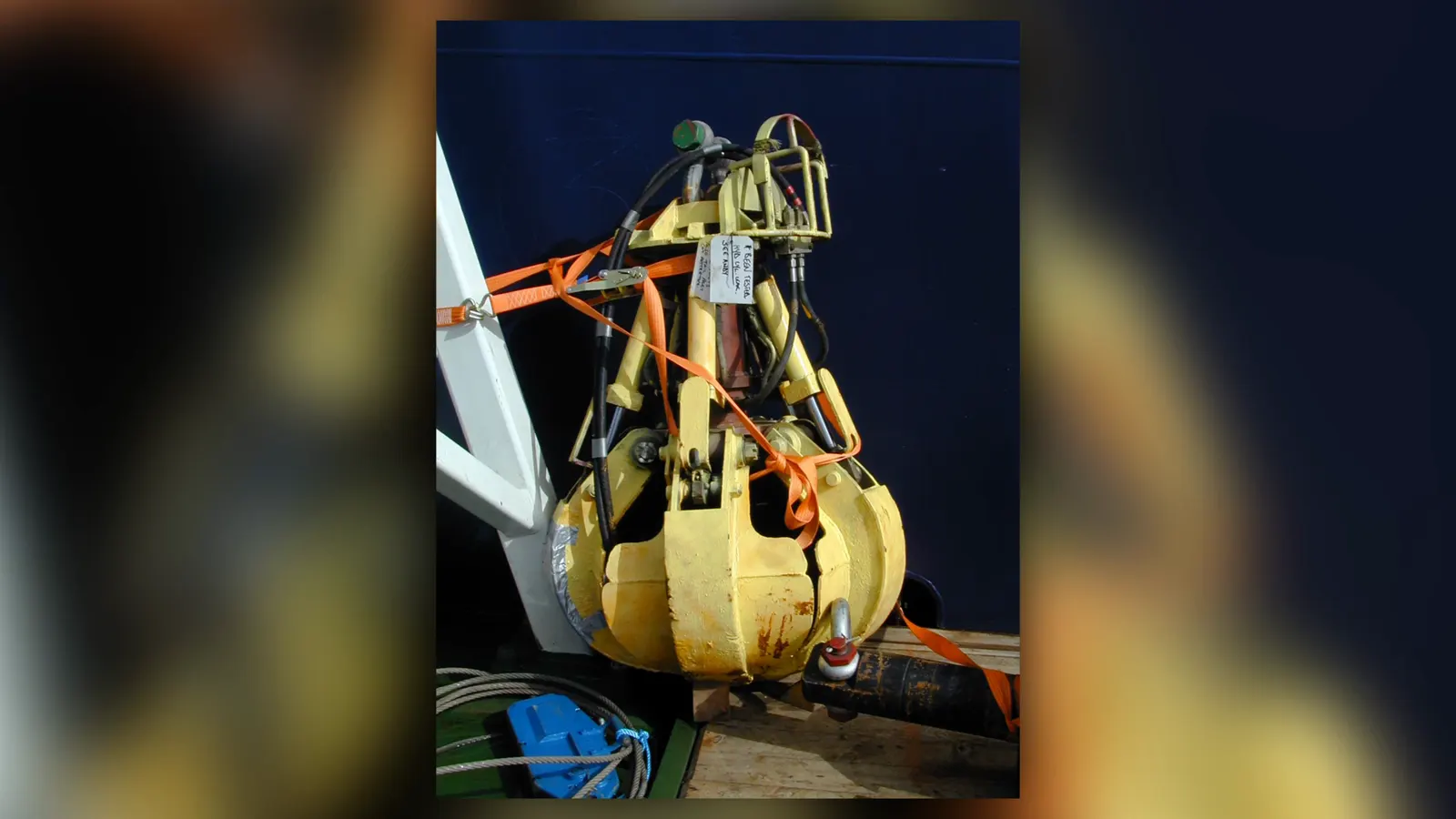
The OPRED Guidance Notes (paragraph 12.39) set a minimum survey radius of 500 m around any installation that had a safety zone. Clearance for fishing is normally verified with trawl gear by a fishermen’s representative body. The operator then monitors what was left in place, such as buried pipelines, jacket footings and wells (WBS element 11), at a frequency agreed with the regulator: for example after two, five and ten years.
Subsea infrastructure removal in the Lean Decom training
The training covers subsea infrastructure removal through the specialists who plan and deliver the work. The Safety and Risk Management module adds the subsea lifting risks. Each module is online and video-based.
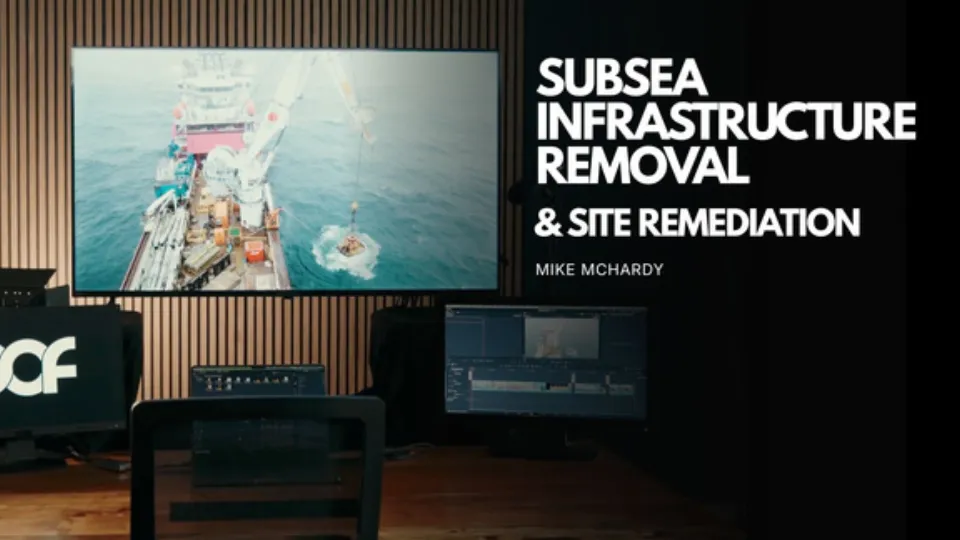
Subsea Infrastructure Removal and Site Remediation
Recovery methods for subsea infrastructure, site remediation and vessel selection.
Specialised Tooling
The tools used in well P&A and removal work, and how the right tool reduces risk and cost.
Permitting Lessons Learned and Efficiency Strategies
How permitting decisions affect cost, schedule and risk, with practical efficiency opportunities.
Subsea decommissioning terms
- Flexibles
- Flexible pipes, such as flexible flowlines and risers, often used between the seabed and a floating production facility. In the training, the term also covers umbilicals.
- Concrete mattress
- A mat of concrete blocks joined by polypropylene rope, laid over pipelines and cables for protection and to protect against scour.
- Mattress recovery tool (MRT)
- A lifting tool with hydraulic rams and tines that grab underneath a concrete mattress for a single lift.
- Subsea Christmas tree
- The assembly of valves and instruments on a subsea wellhead that controls the flow of fluids from the well.
- Midwater arch
- A buoyant structure, generally tethered to a clump weight, that supports flexibles in the water column.
- Bundle and towhead
- A bundle is a carrier pipe that houses several flowlines and umbilicals. A towhead is the structure at each end.
- NORM
- Naturally occurring radioactive material, a risk in any equipment that carried production fluids. The training also refers to LSA (low specific activity) material.
- Over-trawl survey
- A survey in which trawl gear is towed over a decommissioned site to confirm that no snagging risk remains.
Sources and further reading
- Lean Decom training: Subsea Infrastructure Removal and Site Remediation module, taught by Mike McHardy, DOF.
- Lean Decom training: Specialised Tooling module, taught by David Ledingham, Claxton.
- Lean Decom training: Permitting Lessons Learned and Efficiency Strategies module, taught by Gareth Jones, Xodus.
- Lean Decom training: Safety and Risk Management module, taught by Graham Skinner, OEUK.
- Lean Decom training, supporting modules: OEUK Work Breakdown Structure (Ricky Thomson, OEUK); Onshore Disposal, Reuse, Repurpose and Recycle (Lee Vettese, ASCO); Decommissioning Overview: Heather and Thistle case study (Will Black and Ean Paul, EnQuest); Offshore Oil and Gas Infrastructure and Locations (Lean Decom).
- OPRED: Guidance Notes: Decommissioning of Offshore Oil and Gas Installations and Pipelines, November 2018. gov.uk
- OSPAR Decision 98/3 on the Disposal of Disused Offshore Installations (consolidated text, as amended by OSPAR Decision 2024/01). ospar.org
- The Pipelines Safety Regulations 1996 (S.I. 1996/825), regulation 14. legislation.gov.uk
- OEUK: Guidelines on Decommissioning of Pipelines in the North Sea Region, Issue 1. oeuk.org.uk
- OEUK: Decommissioning Work Breakdown Structure Guidelines, October 2019. oeuk.org.uk
- NSTA: UKCS Decommissioning Cost and Performance Update 2026. nstauthority.co.uk
Subsea infrastructure removal: common questions
What is subsea decommissioning?
Subsea decommissioning is the removal, or the making safe, of the equipment on the seabed at the end of a field’s life, followed by site remediation. In the UK, the NSTA reports that subsea infrastructure is 12% of forecast decommissioning spend from 2026 onwards.
How long does concrete mattress recovery take?
Connecting lifting hoops by remotely operated vehicle (ROV) may take two hours per mattress. A mattress recovery tool may recover five to six mattresses an hour, depending on water depth. A buried mattress may need dredging first.
How much does a subsea Christmas tree weigh?
Lighter subsea Christmas trees may weigh approx. 30 tonnes, and heavier trees 50 to 60 tonnes. The weight decides the rigging, the crane capacity and the hook height needed.
Are subsea pipelines removed or left in situ?
The answer depends on the pipeline and the country. In the UK, each pipeline is decided case by case, with a comparative assessment. The starting principle is a clear seabed, but a pipeline that is adequately buried and trenched may be decommissioned in situ. Regulation 14 of the UK Pipelines Safety Regulations 1996 requires a disused pipeline to be left in a safe condition.
What is offshore site remediation?
Offshore site remediation is the recovery of debris and non-oilfield items, such as dropped scaffold poles, once the main subsea infrastructure is removed. Items are found by survey and recovered with grabs, ROVs and subsea baskets. UK guidance also uses the terms debris clearance and seabed clearance.
How is the seabed checked after decommissioning?
A multibeam survey shows any remaining debris, and an over-trawl survey can confirm that there is no snagging risk. In the UK, items left in place are then monitored at intervals agreed with the regulator, for example after two, five and ten years.
Related topics
Get your information pack
Course details and free sample lessons, emailed to you.
Learn subsea removal from the people who plan and deliver the work
Lean Decom is a specialist decommissioning training provider. The training shares lessons from North Sea projects, taught by 18 specialists, for you to apply to your own work.