
OPRED and UK Offshore Decommissioning Regulation
The Offshore Petroleum Regulator for Environment and Decommissioning (OPRED) is the UK regulator for offshore oil and gas decommissioning and for the offshore environment.
target recycling figures are seen by OPRED in the waste management plans of UK decommissioning programmes.
Lean Decom trainingOPRED meets each operator’s team to check progress against the approved programme.
Lean Decom trainingSteel installations placed in the OSPAR maritime area after 9 February 1999 must be totally removed.
OSPAR Decision 98/3, as set out in the OPRED Guidance Notesnotices under the Petroleum Act 1998 require relevant parties to submit a decommissioning programme.
Petroleum Act 1998, as taught in the trainingWhat is OPRED?
OPRED, the Offshore Petroleum Regulator for Environment and Decommissioning, is the UK regulator for the environmental side of offshore oil and gas and for decommissioning. OPRED is part of the Department for Energy Security and Net Zero (DESNZ). OPRED reviews decommissioning programmes, which the Secretary of State approves under the Petroleum Act 1998, then monitors each operator until the work is complete and closed out.
Where this applies: OPRED, the Petroleum Act 1998 and the other regulators on this page are the UK system, used here as a worked example. OSPAR Decision 98/3 applies to the North-East Atlantic. Other countries have their own regulator, rules and terms.
Key points
- OPRED is part of the Department for Energy Security and Net Zero and reports directly into government.
- An approved decommissioning programme is signed by the Secretary of State and the operator’s board, and becomes a legal obligation.
- If an approved programme is not carried out, the Secretary of State can serve a notice requiring remedial action. Failing to comply with that notice is a criminal offence.
- The NSTA is a separate regulator, responsible for wells and for the cost efficiency of decommissioning.
- UK policy aims for a clear seabed. Under OSPAR Decision 98/3, a disused installation may be left in place only under a derogation.
- Each operator has an OPRED case manager, from programme preparation to close-out and monitoring.
What does OPRED do?
OPRED stands for the Offshore Petroleum Regulator for Environment and Decommissioning. OPRED is part of the Department for Energy Security and Net Zero (DESNZ), so the regulator reports directly into the UK Government.
OPRED regulates the environmental side of the offshore oil and gas industry on the UK Continental Shelf, including carbon capture and storage operations. That work includes permitting for chemicals, and responses to pollution and oil spills offshore.
One of OPRED’s core responsibilities is to manage the decommissioning process. OPRED works with operators to make sure decommissioning is carried out according to the legal requirements and within the regulations, from the first draft of the decommissioning programme to close-out and monitoring.

The rules on this page are UK rules. The questions behind the rules apply to decommissioning projects in any country. A reader in another country can take the questions the UK system answers: who is liable, which document must be approved before removal starts, how progress is reported, and how the work is closed out.
What does the Petroleum Act 1998 say about decommissioning liability?
The Petroleum Act 1998 provides the statutory framework for decommissioning offshore oil and gas installations and pipelines on the UK Continental Shelf. The Act sets out who must submit a decommissioning programme, who must secure that the work is carried out, and who meets the financial obligations.
Section 29 notice
Under Part IV of the Act, the Secretary of State may issue a section 29 notice to relevant parties, requiring them to submit a decommissioning programme. For an installation, notices may go to the operator, the licensees, the owners and the parties to a joint operating agreement.
Approved programme
Once a programme is approved, the parties under the obligation are responsible for securing that the decommissioning measures are carried out in line with the approved programme. Decommissioning without an approved programme is an offence under the Act.
Joint and several liability
Liability may apply to more than one party, and may be held on a joint and several basis. One party may be required to meet the full obligation if another party does not.
Previous owners
If the current owners default and the financial security is inadequate, liability may pass back to previous owners. Section 34 of the Act allows the Secretary of State to place the duty on a party that held an interest earlier. The OPRED Guidance Notes describe section 34 as a measure of last resort.
The legal responsibility placed on certain parties connected to an offshore installation or submarine pipeline to submit, fund and secure the carrying out of decommissioning, in line with an approved decommissioning programme.
The official guidance
The main guidance is the Guidance Notes: Decommissioning of Offshore Oil and Gas Installations and Pipelines, November 2018. The notes are UK Government guidance, issued through OPRED, and set out the regulatory process and expectations under the Petroleum Act 1998. The notes were produced in 2018, when OPRED was part of the Department for Business, Energy and Industrial Strategy (BEIS).
Because liability can be shared, and can pass back to earlier owners, joint venture partners commonly use financial security arrangements to cover each share of the decommissioning cost. See cost estimates and financial security.
What does OPRED expect in a decommissioning programme?
The decommissioning programme is the key document used to oversee and monitor the decommissioning of an asset, and to make sure the work is completed in line with the regulations. OPRED reviews the programme together with two main supporting documents.
Inside the programme
Other information may also be included. The decommissioning programme page covers the contents in detail.
Environmental appraisal
Sets out any impact the decommissioning may have on the environment, from the seabed to the water column and birds. Impacts are assessed, and any changes needed to protect the seabed, mammals or anything else in the area are captured in the document. The OPRED Guidance Notes use the name Environmental Appraisal (EA).
Comparative assessment
The pipelines in a field are all comparatively assessed to select the right decommissioning option. Full removal is the solution where a pipeline can be fully removed. Leaving a pipeline in situ may be an option if, for example, the pipeline is clean and buried to a certain depth. See comparative assessment.
The five stages in OPRED’s guidance
Early discussion
Early discussion between the operator and OPRED helps the operator build a realistic plan and timescale. An approved programme is required before decommissioning activity takes place.
Planning and producing the programme
Detailed assessment of the options leads to the operator’s preferred solution. Government and other interested parties consider a draft programme for consultation.
Submitting the programme
After consultation, the operator and OPRED agree a final version. The Secretary of State then calls formally for submission under the 1998 Act and issues a letter confirming approval.
Execution
The operator carries out the approved programme, up to the completion of post-decommissioning site surveys.
Post-completion activities
The operator puts arrangements in place to monitor, maintain and manage the decommissioned site and any remains of installations or pipelines.
Source: OPRED Guidance Notes, November 2018, as included in the training.
In the UK, cessation of production (CoP) sits with the NSTA. The licensee must notify the NSTA within 14 days of CoP. Dialogue with OPRED starts before CoP. The operator builds the decommissioning programme using the template that OPRED provides. The section 29 notice holders must consult the NSTA before submitting a programme.
Public consultation
The draft programme goes to government bodies and to a range of non-governmental organisations and stakeholders who may be affected. Statutory consultees, such as fishing organisations, normally have 30 days to comment. The operator must respond to every comment and request from the consultees before the programme is approved or rejected.
See real examples. Lean Decom keeps a list of the UK decommissioning programmes approved in 2026, and the decommissioning programme page explains the document step by step.
How does OPRED regulate decommissioning?
Under the Petroleum Act 1998, the Secretary of State approves or rejects each programme. Once approved, the programme is signed by the Secretary of State and by the operator’s board of directors. From that point, completing the work in the agreed timeframe is a legal obligation for the operator.
The ultimate sanction
If an approved programme is not carried out, the Secretary of State can serve a notice requiring remedial action. Failing to comply with that notice is a criminal offence under section 37 of the Petroleum Act 1998.
Progress reporting
The approved programme becomes the template for the work. The OPRED team meets the operator’s team quarterly to check progress. The operator also submits a progress report that sets out:
- the infrastructure removed so far
- the costs spent to date
- the future plan for completing the work
Deviations from the plan
Conditions offshore can force changes to the theoretical plan. OPRED must approve any deviation from the approved programme, so that the operator stays in full compliance with the regulations.
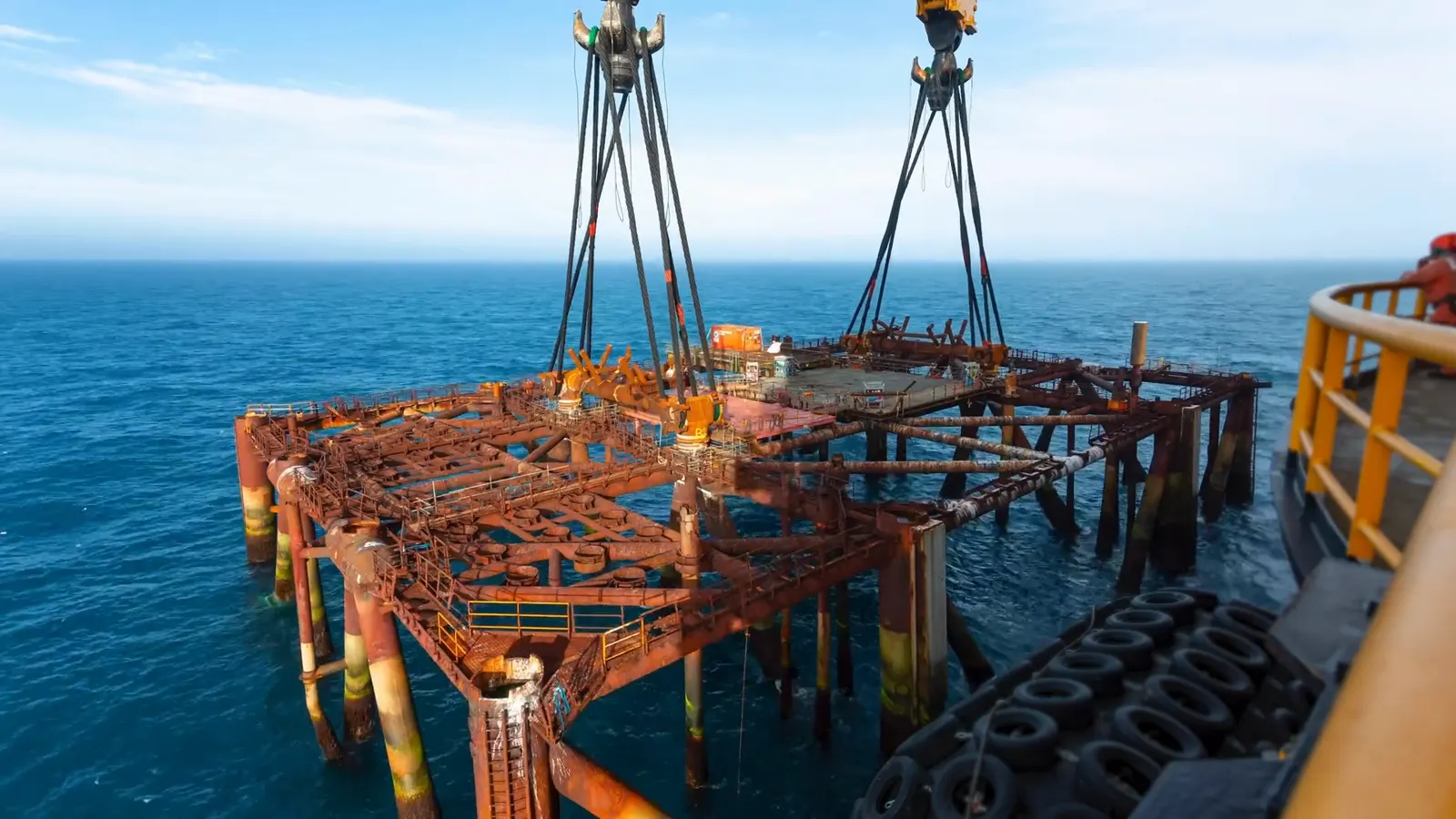
Working with OPRED: one case manager from start to finish
Each operator has an OPRED case manager assigned. The case manager follows the whole process with the operator.
Programme and approval
The case manager works with the operator on the preparation and approval of the decommissioning programme.
Progress and deviations
During execution, the case manager handles progress reporting, any deviation requests and the approvals needed.
Close-out report
The operator submits a close-out report within one year of completing the offshore work. OPRED assesses the report, circulates the report to the stakeholders consulted on the programme, and publishes the accepted report.
Post-decommissioning monitoring
Monitoring agreed with the operator, for example a three-yearly seabed survey, stays a direct link between OPRED and the operator.
What is a derogation, and when can infrastructure be left in place?
In UK decommissioning there is an expectation of a clear seabed. OSPAR Decision 98/3 prohibits dumping, and leaving wholly or partly in place, disused offshore installations in the OSPAR maritime area (the North-East Atlantic), except in limited cases where a derogation may be granted.
Infrastructure has been installed in the North Sea over the 50 years since the industry began, and much of that infrastructure was not installed with removal in mind. In some cases, a clear seabed will not be possible.
Examples include the footings of a heavy steel jacket, and a concrete gravity base structure. Decision 98/3 recognises that both may be difficult to remove. For concrete gravity bases, the challenges are the time for the work, the cost of the work, and the implications of bringing that volume of concrete back to the UK for waste disposal.
Annex 1 of OSPAR Decision 98/3 lists the categories that may be considered for derogation, excluding topsides: steel installations weighing more than 10,000 tonnes in air, gravity based concrete installations, floating concrete installations, and any concrete anchor base that interferes, or is likely to interfere, with other legitimate uses of the sea. For a steel installation, only the footings may be left in place, and only where the installation was placed before 9 February 1999.
Decision 98/3 covers installations, not pipelines. In the UK, pipelines are decided case by case under the Petroleum Act 1998, with a comparative assessment.
Under OSPAR Decision 98/3, a permit to leave a disused offshore installation, or part of one, in place instead of removing the installation fully. In the UK, a derogation is a different process from the normal decommissioning programme.
How the derogation process works
Comparative assessment
The operator carries out a comparative assessment in line with Annex 2 of OSPAR Decision 98/3. The assessment includes full removal, and starts from a default position of complete removal.
OPRED review
OPRED judges the assessment against the criteria in the OPRED Guidance Notes. The operator must show significant reasons why leaving the footings, or the concrete installation, in place is preferable to reuse, recycling or final disposal on land.
Consultation and permit
If the Government is satisfied that a case has been made, OPRED consults the other OSPAR contracting parties before a permit is issued.
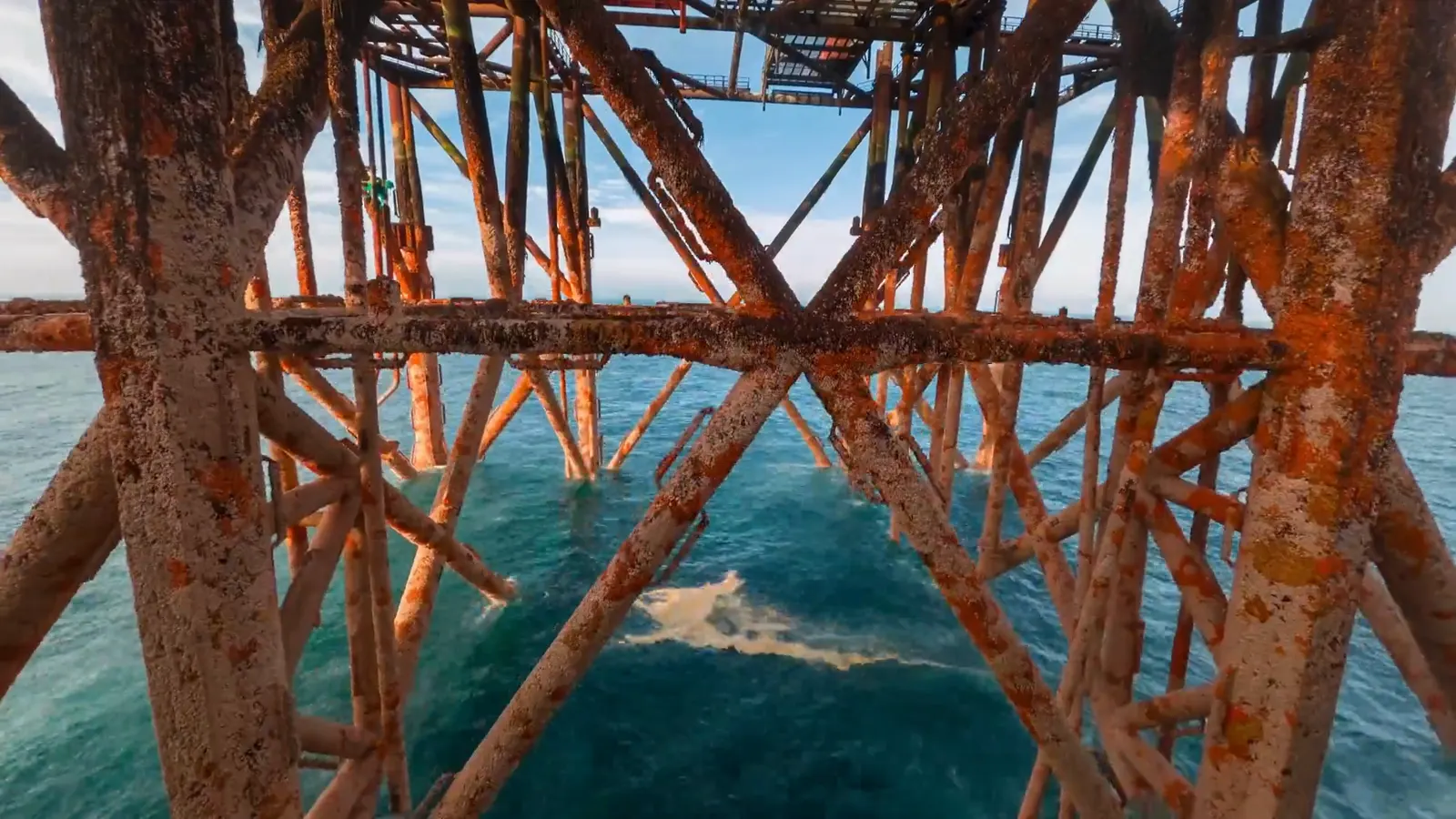
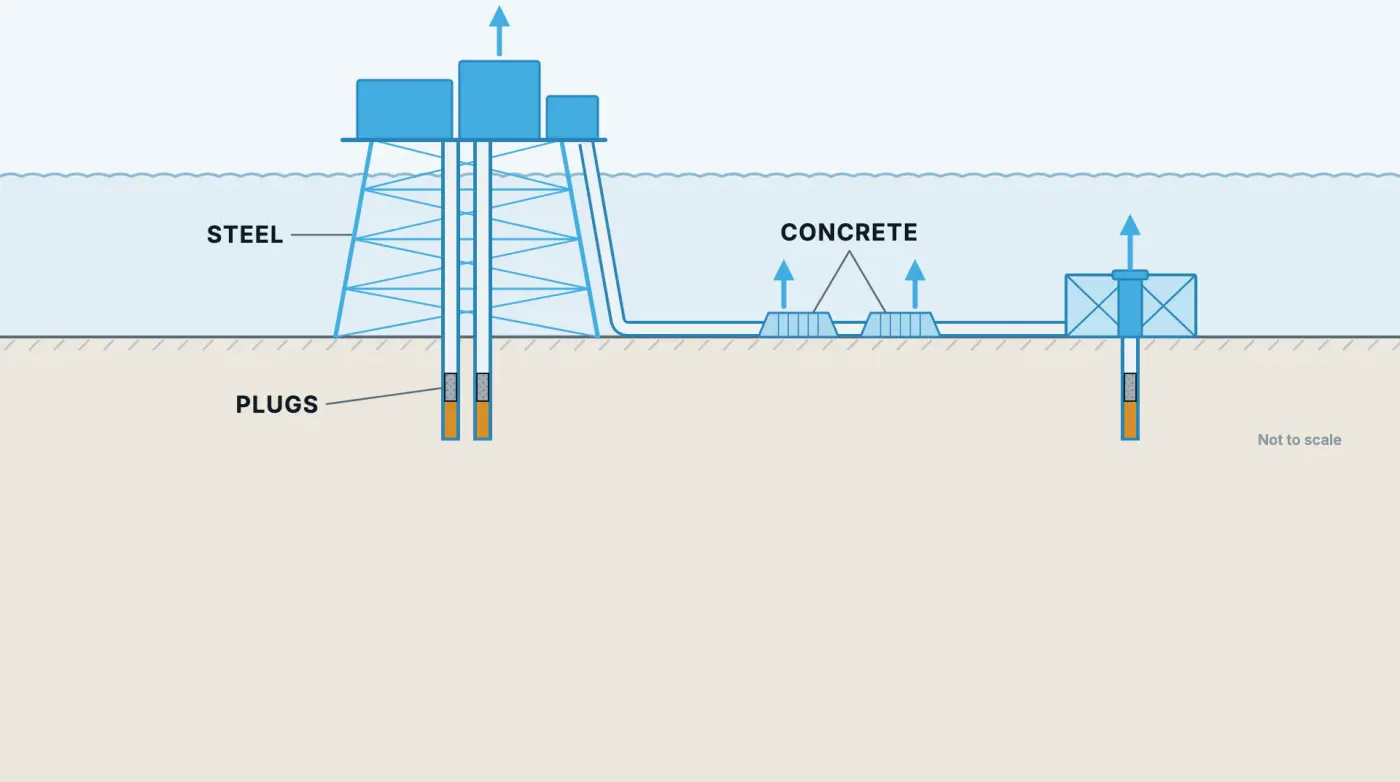
How are the options compared? The comparative assessment and derogation page explains how decommissioning options are assessed and justified.
Who else regulates UK offshore decommissioning?
The framework and the bodies differ from country to country. In the UK there is a hierarchy of legislation and regulation. International and regional agreements set the principles. The UK Government gives those commitments legal effect through legislation, policy and guidance. Regulators oversee different parts of the framework in practice, and industry guidance helps companies apply good practice.
| Level | Body | Role in decommissioning |
|---|---|---|
| International | International Maritime Organization (IMO): London Convention and London Protocol | Control pollution of the marine environment, particularly through rules on dumping at sea. |
| International | IMO Guidelines and Standards for the Removal of Offshore Installations and Structures (Resolution A.672(16), 1989) | Global guidelines that governments are recommended to take into account when deciding on the removal of disused installations. The UK applies OSPAR Decision 98/3 in place of the IMO standards, although some IMO points still apply, such as at least 55 m of clear water above a partly removed installation. |
| Regional | OSPAR (Oslo and Paris Conventions) | Protects the marine environment of the North-East Atlantic. Decision 98/3 prohibits dumping, or leaving in place, disused offshore installations unless a derogation is granted. Recommendation 2006/5 sets a management regime for offshore cuttings piles. |
| National | Department for Energy Security and Net Zero (DESNZ) | UK Government department responsible for the overall policy and statutory framework for offshore energy and decommissioning. |
| National | OPRED, within DESNZ | Main UK regulator for offshore environmental matters and decommissioning. Reviews decommissioning programmes, which the Secretary of State approves. |
| National | North Sea Transition Authority (NSTA) | The wells regulator. All plug and abandonment work goes through NSTA approval, managed through the Well Operations and Notifications System (WONS). The NSTA also covers cessation of production, the economics of decommissioning, stewardship, data collection and benchmarking, and must be consulted on each decommissioning programme. |
| National | Health and Safety Executive (HSE) | Health and safety of people onshore and offshore, safety case requirements, including the dismantlement safety case, and the control of major accident hazards. |
| Sub-national | The environment body for each part of the UK: SEPA (Scotland), the Environment Agency (England), Natural Resources Wales (Wales) and the Department of Agriculture, Environment and Rural Affairs (Northern Ireland) | Onshore dismantling and disposal, including pollution and waste control. |
| Industry | Offshore Energies UK (OEUK) | An industry body, not a regulator. Provides guidance, practical resources, examples of good practice and industry forums. |
From the training: Lean Decom, UK Regulatory and Governance Landscape. The IMO Guidelines row is from the IMO resolution and the OPRED Guidance Notes.
How OPRED works with the other regulators
NSTA. OPRED engages with the NSTA almost weekly on decommissioning. The NSTA is responsible for the cost efficiency of decommissioning, and gives input and consultation on decommissioning programmes. The two regulators work closely to stay aligned on the regulations that apply to each operator.
Decommissioning costs involve a form of tax relief, so the economics of decommissioning are a national concern as well as a company concern.
HSE. OPRED works closely with the HSE on reviewing and approving safety cases, both for regular projects and for dismantling.
The environment bodies. Waste brought ashore, and any shipment of waste abroad, is regulated by the environment body for that part of the UK: SEPA in Scotland, the Environment Agency in England, Natural Resources Wales in Wales, and the Department of Agriculture, Environment and Rural Affairs in Northern Ireland. OPRED engages with them on a project-specific basis rather than day to day.
The Offshore Major Accident Regulator (OMAR) is the UK competent authority for offshore major accident hazards. OPRED and the HSE work in partnership as OMAR. Where an issue covers both safety and environment, the two regulators raise the issue together with the operator and agree a joint approach.
Other stakeholders
The Crown Estate, Crown Estate Scotland, the Marine Directorate, the Marine Management Organisation, Natural England, NatureScot, local authorities, and port and harbour authorities.
Get your information pack
Course details and free sample lessons, emailed to you.
How does OPRED guidance cover fishing risks and records?
Infrastructure left in place can affect other sea users for many years, and the records of an asset have historical value. OPRED guidance covers both.
Managing fishing risks
OPRED encourages operators to address long-term fishing-related risks from infrastructure left in place after decommissioning. One route is participation in the Fisheries Legacy Trust Company, which helps make sure legacy seabed items are recorded and communicated to fishermen and other sea users.
Where a pipeline is left behind, the operator needs to be able to demonstrate that the pipeline does not pose a risk to fishers. Under the OPRED Guidance Notes, residual liability for anything left in place remains with the owners in perpetuity.
Preserving offshore records
Capturing the Energy is a UK offshore oil and gas archive initiative based at the University of Aberdeen. The initiative has been in place since March 2006 and aims to preserve historically important records from the UK offshore industry for future generations.
The UK Government’s offshore decommissioning guidance names Capturing the Energy as an initiative that operators and relevant contractors are encouraged to support during decommissioning.
UK decommissioning regulation in the Lean Decom training
The training covers regulation from the regulator’s own point of view, alongside the wider UK landscape and the document at the centre of the process. Each module is online and video-based, so you can learn at your own pace.

Regulators and Regulations
How OPRED works with operators on decommissioning compliance: the programme, supporting documents, oversight and derogation.
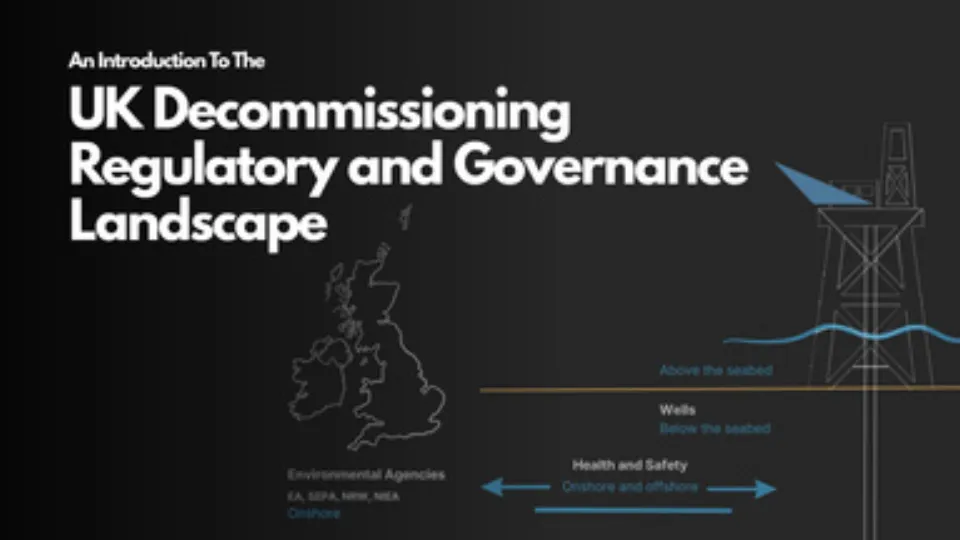
UK Regulatory and Governance Landscape
The international, regional and UK frameworks, the regulators and their roles, and the industry body that supports them.

The Decommissioning Programme
What goes into a decommissioning programme, the supporting documents, and the roadmap to approval.
Explore the training options →
Job titles and organisations are as given in the training.
UK decommissioning regulation terms
- OPRED
- The Offshore Petroleum Regulator for Environment and Decommissioning, part of DESNZ. The UK regulator for offshore environmental matters and decommissioning.
- DESNZ
- The Department for Energy Security and Net Zero, the UK Government department responsible for offshore energy and decommissioning policy.
- Decommissioning programme
- The key UK document used to oversee and monitor the decommissioning of an asset. Once approved, the programme is a legal obligation. The Petroleum Act 1998 uses the name abandonment programme.
- Section 29 notice
- A notice issued by the Secretary of State under Part IV of the Petroleum Act 1998, requiring relevant parties to submit a decommissioning programme.
- Joint and several liability
- Liability shared by several parties, where one party may have to meet the full obligation if another party does not.
- Derogation
- Under OSPAR Decision 98/3, a permit to leave a disused offshore installation, or part of one, in place. In the UK, a derogation is considered only after a comparative assessment that includes full removal.
- Close-out report
- The report an operator submits when decommissioning is complete. OPRED assesses the report, circulates the report to the stakeholders consulted on the programme, and publishes the accepted report.
- OMAR
- The Offshore Major Accident Regulator: the UK competent authority for offshore major accident hazards, formed by OPRED and the HSE working in partnership.
Sources and further reading
- Lean Decom training: Regulators and Regulations module, taught by Teresa Munro, OPRED.
- Lean Decom training: UK Regulatory and Governance Landscape module, by Lean Decom.
- Lean Decom training: The Decommissioning Programme module, taught by Gareth Jones, Xodus.
- Lean Decom training: Cost Model, Estimations and Financial Security Arrangements module, by Lean Decom.
- OPRED: Guidance Notes, Decommissioning of Offshore Oil and Gas Installations and Pipelines, November 2018. gov.uk (PDF)
- OPRED: About us. gov.uk
- Petroleum Act 1998, Part IV. legislation.gov.uk
- OSPAR Commission: OSPAR Decision 98/3 on the Disposal of Disused Offshore Installations. ospar.org
- IMO: Resolution A.672(16), Guidelines and Standards for the Removal of Offshore Installations and Structures on the Continental Shelf and in the Exclusive Economic Zone, 1989. imo.org (PDF)
- Health and Safety Executive: About OMAR, the offshore competent authority. hse.gov.uk
- North Sea Transition Authority: Cessation of Production, and Decommissioning programme consultation. nstauthority.co.uk
OPRED and UK decommissioning: common questions
What is OPRED?
OPRED is the Offshore Petroleum Regulator for Environment and Decommissioning. OPRED is part of the UK Department for Energy Security and Net Zero (DESNZ) and regulates the environmental side of offshore oil and gas and the decommissioning of offshore installations and pipelines.
What does OPRED do in decommissioning?
OPRED reviews decommissioning programmes for approval by the Secretary of State, then oversees the work through quarterly progress meetings, progress reports and approval of any deviations. OPRED also assesses the operator’s close-out report and agrees any post-decommissioning monitoring.
Is OPRED the same as the NSTA?
No. OPRED sits within DESNZ and reviews decommissioning programmes. The North Sea Transition Authority (NSTA) is a separate regulator: the wells regulator for plug and abandonment, and the body responsible for the cost efficiency and economics of decommissioning. The two work together almost weekly.
What is a section 29 notice?
A section 29 notice is issued by the Secretary of State under Part IV of the Petroleum Act 1998. The notice requires relevant parties connected to an offshore installation or pipeline to submit a decommissioning programme. Liability may be joint and several.
What is a derogation in offshore decommissioning?
A derogation is a permit under OSPAR Decision 98/3 to leave a disused offshore installation, or part of one, in place, such as heavy steel jacket footings or a concrete gravity base structure. In the UK, the operator must carry out a comparative assessment that includes full removal. A derogation is considered only if the assessment shows significant reasons why leaving the footings, or the concrete installation, in place is preferable.
What happens if an operator does not complete the approved decommissioning programme?
The approved programme is a legal obligation. If an approved programme is not carried out, the Secretary of State can serve a notice requiring remedial action. Failing to comply with that notice is a criminal offence under section 37 of the Petroleum Act 1998.
Does OPRED regulate decommissioning outside the UK?
No. OPRED regulates offshore oil and gas decommissioning on the UK Continental Shelf. Other countries have their own regulator, rules and terms.
Related topics
Get your information pack
Course details and free sample lessons, emailed to you.
Learn decommissioning regulation from the regulator
Lean Decom is a specialist decommissioning training provider. The training shares lessons from North Sea projects, taught by 18 specialists, including a specialist from OPRED, for you to apply to your own work.