
Preparing your teams for decommissioning projects.
ECITB-approved online training that helps you and your teams have more informed client conversations, provide well-informed solutions and sustain client confidence as you enter or expand your decommissioning work.
The challenge and opportunity
Offshore assets around the world are reaching the end of their working lives. Your clients are planning decommissioning projects, and they are asking their suppliers for support in new regions and on tight timelines.
Your engineers, project managers and sales professionals are already experienced. But decommissioning has a different risk profile, different activities and different pressures from the projects they know. So the same one or two decommissioning specialists join every client call and every bid review, often early in the morning across time zones.
What we hear from supply chain leaders
- Growing demand for decommissioning projects
- A recognised gap in workforce experience and knowledge of decommissioning
- A need to develop personnel to have more informed conversations with clients
Three ways the training adds value to your business
Your people are already good at what they do. The training builds on that experience in three ways.
What the three labels mean
You know what you need, and you come to us for that purpose.
You want to enhance how you or your team perform today.
You want to avoid a negative situation, for example losing client confidence, losing a contract award, or a health, safety or environmental incident.
You have a defined need for training
Clients often ask suppliers to show that their people are trained for decommissioning work. Management systems such as ISO 9001, ISO 14001 and ISO 45001 also ask for evidence of competence.
- The Introduction to Offshore Decommissioning course is approved by the ECITB, and learners who complete the course receive an ECITB certificate of training.
- Eligible ECITB levy-paying companies can claim a training grant.
Make a strong team even better
Your teams already do great work. Deeper decommissioning knowledge helps them work with confidence straight away.
In practice, that means:
- Client conversations: confident, well-informed discussions with clients about their decommissioning projects.
- Proposed solutions: the contextual understanding to propose engineering solutions that fit each client’s decommissioning project.
Reputation and client confidence
Knowledge gaps create risks in the business, for example:
- A client discussion moves into an area where your team is less informed, and client confidence falls.
- A health, safety, environmental or quality incident.
Ultimately, your reputation depends on client confidence. When your people understand every area of your client’s challenges, they demonstrate your standards and maintain that confidence.
- Continued work and a stronger existing reputation.
- Greater awareness of health, safety, environmental and quality risks in decommissioning.
What the training is worth to your business
Every business measures value differently. These examples show where the training saves time and protects your reputation.
Time to learn
3 days + 1 day
Without structured training, one person may spend 3 days researching alone, plus a day of a senior colleague’s time.
Specialist time
20%
If a decommissioning specialist spends one day a week supporting colleagues in client meetings, that is 20% of their working year. Training more people frees that time for high-value work.
Reputation
The next contract
When your people understand the client’s whole project, your reputation grows stronger, and so does your position for the next contract.
Indicative examples only.
Feedback from learners
“It has already made a huge difference in being part of conversations in meetings. There are so many new acronyms and various terminologies that are all new to me and this has helped a lot with that.”
Lee Campbell
Senior Project Engineer
“Super comprehensive decommissioning training delivered by the top industry voices who are actually doing the work. It’s really easy to follow and stands out from typical online training courses.”
Sabrina Ataalla
Consultant, KPMG, Middle East Oil and Gas
“An important investment in my career development this year.”
Carlo V. Cervo
AF Claxton
Hear directly from operators, contractors and the regulator
Each module is taught by a specialist who has planned or delivered decommissioning work. Several come from operators such as bp, EnQuest, TAQA and Equinor, so your people hear how clients think about cost, risk and schedule.
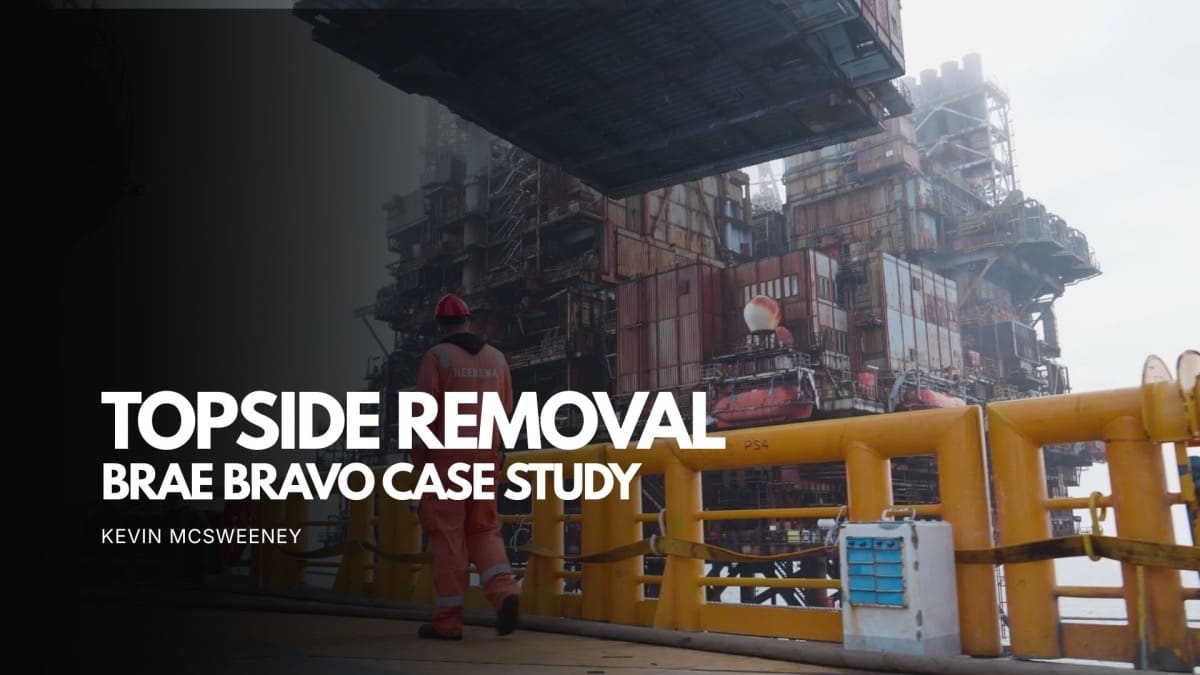
Real projects, real numbers
Footage and case studies from projects such as the Brae Bravo topside removal and the Western Isles FPSO removal. Specialists share real costs, savings and lessons, which your people can refer to in client conversations.
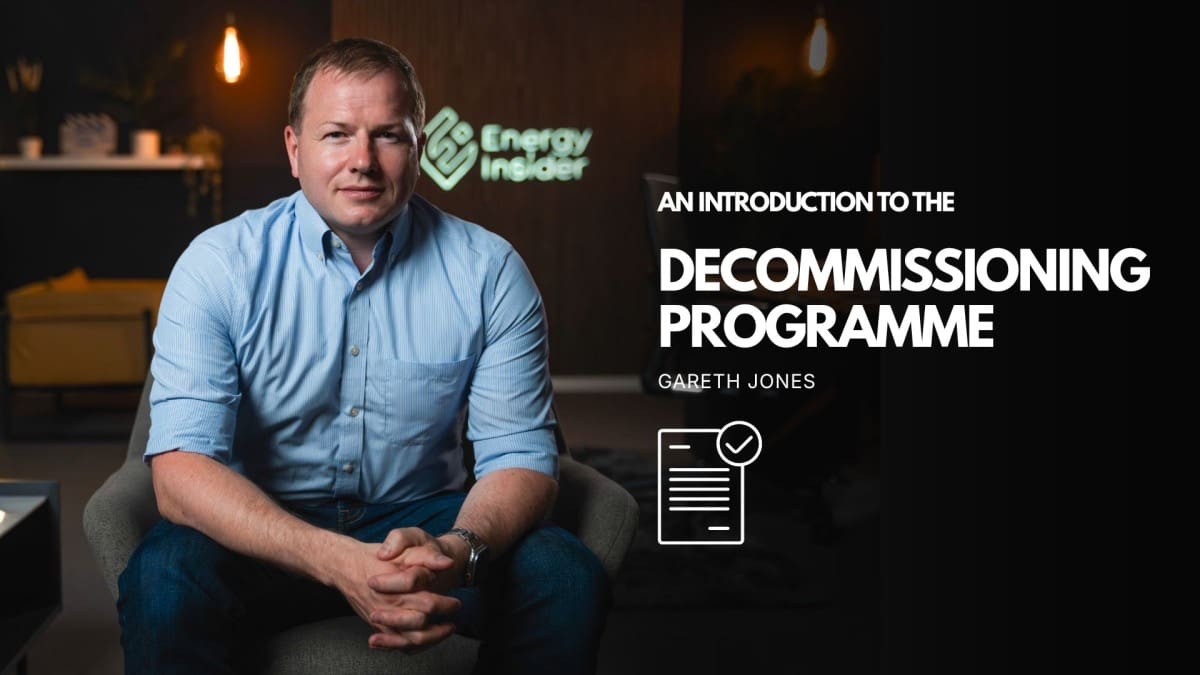
The full lifecycle
From regulations and contracting models to wells, topside, substructure, FPSO and subsea removal. Each module is short, so people can study around their workload or go straight to the area they need.
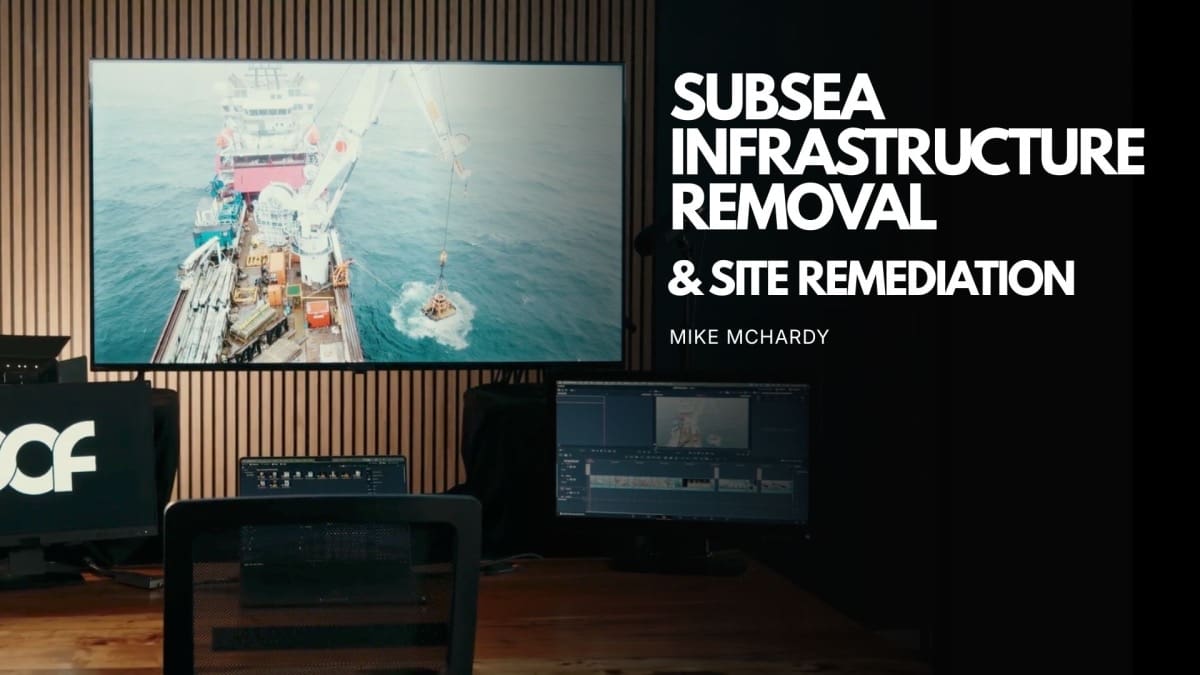
Built for international teams
Filmed with an international audience in mind. Specialists explain North Sea experience, and where the lessons apply to projects in other regions.
Value across every team that works with your clients
Decommissioning knowledge adds value well beyond your decommissioning specialists.
Business development and sales
Discuss each client’s decommissioning plans in more depth, and connect your existing services to the work in each phase.
Bid and proposal professionals
Add further insight to your tenders and proposals, using the language and priorities of decommissioning clients.
Engineers and technical specialists
Apply existing expertise to decommissioning, with a clear view of the different risk profile and the cost focus behind every design review.
Project and operations teams
Understand the priorities of your client’s representatives on site: cost, permits, safety and the removal schedule.
Leaders and senior managers
Shape strategy with a full view of the decommissioning lifecycle, the contracting models and where your services fit.
Marketing and communications
Describe your services in terms that reflect what decommissioning clients care about most.
Training for a team, a region or your whole organisation
Start with one group and add more people as your decommissioning work grows. The more people you train, the less you pay per person.
Talk to us about training your people
Tell us how many people you would like to train, and in which regions. We will suggest the option that suits your business.