
Disembarkation Procedure: Final Disembarkation of an Offshore Platform
Final disembarkation is the last departure of the crew from a manned offshore platform, once the platform wells are plugged and the topsides are hydrocarbon free.
is the time a UK licensee has to notify the North Sea Transition Authority after production has stopped for good.
NSTA, Cessation of Productionkey documents are updated in the UK before the crew can leave, starting with the safety case.
Lean Decom trainingis the notice UK regulations require for a material change to a safety case, unless the regulator sets a shorter period.
Safety Case Regulations 2015, regulation 24is the time a UK operator has to report to OPRED that all aids to navigation on an installation have stopped working.
OPRED, Consent to Locate guidanceWhat is the disembarkation procedure?
The disembarkation procedure is the planned run-down of a manned offshore platform, so that the last crew can leave safely and the platform can stay unattended until the removal contractor arrives. Systems are de-energised in sequence, the hazards that remain are recorded for the removal contractor, and the platform is left in a condition agreed with that contractor. On the TAQA platforms described in the training, the final departure phase took 14 to 30 days.
Where this applies: The run-down sequence and the lessons on this page apply to any manned platform. The documents, lead times and regulators are UK examples from TAQA platforms in the North Sea. Other countries have their own regulator, rules and terms.
Key points
- Final disembarkation follows well plug and abandonment (P&A), de-energisation and engineering down and clean, and comes before the heavy lift.
- On the TAQA platforms in the training, the final departure phase took 14 to 30 days.
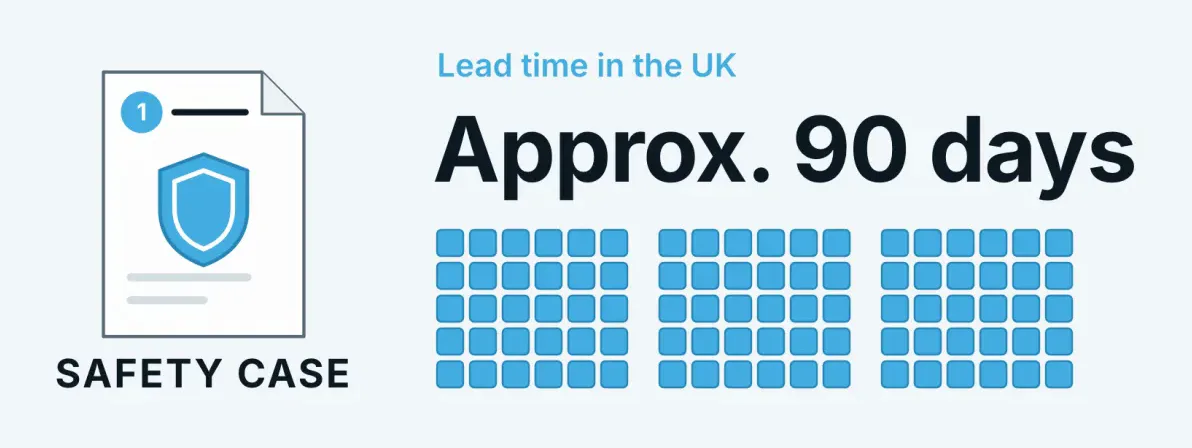
- In the UK, five key documents are updated. A material change to the safety case must reach the regulator at least three months ahead.
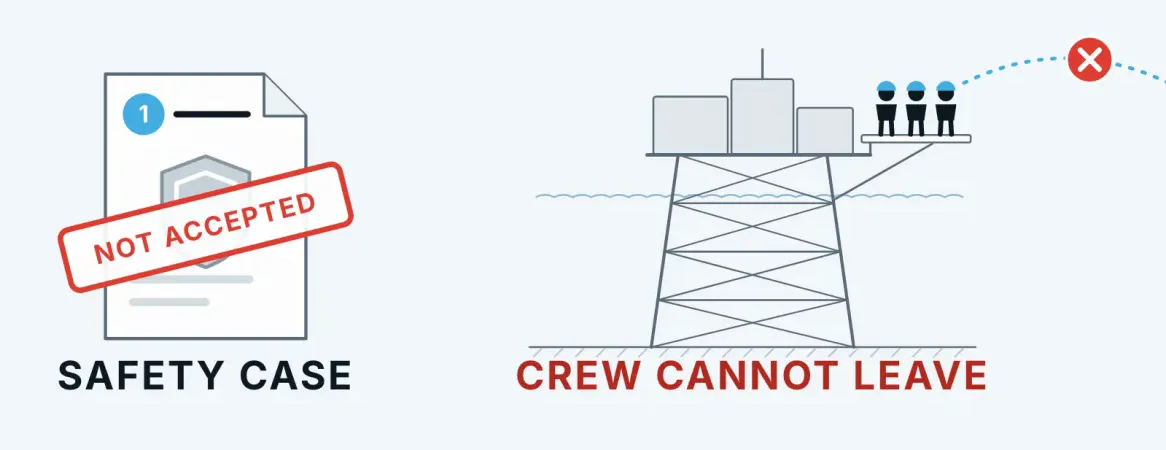
- If the UK regulator does not accept the safety case change, the crew cannot leave.
- Energy sources left on board go on a stored energy register for the removal contractor.
- The as-left condition is agreed with the removal contractor and backed by photo and video evidence.
What is disembarkation in offshore decommissioning?
Disembarkation is the final phase a manned platform goes through, as the systems are run down and the crew prepares to leave for the last time. The tasks are completed in a specific sequence and time frame, so that the platform is left in as safe a condition as possible. Some operators say down-manning for the same step.
After the final flight, the platform is unattended, with no power on board apart from autonomous systems such as the navigation aids. TAQA calls this state unattended installation mode. Another name is lighthouse mode. The lift vessel may not be available for a year or more. A disembarked platform is not the same as a normally unattended installation (NUI), which is designed to operate without a permanent crew.
Every day between cessation of production (CoP) and disembarkation costs money with no income from oil. TAQA calls this window oil to exit, and aims to keep the window as short as possible.
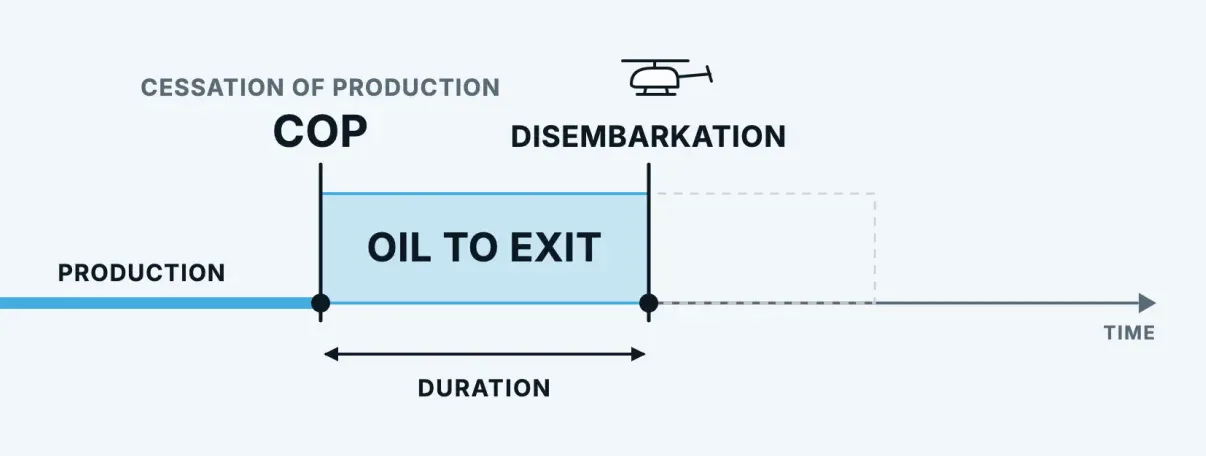
Once the crew has gone, maintenance can focus only on the areas the return crew will use, such as the accommodation, hook-up points, cutting locations, the routes between them and the escape routes. One operator described in the Lean Decom training saved over £46 million in operating costs on one asset with this minimal manning approach.
Where does disembarkation sit in the decommissioning process?
For a manned fixed platform, the main stages follow a broad order, and the stages overlap. Final disembarkation is the last step while the platform is manned, before the removal contractor arrives.
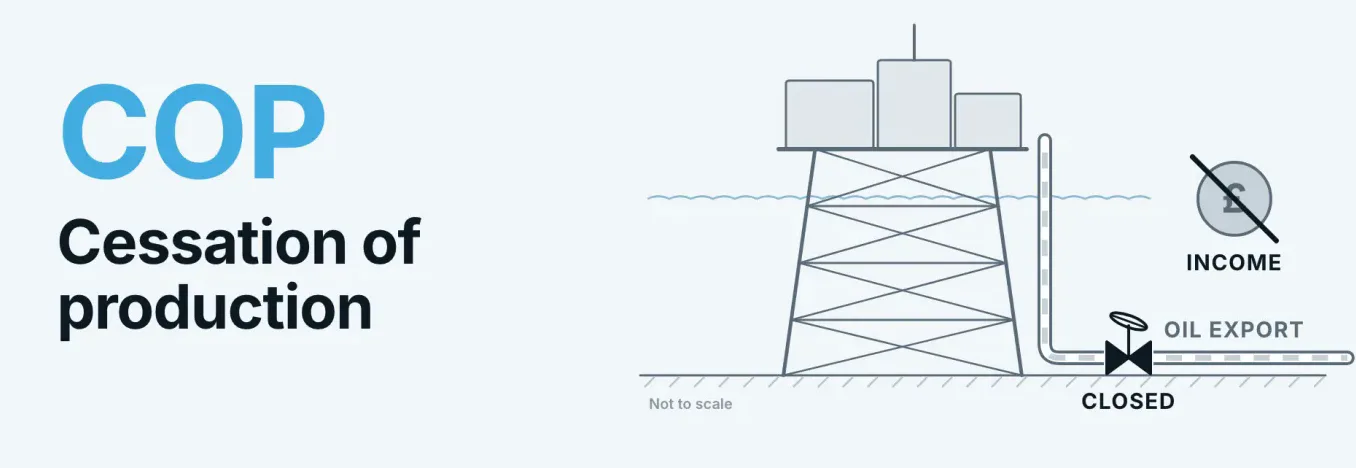
Cessation of production
Production stops, usually by closing the relevant valves. In the UK, the licensee must notify the North Sea Transition Authority (NSTA) within 14 days. In the case studies in the training, all costs after CoP are decommissioning costs.
De-energisation
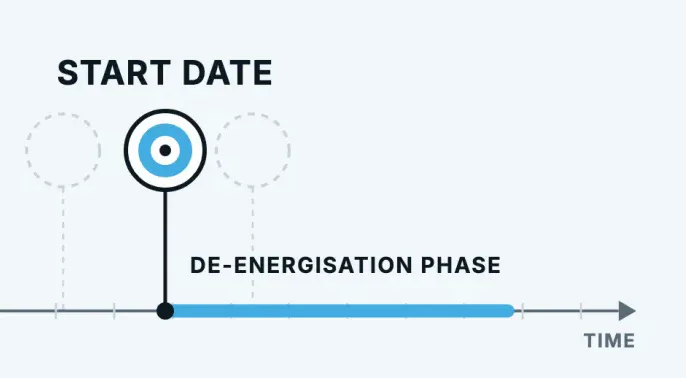
Every significant source of energy is identified, removed or neutralised. The phase typically runs from CoP to final disembarkation.
Engineering down and clean
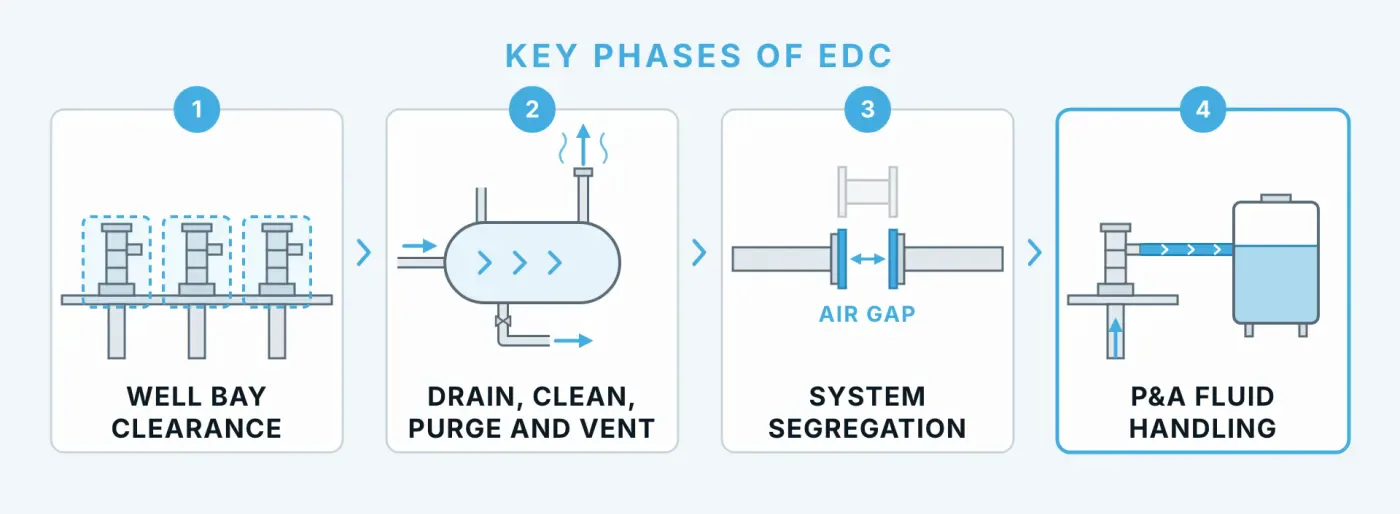
Bulk hydrocarbons, chemicals and hazardous energy are removed in four key phases, leaving the topside inert. The last cleaning cannot finish until the wells are complete.
Final disembarkation
The final departure phase ends with the last flight. The platform is left unattended, in a condition agreed with the removal contractor.
Heavy lift and removal
A crew returns to make the platform safe to work on, and the removal contractor removes the topside, then the substructure. See topside preparation and removal.
What must be done before a platform can be disembarked?
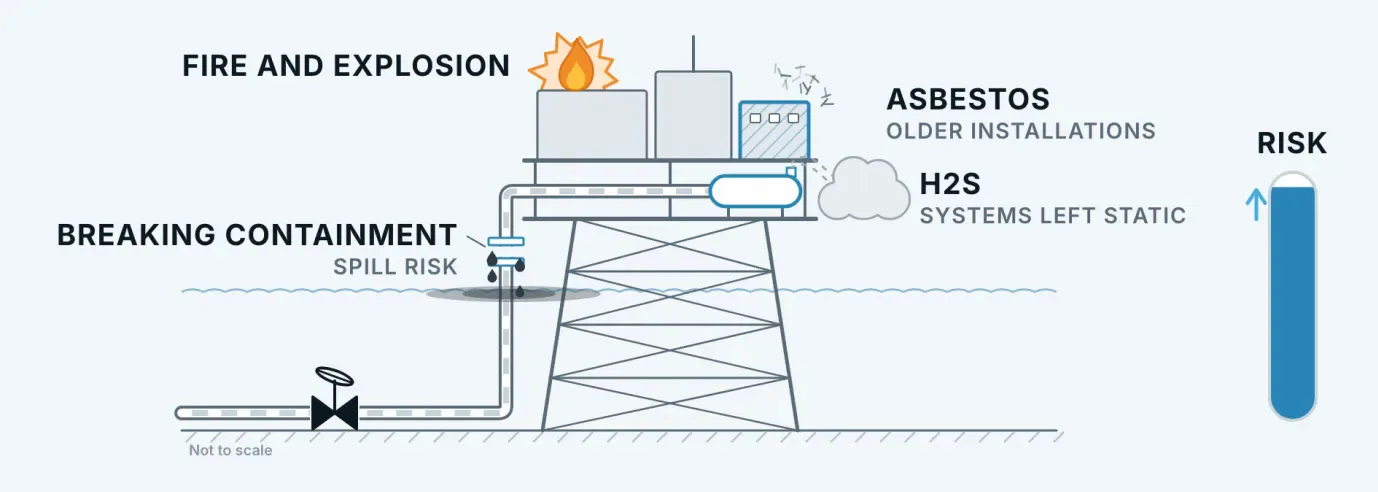
An asset cannot be safely left unattended until every significant source of energy has been de-energised or controlled, and the record of that work is ready for the next party.
Energy sources and hazards to deal with
The stored energy register lists every energy source left on the platform after disembarkation. The Completions Assurance Package records how all hydrocarbons and stored energy were dealt with, and goes to the heavy lift contractor. Not every source is obvious: the passenger lift is not on a piping and instrumentation diagram (P&ID).
Enabling modifications
On the Tern Alpha platform, power demand fell from approx. 20 MW to approx. 3 MW after CoP. Temporary power replaced a large gas turbine: more stable at low load, and far less diesel.
Systems that become critical
Cranes, diesel and seawater systems matter more than ever. Review cranes well ahead of P&A, and keep the perimeter walkways safe for re-embarkation.
Gas monitoring
After flushing and purging, pipework is tested for a flammable atmosphere. There is no industry-wide acceptance criterion, so each company typically sets one.
What are the goals of disembarkation?
Safe and controlled
The duty of care is to the people on board, right to the end.
Systems de-energised
De-energisation is complete before the last crew leaves.
An agreed as-left status
The platform is left in a status agreed with the removal contractor, and is safe for the contractor to return to.
Compliant, and ready for a return
The unmanned installation complies with the regulations. Camp beds and food stay on board, because a crew that returns to a cold platform with no power may need to stay overnight.
How long does disembarkation take?
The final departure phase can be as long or as short as the operator likes. On the TAQA disembarkations described in the training, the phase tended to take between 14 and 30 days.
The main factor is where the removal preparation happens. Platform-based preparation is done while the platform is still manned. Vessel-based preparation is done after disembarkation, as part of the removal campaign.
Which documents must be updated before disembarkation?
Five key documents are updated in the UK during the final departure phase. The safety case comes first, because without acceptance by the regulator the crew cannot leave. Other countries have their own documents and approvals.
| Document | Why the document changes |
|---|---|
| 1. Safety case | Performance standards and safety critical elements must match a de-energised, unattended platform. UK regulations require a material change to reach the regulator at least three months ahead, unless the regulator sets a shorter period. Until the regulator accepts the change, the crew cannot leave and safety critical elements cannot be modified. |
| 2. Consent to Locate | A UK consent under Part 4A of the Energy Act 2008, with conditions on navigation marking. With no platform power, autonomous navigation aids are installed and commissioned before departure, and the consent is changed to allow them. |
| 3. Marine licence and chemical permits | Cover any discharges during the final departure phase. |
| 4. Active waste management plan | Keeps decommissioning waste separate from operational waste. A mix-up, even an innocent one, can lead to regulatory complications. |
| 5. Oil pollution emergency plan (OPEP) | Updated for the reduced hydrocarbons on board, ahead of unattended mode. |
What does the disembarkation procedure cover?
The procedure runs down the platform workstream by workstream, in sequence, as the number of people on board (POB) falls.
Platform management
- The offshore installation manager (OIM) is the voice of the platform: communication, welfare and housekeeping.
- Brief returning crews on changed muster points and escape routes.
- Keep a multi-skilled crew that can support the emergency response, and test the satellite phones.
Platform services
- Run down the food stocks.
- Shut the accommodation as POB falls, clean the cabins and secure the doors for ventilation.
- Fit netting to stop birds nesting.
Cranes, diesel and power
- Maintain the cranes, and decide which crane is de-energised first.
- Follow a diesel strategy: too little or too much diesel in the final week both cost money.
- Log batteries and generator fluids on the stored energy register. In the UK, the verifier for the UK Emissions Trading Scheme (UK ETS) visits, so that the asset can leave the scheme and relinquish the combustion permits.
Operations and maintenance
- Run down the firewater and potable water systems.
- Decommission lifeboats, radios and emergency position-indicating radio beacons (EPIRBs) as POB falls. EPIRBs are deregistered onshore.
- If the asset will be disposed of outside the UK, remove all radioactive sources, such as ionising smoke detectors, before disembarkation. Remove the refrigerant (F-gas) from the larger fridges and freezers.
Helideck, safety and medical
- Once the heli-fuel system is de-energised, helicopters can still land but cannot refuel. Tell other assets and the regulators, and provide manual firefighting on the helideck.
- Replace de-energised firefighting systems with manual extinguishers.
- Clear the medical suite early: no controlled drugs may be left. A medic stays in the final crew, and the crash bag counts towards the flight payload.
Logistics and backloading
- Agree early with vendors what rented equipment must go back. One hired generator had to be returned, and became a heavy lift in the final week.
- Hold enough tote tanks, skips and drums, but backload empties early to keep deck space.
- Plan the final deck and lift plans, with heavier lifts in good weather.
Data, records and telecoms
- Encrypt servers remotely, or drill the servers to make the data inaccessible.
- Backload waste and radiation records, and remove medical records.
- Keep communications live until the final day.
Return and contingency
- Write an essential return procedure, walk the escape routes, and site the return safety equipment.
- Group and label equipment that will fall out of certification.
- Plan for power loss, fog that stops the flights, and gaps in key skills such as a second OIM, with a backup for the backup.
What happens in the final week and on the final day?
The final week
The final week is busy and strange. Activities increase while POB falls, the accommodation modules close, and the canteen is restricted as perishable goods run down. Access and egress routes change. The platform feels emptier and quieter, and the team grows closer. Platform management keeps morale up and looks out for everyone.
The final day
The last systems are run down: the firewater and potable water systems are de-energised, and the utility systems are flushed from top to bottom. The final lifts clear the containers from the deck, in sequence, because the backloads must be complete before the crane is de-energised.
After the final flight
TAQA brings the final crew together to capture lessons from the final 48 hours: what went well and what could improve next time. The meeting is also a celebration, so that the crew can leave the asset with a feeling of pride.
With the final flight on deck, the final crew walked back through a semi-lit platform to find an alternative emergency shutdown button. Everyone left safely. Contingency plans now cover the case where the emergency shutdown button does not work.
Get your information pack
Course details and free sample lessons, emailed to you.
How does the heavy lift contractor interface work?
The platform must be left in an as-left status agreed with the removal contractor. Agreeing that status early, and verifying the status together, avoids commercial variations later.
Survey and walk-around
Before the final departure phase, the contractor surveys landing areas, access routes and where equipment should be corralled.
Punch list
During the final departure phase, the contractor checks the platform and lists items to clear before the crew leaves.
Evidence and handover
The crew works through the list and sends photo or video evidence for the handover package, with the Completions Assurance Package and stored energy register.
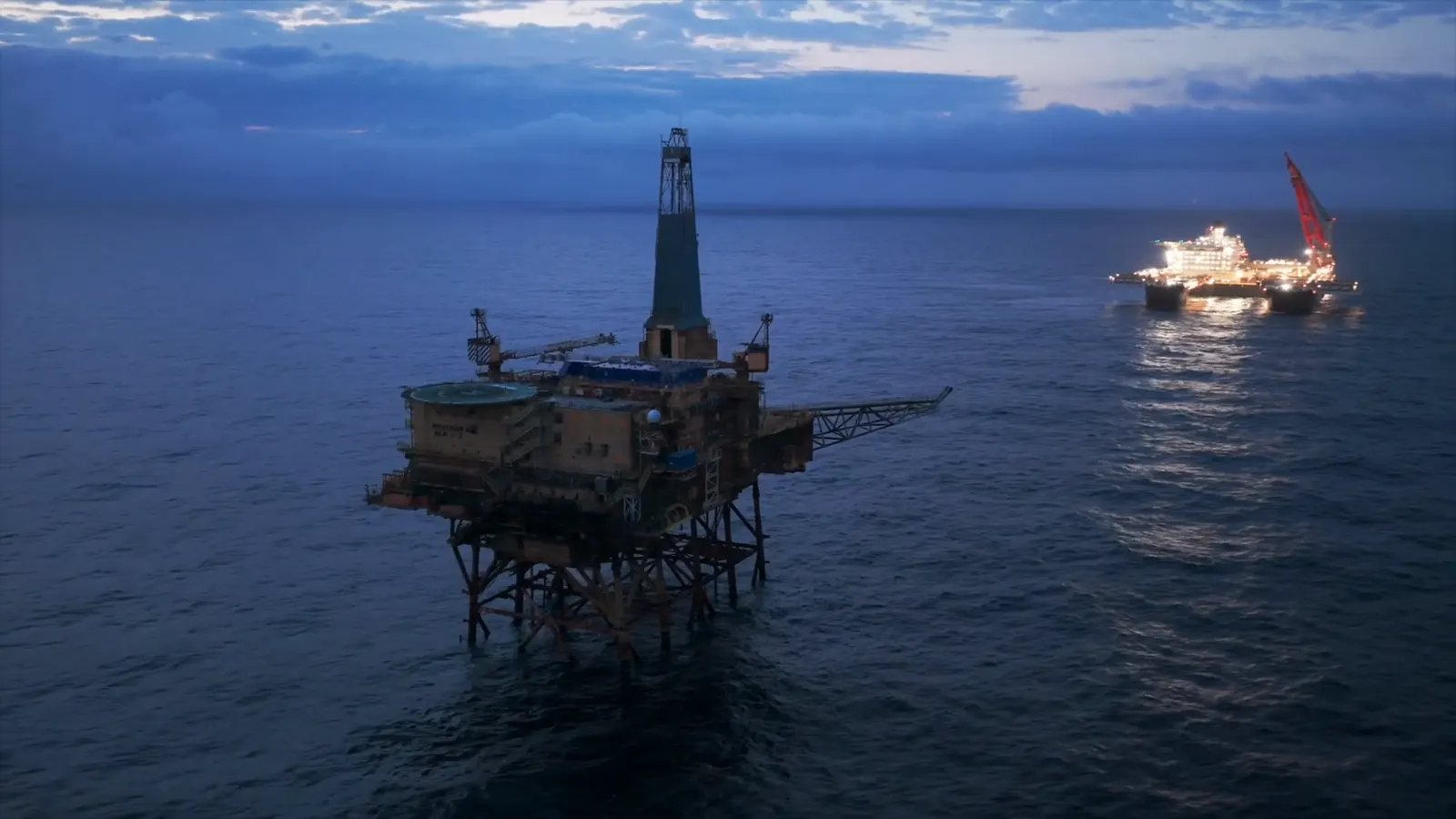
TAQA signed the Brae Bravo removal contract in 2018, before disembarkation. On board, the contractor spotted scaffold boards sitting on top of gratings, which took two months to remove while the crew was still on the platform. With the vessel alongside, the same work would have been a significant added expense.
What lessons have been learned from platform disembarkations?
The lessons below come from the TAQA platform disembarkations and from the Brae Bravo removal.
Book specialist vendors early
Service providers are used to fitting in with operating platforms. In disembarkation, vendors must fit your timeline, and diaries fill up.
One voice from the contractor
Different contractor representatives asked for different areas to be cleared. Agree one plan, with no deviation, whoever visits.
Keep critical consumables
Some consumables were backloaded too early, and a batch had to be sent back in the final week, which delayed activities.
Be ready for a moving start date
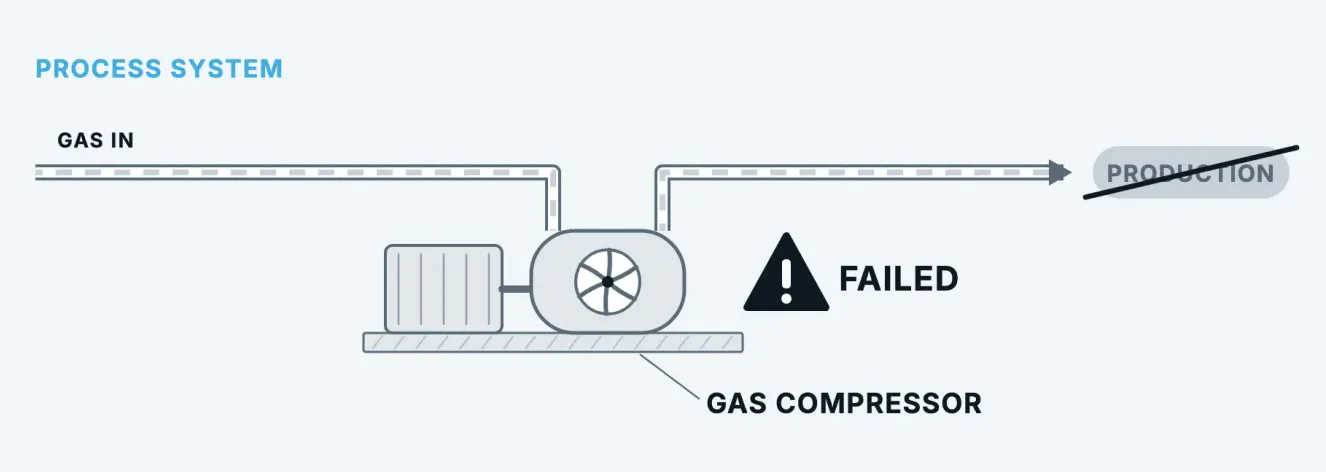
Well P&A may finish early, or a gas compressor failure may end production suddenly. Be ready to start de-energisation straight away.
Deter nesting birds
Birds nesting on an unmanned platform can delay removal. In the UK North Sea, disturbing nesting birds needs a licence, applied for in advance. Fit deterrents before the crew leaves.
Site the navigation aids with care
On Brae Bravo, the shadow of the exhaust stack fell across the solar panels of the navigation aid, which ran out of power in the later winter months. TAQA had to put a guard vessel in place.
Disembarkation in the Lean Decom training
The training follows the platform from cessation of production to the last flight, taught by specialists from TAQA and Nexos, with lessons from five platform disembarkations. Each module is online and video-based.
Final Disembarkation
The documents, the procedure, the final week and day, and the lessons from five disembarkations.
De-energisation of Offshore Installations
Finding and dealing with every energy source, and the record handed to the contractor.

Engineering Down and Clean
The four phases of EDC, and the facilitation projects that support them.
Explore the training options →
Job titles and organisations are as given in the training.
Disembarkation terms
- Disembarkation
- The final departure of the crew from a manned offshore platform, after which the platform is unattended.
- Final departure phase
- The run-down period that ends with disembarkation.
- Unattended installation mode (lighthouse mode)
- The state of a platform after final disembarkation: no crew and no platform power. Not the same as a normally unattended installation (NUI), which is designed to operate without a permanent crew.
- Cessation of production (CoP)
- The permanent end of production from a field or installation.
- Oil to exit
- The TAQA term for the time from cessation of production to final disembarkation.
- Stored energy register
- A record of every energy source left on the platform after disembarkation, handed to the removal contractor.
- Completions Assurance Package
- The TAQA record of how all hydrocarbons and stored energy on the platform were dealt with.
- Consent to Locate
- A UK consent under Part 4A of the Energy Act 2008, with conditions on the navigation marking of an offshore installation.
- Essential return
- The TAQA term for a return to a platform after disembarkation. The return is risk assessed and follows a written procedure.
Sources and further reading
- Lean Decom training: Final Disembarkation (Gemma Douglas, TAQA) and De-energisation of Offshore Installations (Mark Wilson, TAQA).
- Lean Decom training: Engineering Down and Clean (Nigel Melling, Nexos), Topside Removal: Brae Bravo case study (Kevin McSweeney, TAQA), Substructure Removal and Onshore Demolition (Malcolm McCombie, TAQA), Decommissioning Overview (Will Black and Ean Paul, EnQuest), Safety and Risk Management (Graham Skinner, OEUK), Permitting Lessons Learned and Efficiency Strategies (Gareth Jones, Xodus) and Offshore Oil and Gas Infrastructure and Locations (Lean Decom).
- The Offshore Installations (Offshore Safety Directive) (Safety Case etc.) Regulations 2015, regulations 20 and 24. legislation.gov.uk
- Offshore Petroleum Regulator for Environment and Decommissioning (OPRED): Oil and gas: offshore environmental legislation (Energy Act 2008, Part 4A, Consent to Locate). gov.uk
- North Sea Transition Authority (NSTA): Cessation of Production. nstauthority.co.uk
Disembarkation and the decommissioning process: common questions
What is the decommissioning process for an offshore platform?
For a manned fixed platform, the main stages are cessation of production, well plug and abandonment, de-energisation, engineering down and clean, final disembarkation, then topside removal, substructure removal and onshore disposal. The stages overlap.
What must be done before the crew can leave a platform for the last time?
The wells are plugged and abandoned, every significant energy source is de-energised or controlled, the hazards that remain are recorded on a stored energy register, and the as-left condition is agreed with the removal contractor. In the UK, the regulator must also accept the change to the safety case.
What is disembarkation in offshore decommissioning?
Disembarkation is the final departure of the crew from a manned offshore platform. Systems are run down in a set sequence, the platform is left in a condition agreed with the removal contractor, and the platform stays unattended until the removal contractor arrives.
How long does platform disembarkation take?
The final departure phase can be as long or as short as the operator chooses. On the TAQA platforms described in the training, the phase took 14 to 30 days. The length depends mainly on whether removal preparation is done while the platform is manned, or from a vessel after disembarkation.
What documents must be updated before disembarking a platform?
In the UK, five: the safety case, the Consent to Locate, the marine licence and chemical permits, the active waste management plan, and the oil pollution emergency plan. A material change to the safety case must reach the regulator at least three months ahead, unless the regulator sets a shorter period.
What is lighthouse mode on an offshore platform?
Lighthouse mode is a name for a platform left unattended after final disembarkation. There is no crew and no platform power, and autonomous navigation aids mark the platform for shipping. TAQA calls the same state unattended installation mode.
Related topics

Get your information pack
Course details and free sample lessons, emailed to you.
Learn disembarkation from the people who have done the work
Lean Decom is a specialist decommissioning training provider. The training shares lessons from North Sea projects, taught by 18 specialists, for you to apply to your own work.