
Comparative Assessment and Derogation in Offshore Decommissioning
In the UK, comparative assessment (CA) is how an operator decides, and shows the regulator, whether a pipeline or structure should be fully removed, partly removed or left in place.
in the UK comparative assessment process, from scoping and screening to the CA report.
Lean Decom trainingsafety, environmental, technical, societal and economic.
OPRED Guidance Notes, November 2018in air: above this weight, the footings of a steel installation placed before 9 February 1999 may be considered for a derogation.
OSPAR Decision 98/3of installation where a derogation may be considered: steel installations over 10,000 tonnes in air, gravity based concrete, floating concrete, and concrete anchor bases.
OSPAR Decision 98/3What is comparative assessment in decommissioning?
In the UK, comparative assessment (CA) is the structured process an operator uses to compare decommissioning options, such as full removal, partial removal and leave in situ. A CA is required for all pipelines and for any installation that may qualify for a derogation under OSPAR Decision 98/3. Options are compared against five criteria: safety, environmental, technical, societal and economic. The recommendation is set out in a CA report that supports the decommissioning programme.
Where this applies: Comparative assessment and derogation are terms from the UK and the OSPAR maritime area (the North-East Atlantic). OSPAR Decision 98/3 covers installations, not pipelines. Other countries have their own regulator, rules and terms.
Key points
- In the UK, a CA is required for all pipelines and for any derogation candidate.
- Options are compared against five criteria, plus any sub-criteria.
- The usual outcomes are full removal, partial removal or leave in situ.
- OSPAR Decision 98/3 prohibits leaving disused installations wholly or partly in place in the North-East Atlantic, except where a derogation is granted. The Decision does not cover pipelines.
- In the UK, a derogation case rests on a comparative assessment that includes full removal.
- The UK does not have a rigs to reef programme.
Why is comparative assessment needed?
UK policy is that decommissioning should aim to achieve a clear seabed, while accepting that a clear seabed will not always be achievable. Much of the North Sea infrastructure was installed over the last 50 years without thought for how the infrastructure would one day be removed.
Operators who believe they cannot remove all of the subsea infrastructure, and want to explore partial removal or leaving pipelines or stabilisation materials in situ, must go through the comparative assessment process. The CA shows, with evidence, how the preferred option was identified.
Each project is considered on a case-by-case basis. There are subtle differences between projects, even where the projects look the same on the surface.
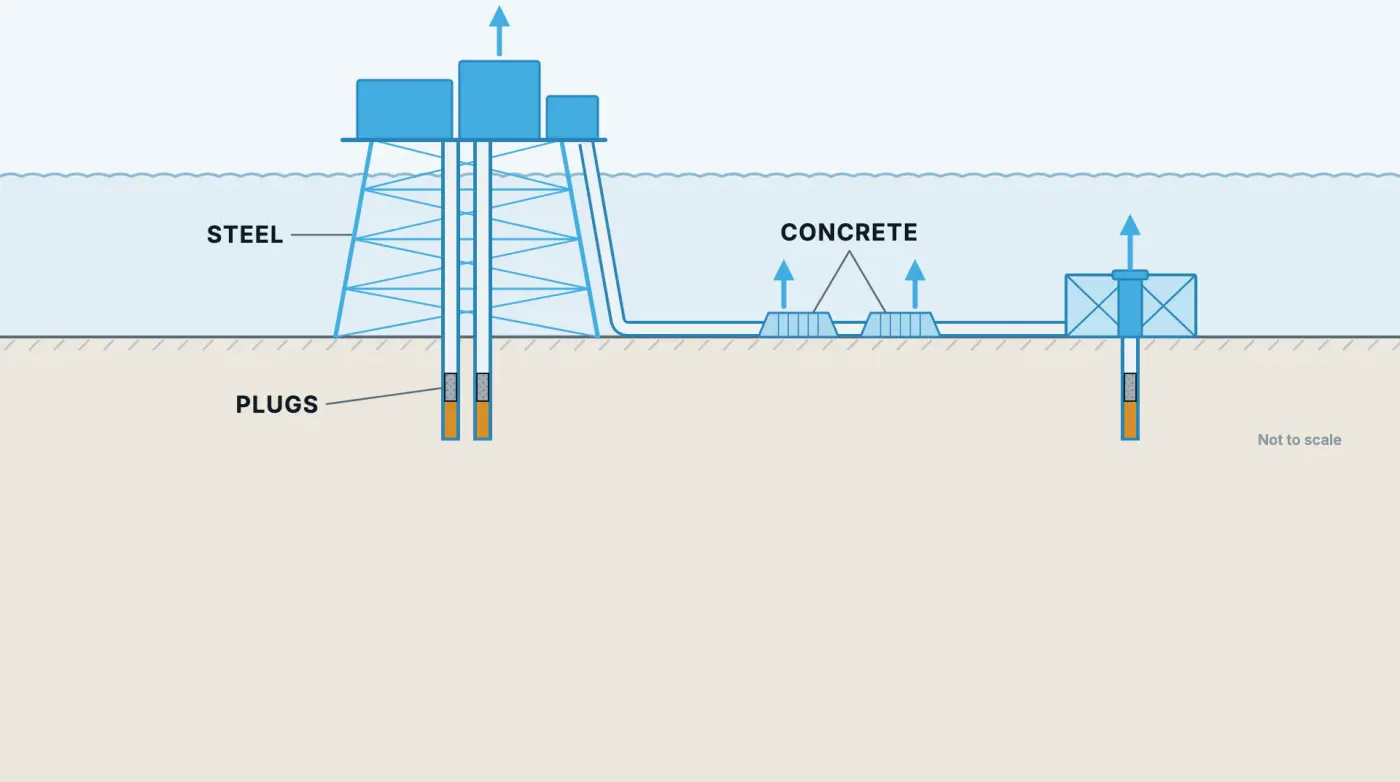
Leaving an item, such as a pipeline, in place after decommissioning. A pipeline may be left in situ if, for example, the pipeline is clean and buried to a certain depth below the seabed. The OPRED Guidance Notes expect burial to at least 0.6 m above the top of the pipeline in most cases.
Under Regulation 14 of the Pipelines Safety Regulations 1996, a pipeline that is no longer used must be left in a safe condition, and the work to make the pipeline safe must be done safely.
When is a comparative assessment needed?
The OPRED Guidance Notes make a comparative assessment mandatory in two cases: all pipeline decommissioning, and any installation that is a potential OSPAR derogation candidate. An installation that is fully removed needs no comparative assessment.
Every pipeline in the field
The pipelines in a field are all comparatively assessed so that the correct decommissioning option is selected. If a pipeline can be fully removed, full removal is the solution.
Mattresses and grout bags
Material placed over pipelines during the operating life, for example after spans, storms or snagging. The default is removal. A proposal to leave material in situ needs a CA, with evidence that the material will not be a snagging hazard. Where rock has been placed over a pipeline, the guidance generally assumes that the rock and the pipeline stay in place.
Derogation candidates
Heavy steel jacket footings and concrete gravity base structures may be left in place only through the derogation process. The CA follows Annex 2 of OSPAR Decision 98/3, with full removal as the base case.
How does the comparative assessment process work?
The training describes the UK comparative assessment as a seven-stage process, from scoping and screening the possible methods to a recommendation in a CA report. The main steps set out in the training are below.
Scoping and screening
Identify what is being assessed, such as pipelines or stabilisation materials, and the possible decommissioning methods for each item.
Shortlisting the options
Reduce the methods to a short list of options to take into the assessment. For a pipeline, the OPRED Guidance Notes suggest a short list of approx. five options.
Preparing the evidence
Prepare the evidence for each option against the five criteria: safety, environmental, technical, societal and economic.
Evaluation workshop
Bring stakeholders into a workshop, present the options and compare each option against the five criteria and any sub-criteria.
Recommendation and CA report
The process produces a recommendation, which may be an approach other than full removal. The recommendation is presented in a comparative assessment report, which supports the decommissioning programme.
Steps as described in the training: Xodus, Comparative Assessment. Option screening and detailed assessment for pipelines are also set out in Annex A of the OPRED Guidance Notes.
The OPRED Guidance Notes ask for assessments based on evidence, using existing data where possible. For a derogation candidate, the studies and the assessment process are subject to independent expert verification. For a pipeline that is not complex, a peer review is normally accepted.
What criteria are used in a comparative assessment?
In the UK, every option is compared against the same five main criteria. Sub-criteria can be added within each criterion to suit the project.
| Criterion | Matters to be considered |
|---|---|
| Safety | Risk to personnel, risk to other users of the sea and risk to those on land. |
| Environmental | Marine impacts, emissions to the atmosphere, energy and resource consumption, and cumulative effects. |
| Technical | The risk of major project failure. |
| Societal | Fisheries impacts, amenities and communities. |
| Economic | The cost of each option. |
For a derogation candidate, the OPRED Guidance Notes set no outright hierarchy between the criteria, although balancing the safety and environmental impacts is clearly important. The operator starts from a default position of complete removal. Cost alone is unlikely to be accepted as the deciding factor, unless all other matters show no significant difference.
Comparative assessment and derogation are UK and OSPAR terms. A global reference is the 1989 IMO Guidelines and Standards for the Removal of Offshore Installations and Structures. The IMO guidelines call for a case-by-case evaluation that covers other uses of the sea, the marine environment, and the costs, technical feasibility and risks of injury to personnel of removal.
What are the decommissioning options for pipelines and structures?
A UK comparative assessment usually weighs three outcomes. The outcome chosen for each element is recorded in the decommissioning programme.
Full removal
The item is recovered completely. Full removal is the starting position, and the solution wherever the item can be fully removed.
Partial removal
Part of the item is recovered and part remains, for example the upper part of a jacket recovered with the footings left in place under a derogation.
Leave in situ
The item stays in place after cleaning, for example a pipeline that is clean and buried to a certain depth. Leaving in situ brings long-term monitoring duties.
What happens to anything left behind?
If infrastructure is left on the seabed, the decommissioning programme must show how the operator will manage the residual risk. For a pipeline left in place, the operator must show the pipeline poses no risk to fishing, with regular monitoring for spans and corrective work where needed. A jacket base left in place is monitored in the same way.
Surveys after the work can include a multibeam survey to confirm the seabed is clear, or an over-trawl survey to confirm there is no snagging risk. OPRED also encourages operators to take part in the Fisheries Legacy Trust Company, which helps make sure legacy seabed items are recorded and communicated to fishermen and other sea users. Under the OPRED Guidance Notes, residual liability for anything left in place remains with the owners in perpetuity.
What is a derogation under OSPAR Decision 98/3?
A derogation is a permit to leave a disused offshore installation, or part of one, in place instead of removing the installation fully. In the OSPAR maritime area, the North-East Atlantic, derogations are governed by OSPAR Decision 98/3.
Pipelines follow their own route. OSPAR Decision 98/3 covers offshore installations, not pipelines, and there is no international rule for pipelines. So the UK has its own test: every pipeline gets a comparative assessment, starting from the aim of a clear seabed. A pipeline may stay in place only where the assessment supports leaving the line, and OPRED approves the decommissioning programme. Any pipeline left in place is then monitored. Sources: OSPAR Decision 98/3 and the OPRED Guidance Notes, 2018.
OSPAR, named after the Oslo and Paris Conventions, is the regional agreement that protects the marine environment of the North-East Atlantic. OSPAR has a major influence on offshore decommissioning in the region, especially on the disposal of infrastructure or leaving infrastructure in place.
OSPAR Decision 98/3 was adopted in 1998 and entered into force on 9 February 1999. The Decision prohibits dumping, and leaving wholly or partly in place, disused offshore installations within the OSPAR maritime area, except in limited cases where a derogation may be granted. The topsides of all installations must be returned to shore.
Decision 98/3 covers installations and does not cover pipelines. In the UK, pipelines are decided case by case under the Petroleum Act 1998, using the same comparative assessment principles.
A related measure, OSPAR Recommendation 2006/5, sets out how drill cuttings piles are assessed and managed. Cuttings piles can contain hydrocarbons and drilling fluid residues, so disturbing a pile may harm the marine environment.
The UK derogation process
Heavy steel jacket footings
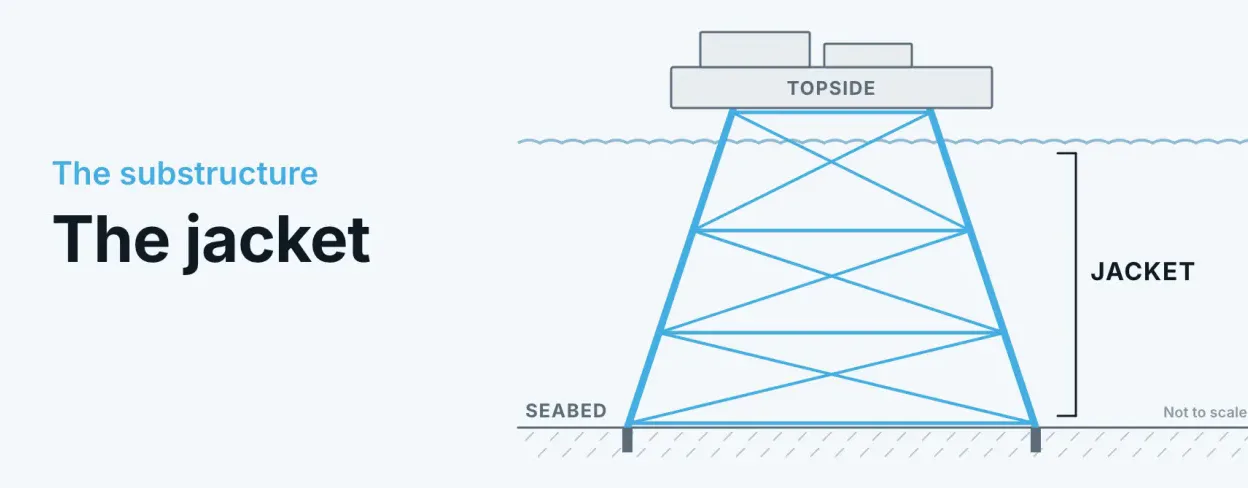
Steel jackets are usually removed in full. OSPAR Decision 98/3 allows a derogation to be considered for all or part of the footings of a steel installation that weighs more than 10,000 tonnes in air, excluding the topsides, and was placed in the maritime area before 9 February 1999. The footings are the parts below the highest point of the piles that connect the installation to the seabed. A steel installation placed after that date must be totally removed.

Concrete gravity base structures
A gravity based concrete installation may be considered for a derogation to be left wholly or partly in place. The challenges of removal are the time and cost of the work, and the waste from bringing that volume of concrete back to shore. The other categories in Decision 98/3 are floating concrete installations, and any concrete anchor base that interferes, or is likely to interfere, with other legitimate uses of the sea.
Example: separating the upper jacket of a large platform from the footings
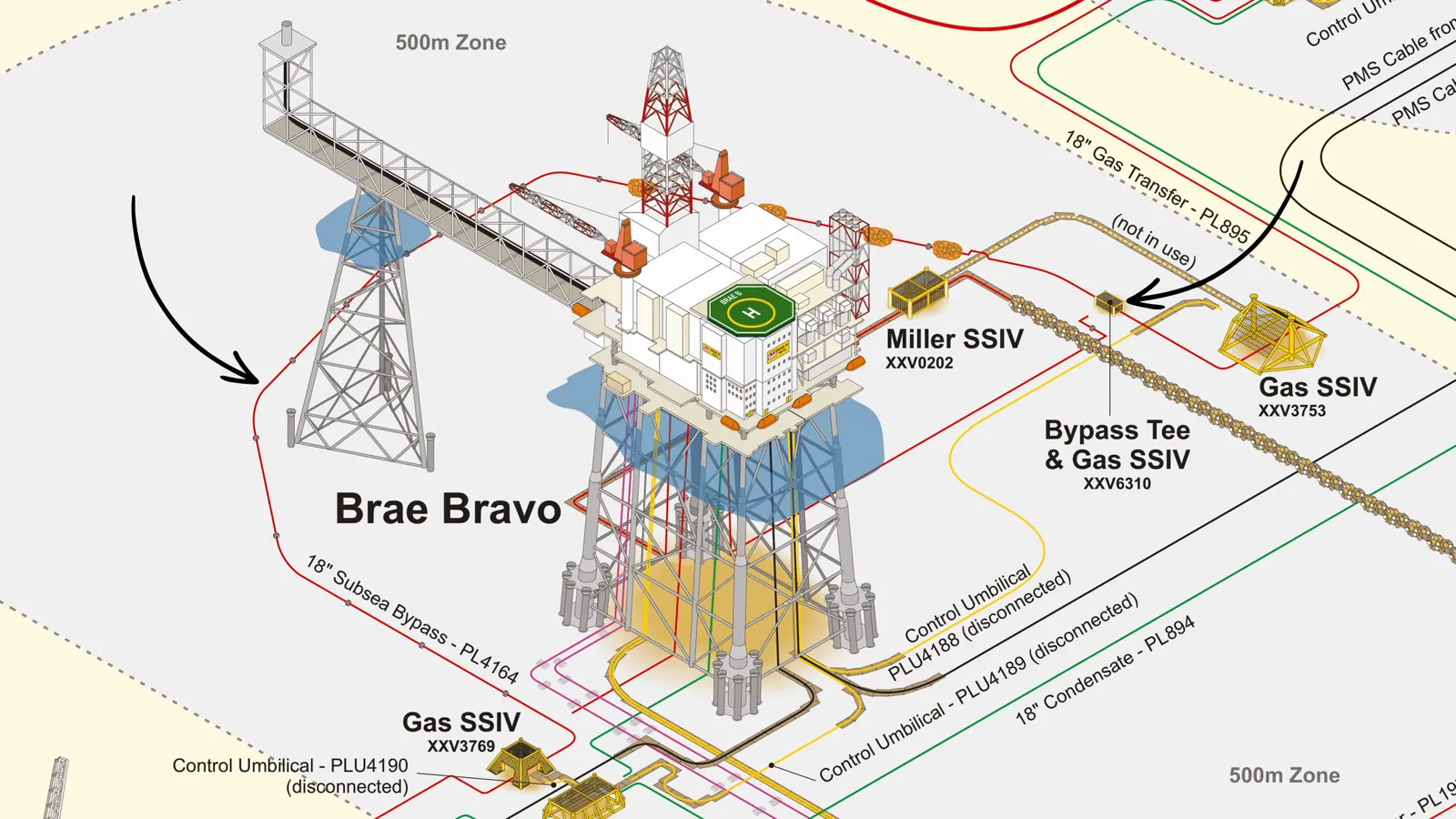
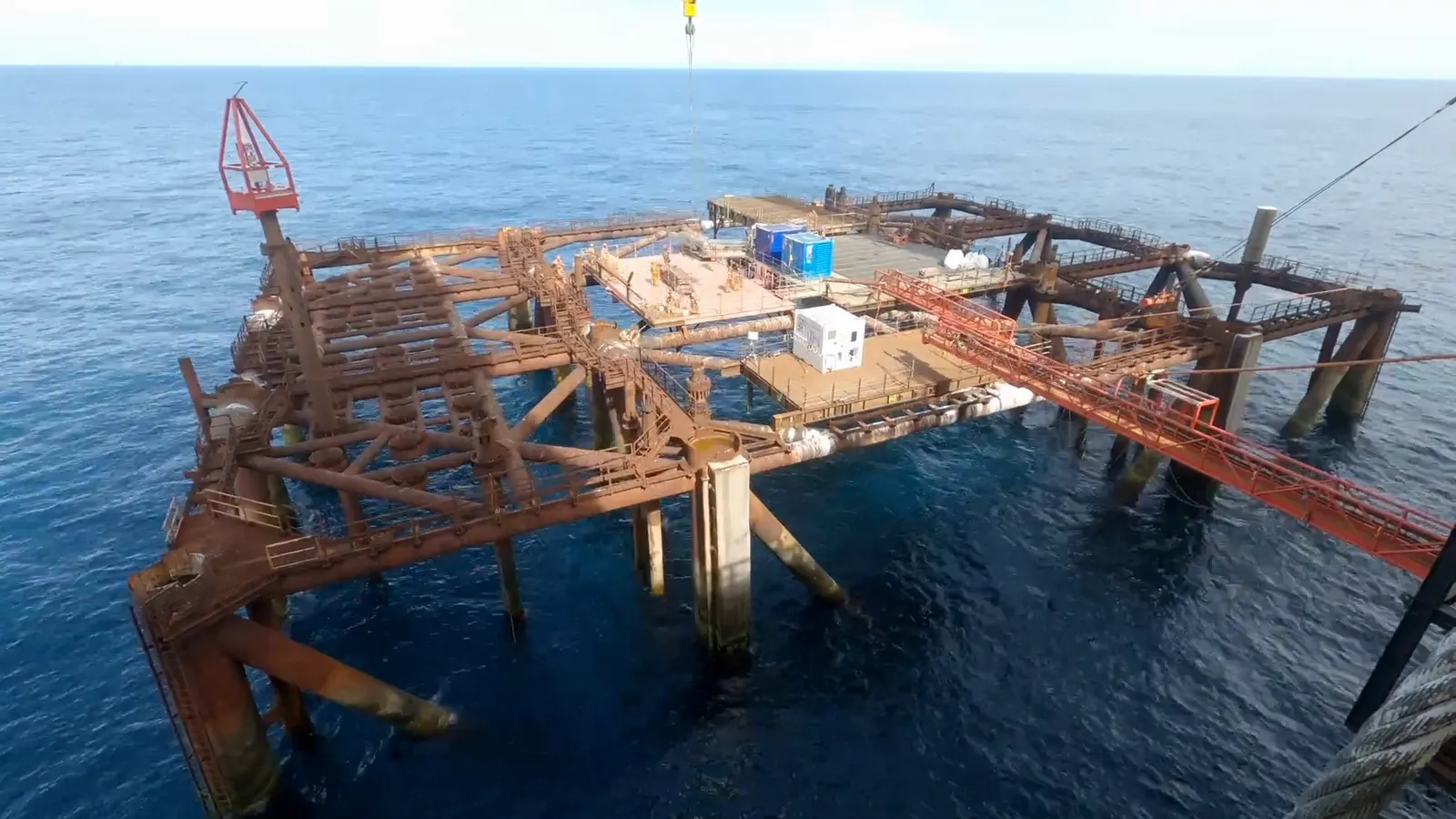
The training includes the removal of the Brae Bravo upper jacket by TAQA. The footings stay in place and are to be covered by a separate decommissioning programme.
The jacket stood in approx. 99 m of water and weighed approx. 22,000 tonnes across eight main legs. The team planned to cut the jacket at minus 61 m: approx. 70 m of structure would be removed. The cut is 38.5 m above the seabed. The lower part of the jacket, the footings, stays in place. The cut depth was set mainly by the layout of the cross bracing and the access needed for the cutting tools. Two features of the footings make removal down to the seabed difficult.
TAQA’s programme for the upper jacket was submitted without a derogation, and does not prejudice the options for the footings. A proposal to leave the footings in place for good would need a derogation. The upper jacket, 11,600 tonnes including marine growth, was lifted and taken to shore, where the jacket programme achieved over 99% recycling or reuse.

Get your information pack
Course details and free sample lessons, emailed to you.
What is rigs to reef, and is rigs to reef allowed in the UK?
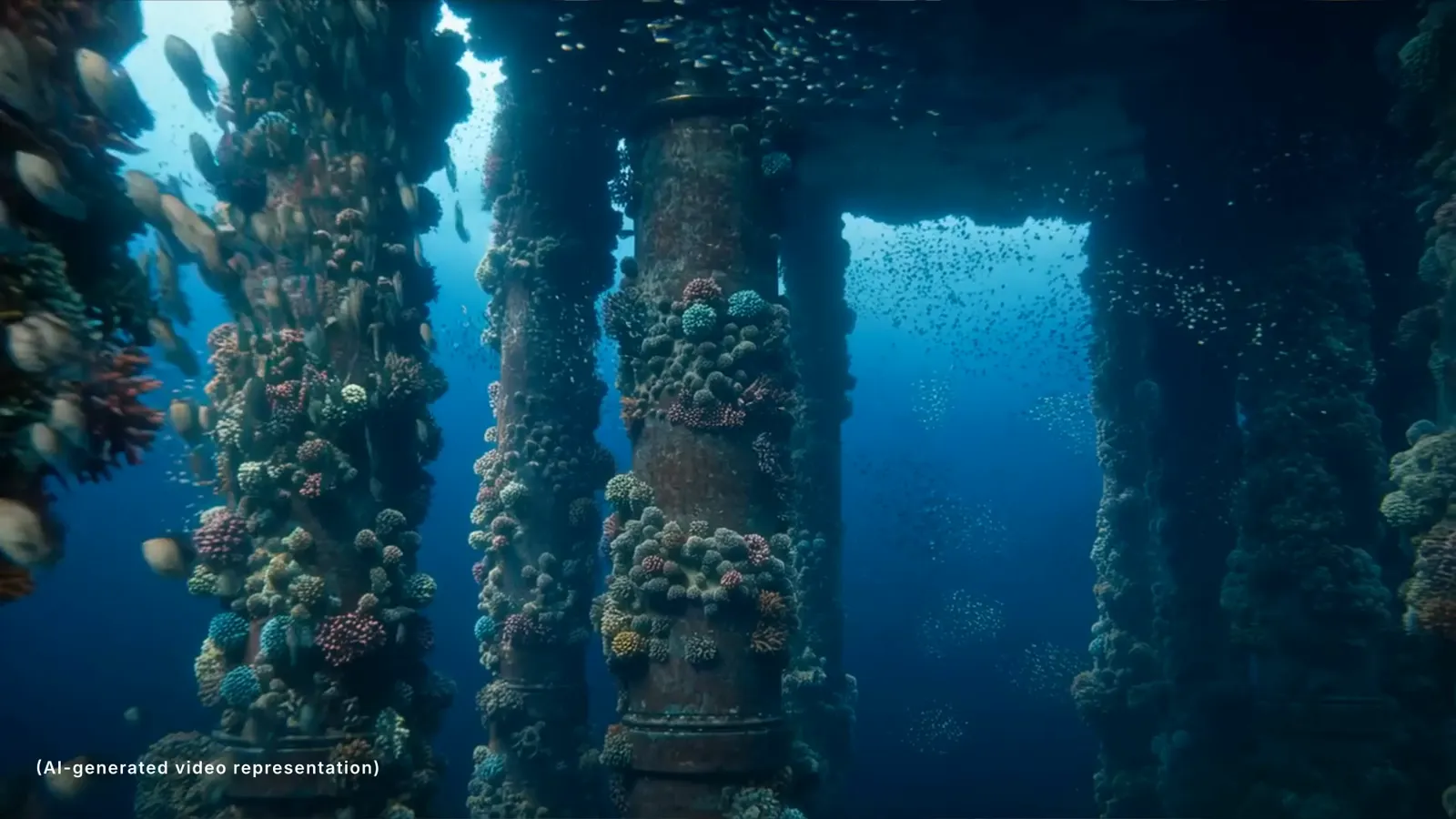
A rigs to reef programme builds a case for the environmental or social benefit of leaving part of a structure, such as a jacket, in the sea. During the operating life, a reef community can grow on the structure. Removing the platform would remove that benefit.
The benefit can be environmental, from the reef communities, or social, such as recreational fishing and diving.
The UK does not have a rigs to reef programme. In the OSPAR maritime area, Decision 98/3 prohibits leaving a disused installation wholly or partly in place unless a derogation is granted. The OPRED Guidance Notes also record that UK ministers ruled out toppling and the local or remote dumping of offshore installations.
Some regions of the world do allow rigs to reef programmes. One example is the United States, where the offshore regulator, the Bureau of Safety and Environmental Enforcement (BSEE), has a national Rigs-to-Reefs policy.
How does comparative assessment feed the decommissioning programme?
In the UK, the CA report is one of the two main supporting documents for the decommissioning programme, alongside the environmental appraisal. Stakeholders shape the result at two points.
From CA report to approved programme
The role of stakeholders
- In the CA workshop: stakeholders join the evaluation and compare the options against the five criteria.
- In public consultation: the draft programme goes to government bodies, non-governmental organisations and other stakeholders who may be affected. OPRED publishes the draft programme and the comparative assessment on GOV.UK. The operator must respond to every comment.
- Regulators: OPRED reviews the programme, and the NSTA gives input on each programme.
The full picture. The decommissioning programme page covers the OPRED roadmap from late-life planning to close-out.
Comparative assessment and derogation in the Lean Decom training
The training covers comparative assessment from the consultant who runs the process, the regulator who reviews the result, and an operator who removed the upper jacket of a large platform and left the footings for a later programme. Each module is online and video-based, so you can learn at your own pace.

The Decommissioning Programme
How a decommissioning programme supports compliant decommissioning, including consultation and comparative assessment.

Regulators and Regulations
The regulator’s role in offshore decommissioning, from the decommissioning programme to close-out.
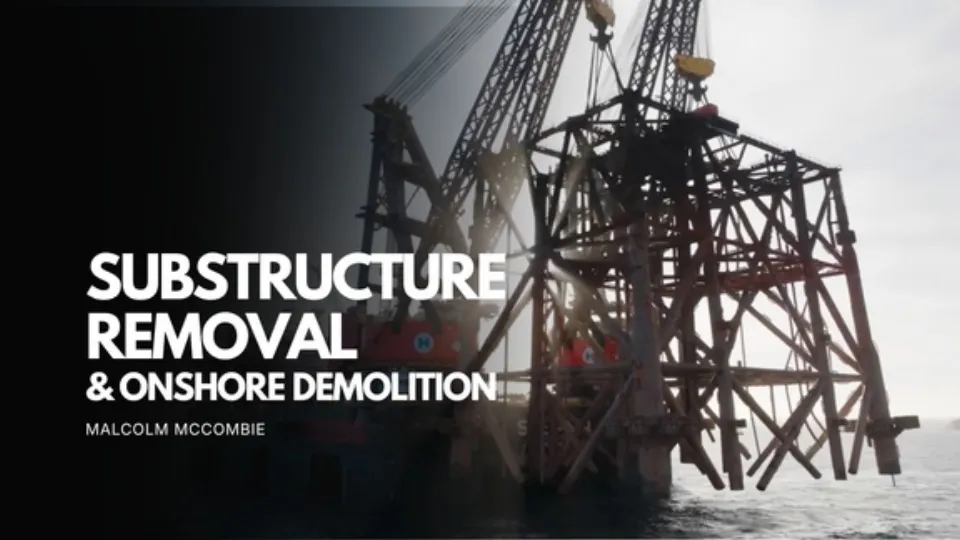
Substructure Removal and Onshore Demolition
Jacket removal planning, subsea cutting and lifting, and onshore dismantling.
Comparative assessment terms
- Comparative assessment (CA)
- A structured comparison of decommissioning options against safety, environmental, technical, societal and economic criteria. A term from the UK and the OSPAR maritime area.
- Derogation
- Under OSPAR Decision 98/3, a permit to leave a disused offshore installation, or part of one, in place instead of removing the installation fully.
- OSPAR Decision 98/3
- The 1998 OSPAR decision that prohibits dumping, or leaving wholly or partly in place, disused offshore installations in the OSPAR maritime area (the North-East Atlantic), except where a derogation is granted. The Decision does not cover pipelines.
- Full removal base case
- The option of complete removal. Every comparative assessment for a derogation candidate must include full removal, and the operator starts from a default position of complete removal.
- Leave in situ
- Leaving an item, such as a clean and buried pipeline, in place after decommissioning.
- Jacket footings
- The parts of a steel installation below the highest point of the piles that connect the installation to the seabed. Footings may be left in place under a derogation.
- Concrete gravity base structure
- A concrete platform substructure that holds position on the seabed by weight alone. One of the derogation categories in OSPAR Decision 98/3.
- Rigs to reef
- Leaving part of a structure in the sea for the benefit of the reef that has grown on the structure. The UK does not have a rigs to reef programme.
Sources and further reading
- Lean Decom training: The Decommissioning Programme module, taught by Gareth Jones, Xodus.
- Lean Decom training: Regulators and Regulations module, taught by Teresa Munro, OPRED.
- Lean Decom training: Substructure Removal and Onshore Demolition module, taught by Malcolm McCombie, TAQA.
- Lean Decom training: Subsea Infrastructure Removal and Site Remediation module, taught by Mike McHardy, DOF.
- Lean Decom training: Decommissioning Overview: Heather and Thistle case study module, taught by Will Black and Ean Paul, EnQuest.
- OSPAR Commission: OSPAR Decision 98/3 on the Disposal of Disused Offshore Installations. ospar.org
- OPRED: Guidance Notes, Decommissioning of Offshore Oil and Gas Installations and Pipelines, November 2018. gov.uk (PDF)
- IMO: Resolution A.672(16), Guidelines and Standards for the Removal of Offshore Installations and Structures on the Continental Shelf and in the Exclusive Economic Zone, 1989. imo.org (PDF)
- Bureau of Safety and Environmental Enforcement (BSEE): Rigs-to-Reefs. bsee.gov
- The Pipelines Safety Regulations 1996, Regulation 14. legislation.gov.uk
Comparative assessment and derogation: common questions
What is a comparative assessment in decommissioning?
In the UK, a comparative assessment (CA) is a structured process that compares decommissioning options, such as full removal, partial removal or leave in situ. A CA is required for all pipelines and for any installation that may qualify for a derogation. The result is a CA report that supports the decommissioning programme.
What are the five comparative assessment criteria?
In the UK, options are compared against five main criteria: safety, environmental, technical, societal and economic. Sub-criteria can be added within each criterion to suit the project.
What is a derogation in offshore decommissioning?
A derogation is a permit under OSPAR Decision 98/3 to leave a disused offshore installation, or part of one, in place instead of removing the installation fully. In the UK, the operator must carry out a comparative assessment that includes full removal. A derogation is considered only if the assessment shows significant reasons why leaving the installation, or part of the installation, in place is preferable.
What is OSPAR Decision 98/3?
OSPAR Decision 98/3 is the 1998 decision under the OSPAR Convention that prohibits dumping, or leaving wholly or partly in place, disused offshore installations in the North-East Atlantic, except in limited cases where a derogation may be granted. The Decision does not cover pipelines.
Which installations can be considered for a derogation?
OSPAR Decision 98/3 lists four categories, excluding topsides: steel installations weighing more than 10,000 tonnes in air, gravity based concrete installations, floating concrete installations, and any concrete anchor base that interferes, or is likely to interfere, with other legitimate uses of the sea. For a steel installation, only the footings may be left, and only where the installation was placed before 9 February 1999. Each case is assessed individually.
Is rigs to reef allowed in the UK?
The UK does not have a rigs to reef programme. In the OSPAR maritime area, Decision 98/3 prohibits leaving a disused installation wholly or partly in place unless a derogation is granted. Some other regions of the world do allow rigs to reef programmes.
Related topics

Get your information pack
Course details and free sample lessons, emailed to you.
Learn how decommissioning options are assessed and approved
Lean Decom is a specialist decommissioning training provider. The training shares lessons from North Sea projects, taught by 18 specialists, for you to apply to your own work.