
FPSO Decommissioning: Disconnection, Tow, Reuse or Recycling
An FPSO (floating production, storage and offloading unit) is held on station by mooring lines and connected to the wells by risers and umbilicals.
things are disconnected before an FPSO can leave station: mooring lines, risers and umbilicals.
Lean Decom trainingmooring lines held the Western Isles FPSO, in three groups of four.
Western Isles FPSO Decommissioning Programmes, 2023is the year the Hong Kong Convention on ship recycling entered into force, on 26 June. The Convention’s definition of a ship names FPSOs.
IMOmay be enough to decommission an FPSO, against 5 to 9 years for a more complex northern North Sea asset.
Lean Decom trainingWhat is FPSO decommissioning?
FPSO decommissioning is the removal of a floating production, storage and offloading unit from the field at the end of production. The risers and umbilicals are disconnected, and the mooring lines are disconnected or cut and laid on the seabed, with tugs holding the FPSO on station for the final lines. The FPSO is then towed away for reuse or recycling, and the moorings are recovered.
Where this applies: The planning steps on this page apply to moored FPSOs in any region. The case study is one FPSO in approx. 150 to 165 m of water in the UK North Sea. Water depth, mooring design and regulations differ by region and country.
Key points
- Three things are disconnected before an FPSO leaves station: mooring lines, risers and umbilicals.
- Lines are released in sequence until the mooring system is no longer storm safe.
- In one of the case studies in the training, a diamond wire saw operated by a remotely operated vehicle (ROV) cut the chains, to get the FPSO off station sooner.
- In the same case study, tugs were connected once 8 of the 12 lines were cut, with a go/no-go weather review before the last four were released.
- The tow route and timing were set by the cut risers hanging below the FPSO and by tidal windows at the destination.
- Vessel choice depends on the mooring make-up, bollard pull, deck space and chain handling equipment.
What is an FPSO, and what must be disconnected?
An FPSO (floating production, storage and offloading unit) is a floating facility that processes well fluids, stores oil and offloads the oil for export, with accommodation and utilities on board. The wells are usually not on the FPSO. The wells are on the seabed and connect to the FPSO through risers and umbilicals.
An FPSO hull may be ship-shaped or circular. A mooring system holds the FPSO in position: commonly an array of chain and rope connected to anchors on the seabed. In one of the case studies in the Lean Decom training, the FPSO has a circular hull and was moored by twelve lines, approx. 90 km northeast of Shetland, in approx. 150 to 165 m of water.
UK example: under the approved Western Isles FPSO decommissioning programme, all hydrocarbon bearing tanks were to be pumped out, flushed, purged and vented, as far as reasonably practicable, before the moorings were disconnected. The remaining subsea infrastructure was covered by a separate programme.
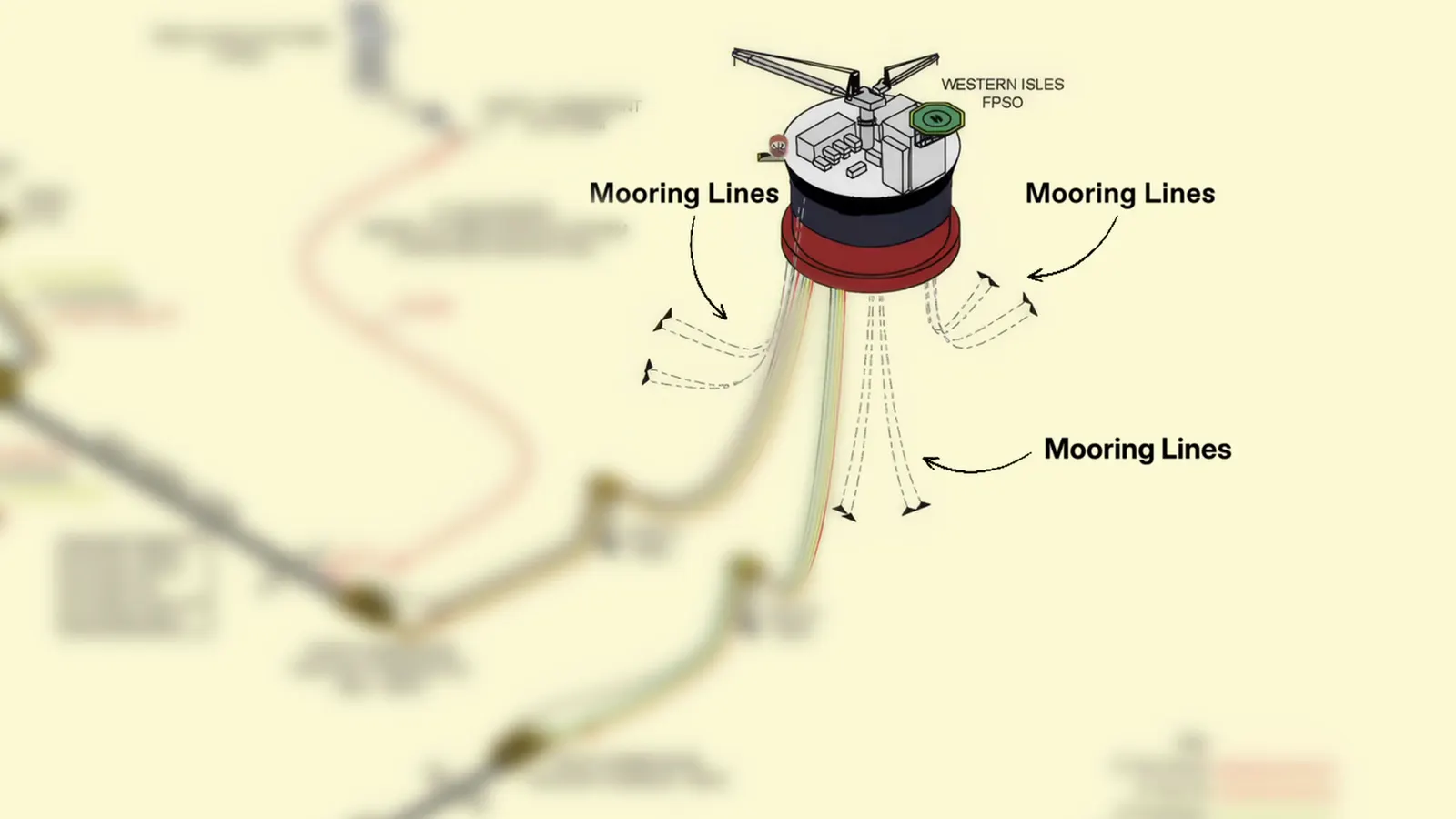
Mooring lines
The lines that hold the FPSO in place. In the case study, each line ran from top chain, through polyester rope, to bottom chain and an anchor pile.
Risers
The pipes between the seabed and the FPSO, flexible in the case study. With no reuse planned, the risers were cut below the FPSO and dropped to the seabed for later recovery. Risers for reuse would be laid down in a controlled way.
Umbilicals
Flexible bundles that can carry power cables, hydraulic lines and fibre optics. In the case study, the umbilicals were cut with the risers, for recovery with the other subsea infrastructure.
How is an FPSO removal planned?
Planning starts at tender stage, with an early look at the loads, the vessels and how much can be recovered on each trip. The steps below are typical planning steps.
Define the scope of work
Decide what goes into each package sent to the supply chain.
Engage contractors early
Early engagement helps package the scopes for cost and schedule, and shows which assets are available.
Run the analysis
Worst-case environmental loads set the bollard pull for station keeping and the tow, the minimum vessel specification and the number of vessels.
Plan the recovery capacity
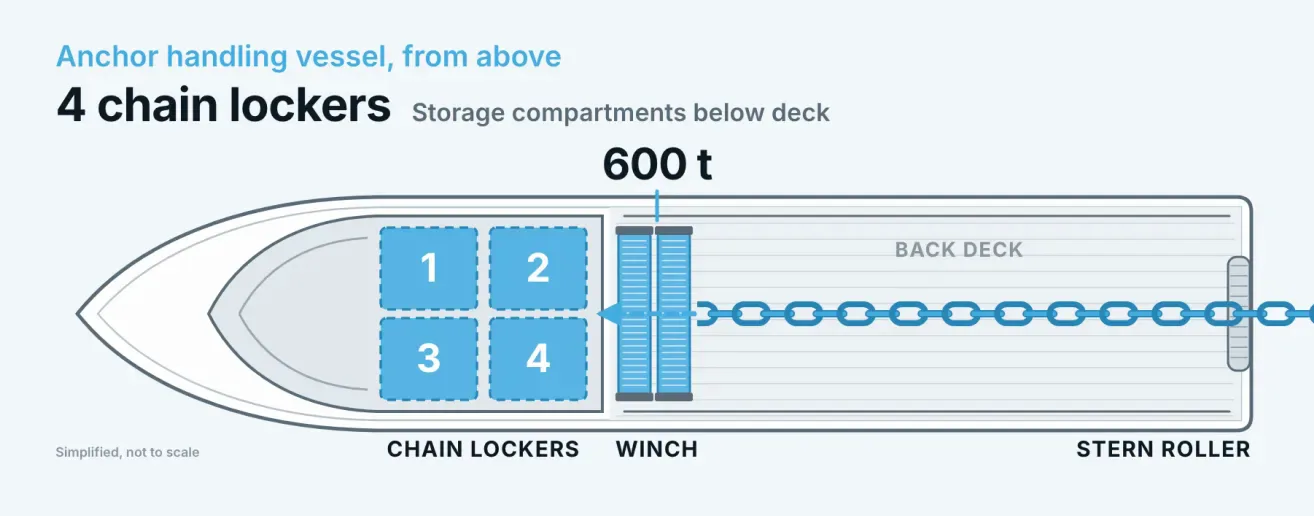
Chain locker and winch drum capacity decide how many mooring lines one trip can recover before a port call.
Order long-lead equipment
Chain gypsies for large chain may not be readily available, and procurement lead times can be long.
Agree reuse options
Mooring chain can still have a useful life, so reuse is worth agreeing with the operator during planning.
In the training, storm safe describes a mooring system that still has enough lines connected to hold the FPSO through bad weather. Once the system is no longer storm safe, station keeping vessels are required.
Where port calls are lengthy or difficult, for example because of a regional restriction, a separate vessel or barge can take recovered equipment to port. The construction vessel then stays on site and keeps recovering.
How are FPSO mooring chains prepared for disconnection?
Before the disconnection vessel arrives, the mooring system is in operational tension and the FPSO is safe for the weather conditions. The FPSO then pays out chain to the point where each line will be disconnected. In the case study, the chains were cut approx. halfway along, so the FPSO paid out most of the chain held on board.
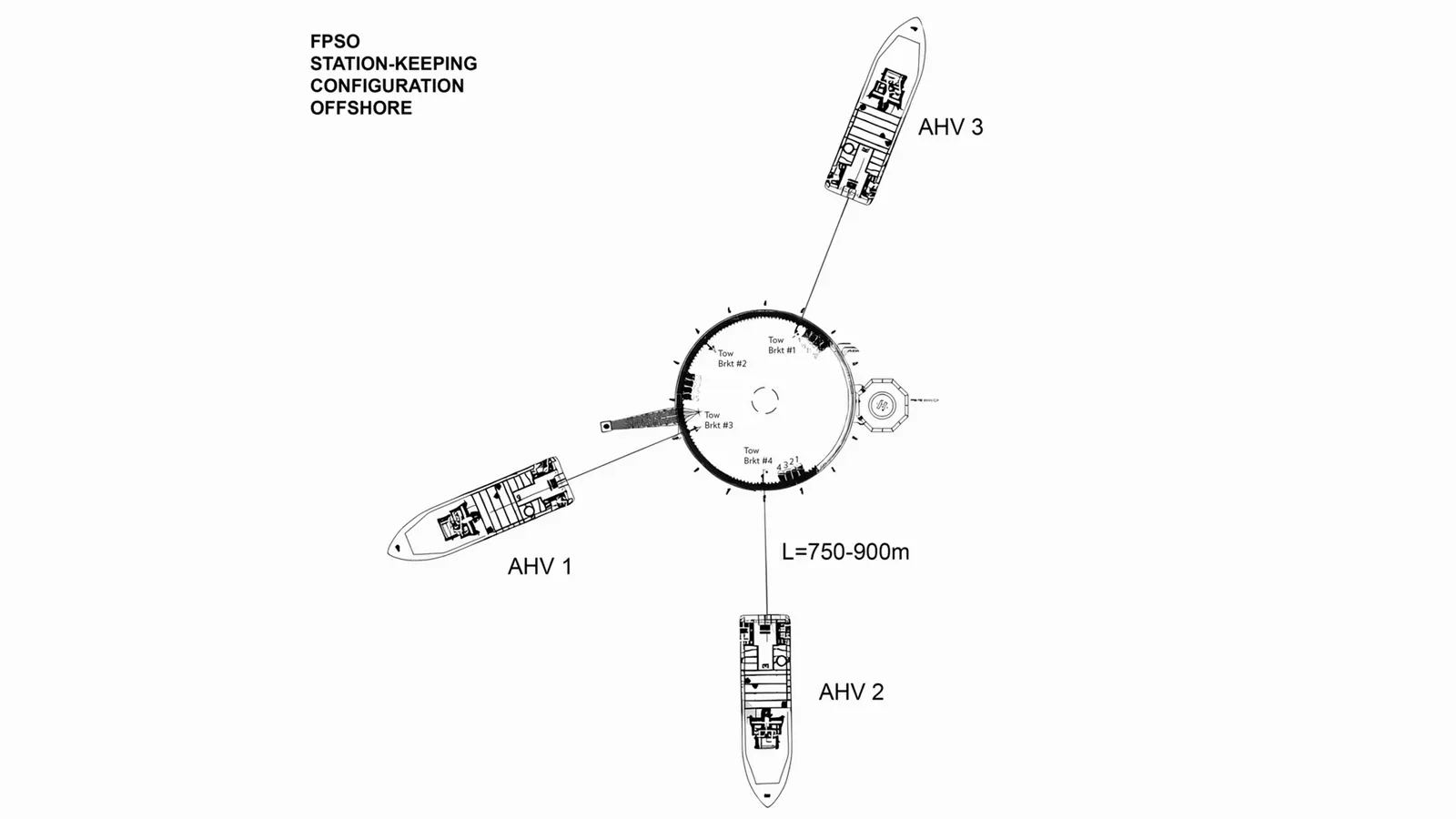
The twelve lines were in three groups of four. The lines were disconnected in sequence, one at a time on each group, working round in a circle, until the system was no longer storm safe. From that point, station keeping vessels supported the FPSO against weather or unplanned movement while the remaining lines were disconnected.
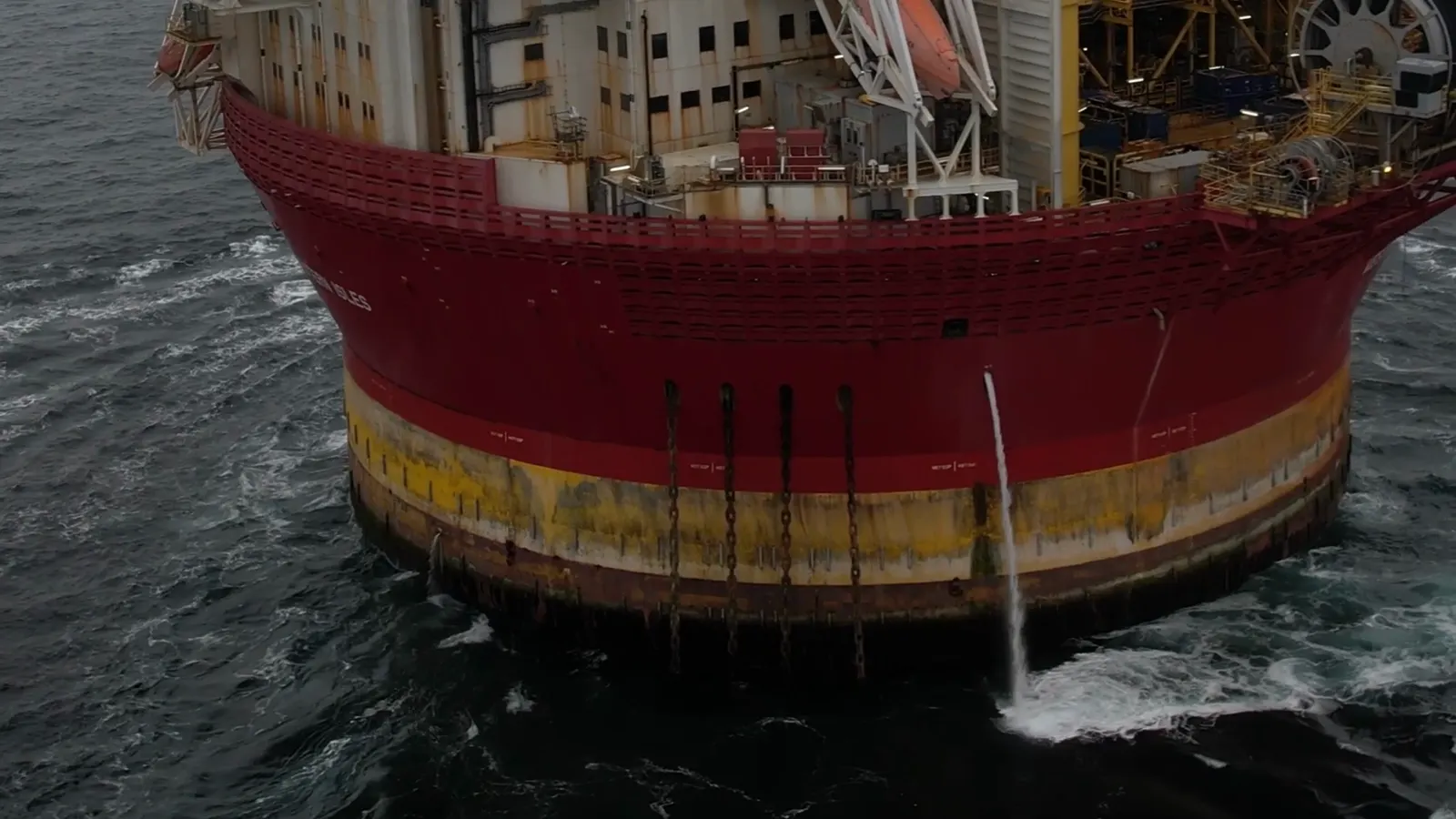
| Typical methods | Break a connection | Cut the chain |
|---|---|---|
| How | Pay out to a connection point, break the connection, lay the line down and return the rest of the chain to the FPSO | Cut the chain subsea at a pre-marked point, for example with an ROV-operated saw as in the case study, then lay the line down |
| Time | Can be very time-consuming where little top chain is available | Faster disconnection, so the FPSO leaves station sooner |
Why speed matters
Many vessels are on station during the disconnection, and every extra day adds cost for all of them. In the case study, the lines were laid on the seabed, and the vessel that did the disconnection stayed to recover the lines after the FPSO had left. Recovering the lines after the FPSO has left is commonly more cost-effective than recovering the lines while all the vessels are on site.
The longer the FPSO stays in the field while lines are picked up and taken to port, the longer every vessel on station adds cost.
How are mooring chains cut and recovered?
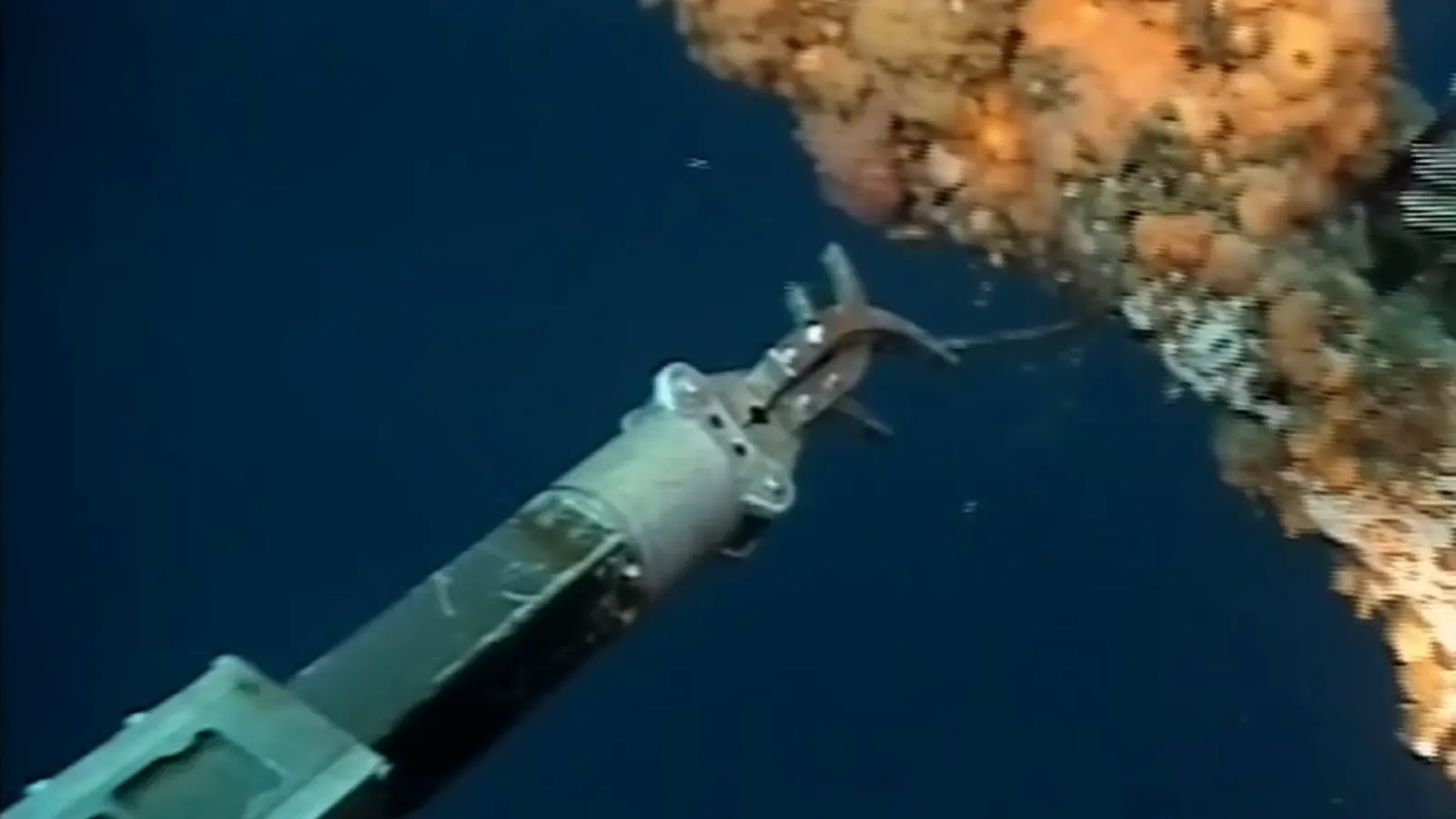
In one of the case studies in the Lean Decom training, a diamond wire saw cut each chain subsea, and the lines were recovered onto a vessel with chain lockers and an anchor handler winch.
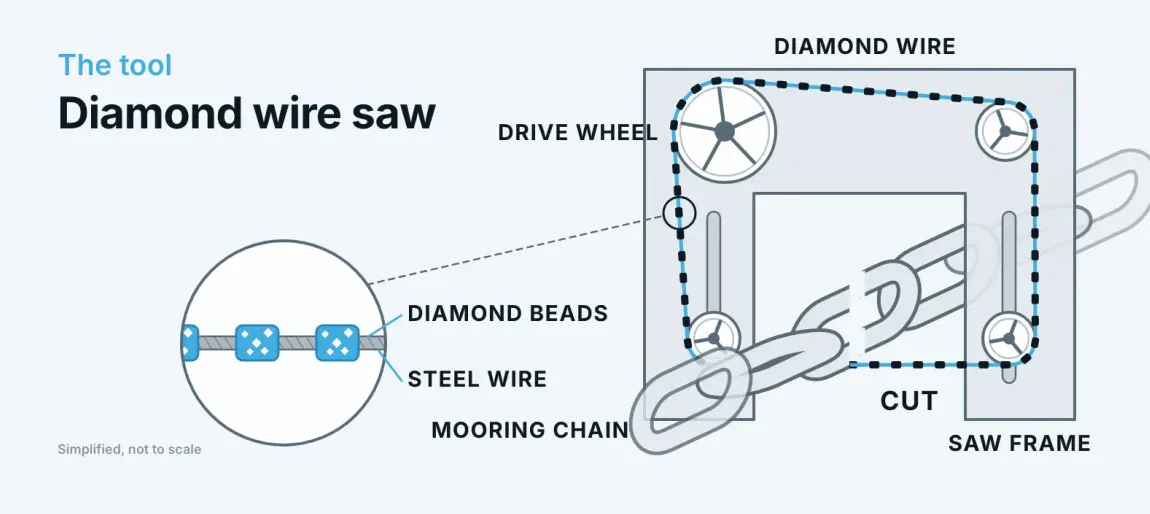
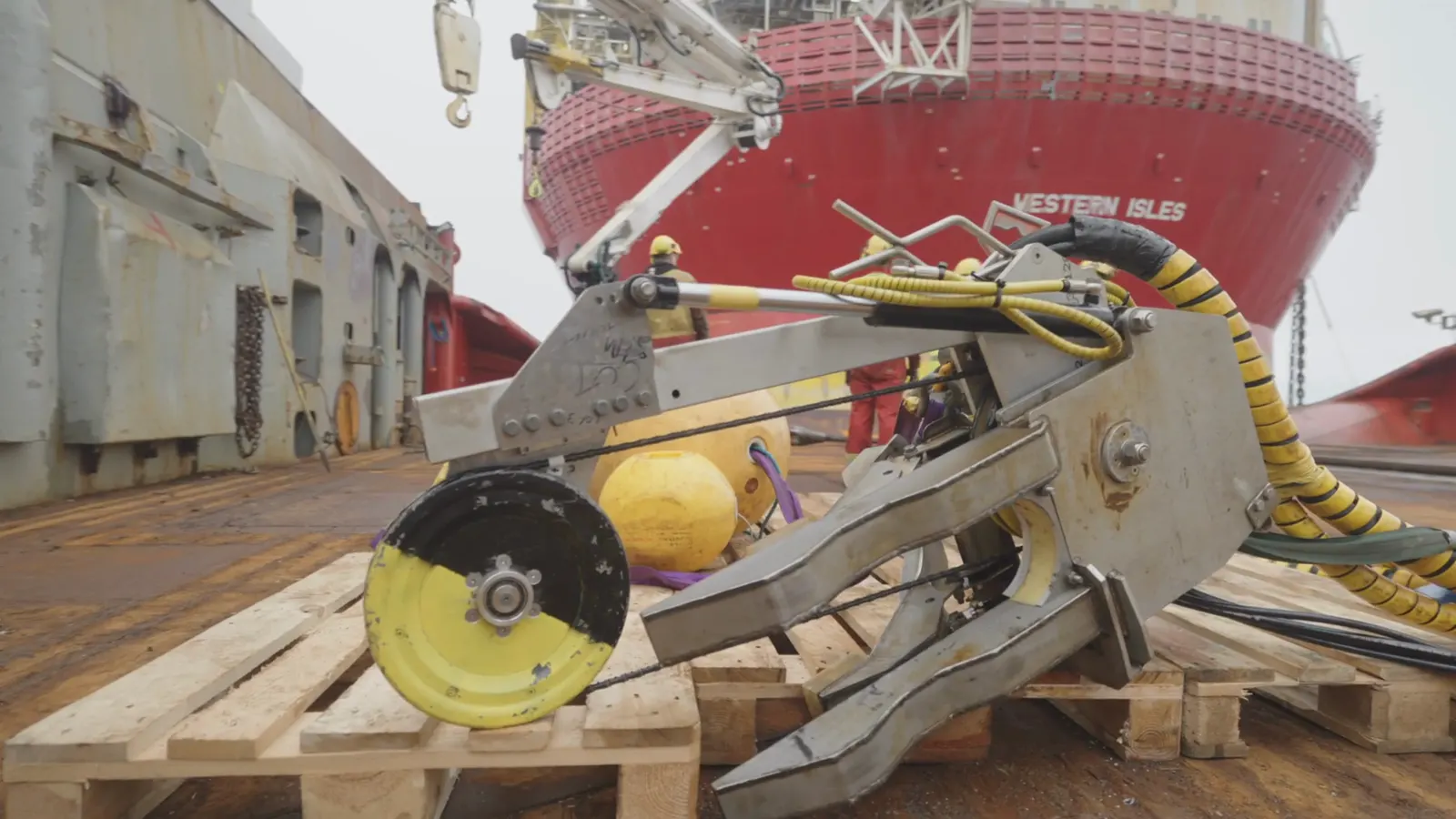
Cutting the chain
The saw is deployed by crane and operated entirely by ROV. Hydraulic power comes from the ROV through hot stabs, hydraulic interfaces that the ROV plugs into the saw.
The ROV aligns the saw on the chain at a point marked in advance. A diamond wire is effective on steel and less likely to bind and jam than a rotary saw, although rotary saws can be very effective in certain applications.
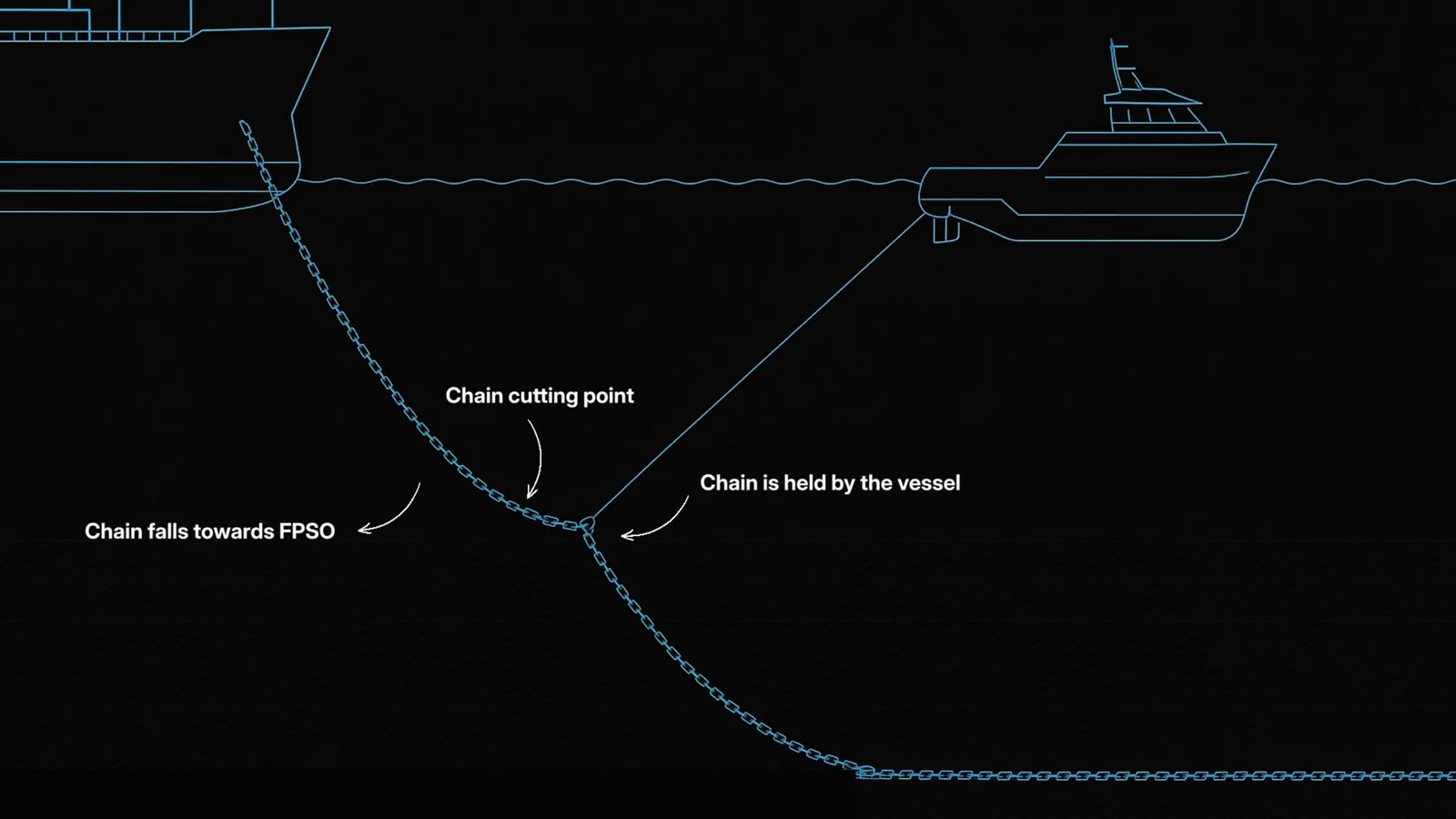
Before the cut, the ROV fits a recovery sling connected to the vessel. After the cut, the upper part falls back towards the FPSO and the vessel holds everything below. The chain end comes on deck for a marker buoy, so that ROVs can find the line again on the seabed.
Recovery order: an example from the training
Top chain
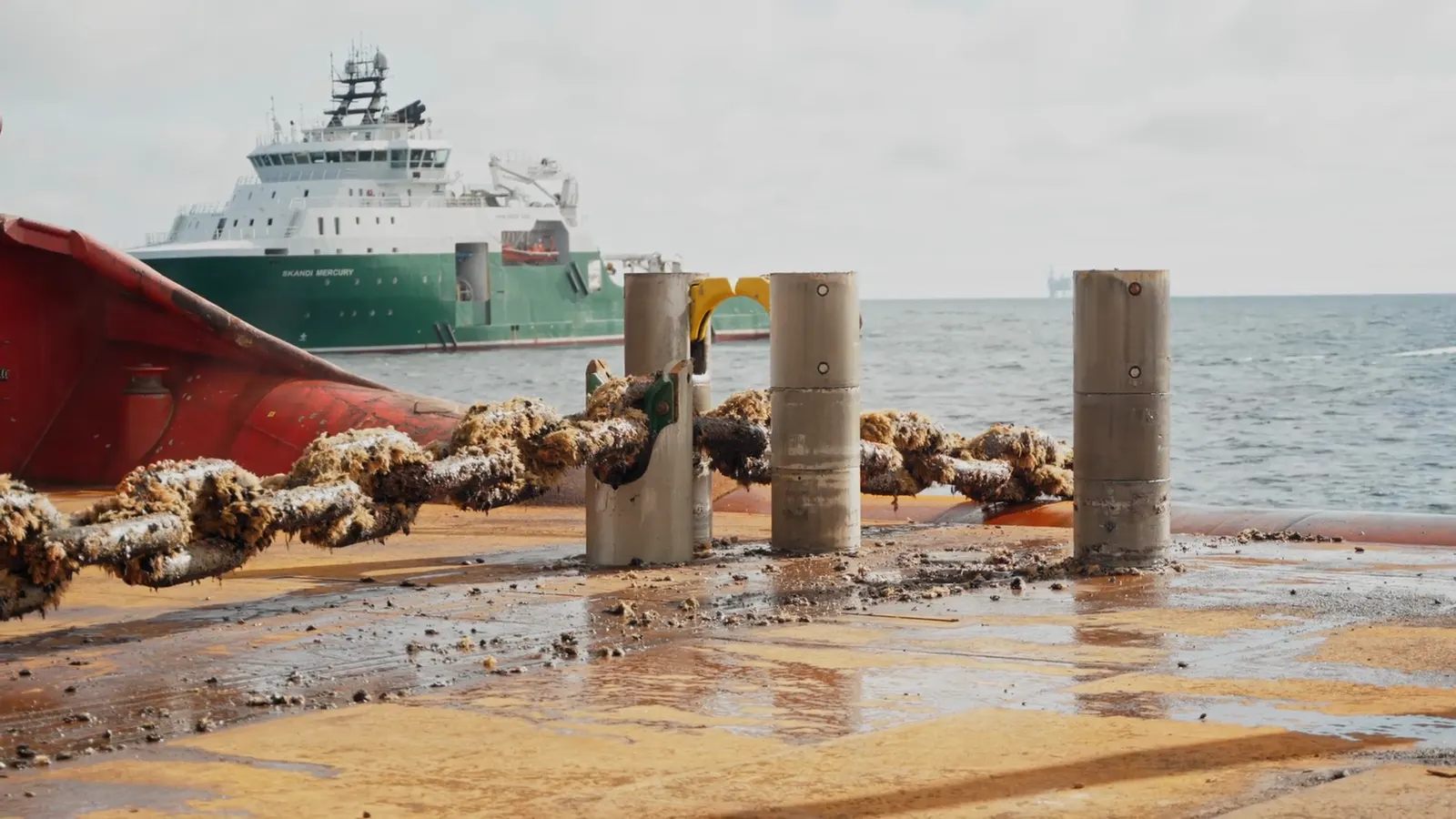
Held on the back deck in a fork, then hauled by the anchor handler winch, typically 600 t capacity, over a chain gypsy into the four chain lockers.
Polyester rope
Recovered onto the anchor winch drum. For this rope size, the drum held three mooring lines before a trip to port.
Bottom chain
Cut as close to the anchor as possible, then recovered like the top chain.
A chain gypsy must be fitted to the chain size. A gypsy that is too big or too small risks the chain slipping.
Why is station keeping critical during FPSO disconnection?
If the FPSO loses station while infrastructure is still connected, or while mooring lines hang below, the FPSO could drag across existing infrastructure and damage live pipelines or other assets that are not being decommissioned. The station keeping analysis is done for the specific conditions expected. The steps below are an example sequence from the case study.
Choose the towing brackets
In the case study, the towing brackets on the FPSO are not placed concentrically, so analysis decided which brackets to use to hold station.
Set the bollard pull
The same analysis set the bollard pull that the vessels needed to hold the FPSO in place.
Connect the tugs
The tugs were connected once a minimum mooring line configuration was in place: 8 of the 12 lines cut, 4 left in place.
Go/no-go
The leadership teams on the FPSO and the vessels checked the weather window against the work remaining before releasing the last lines.
Release and change to tow
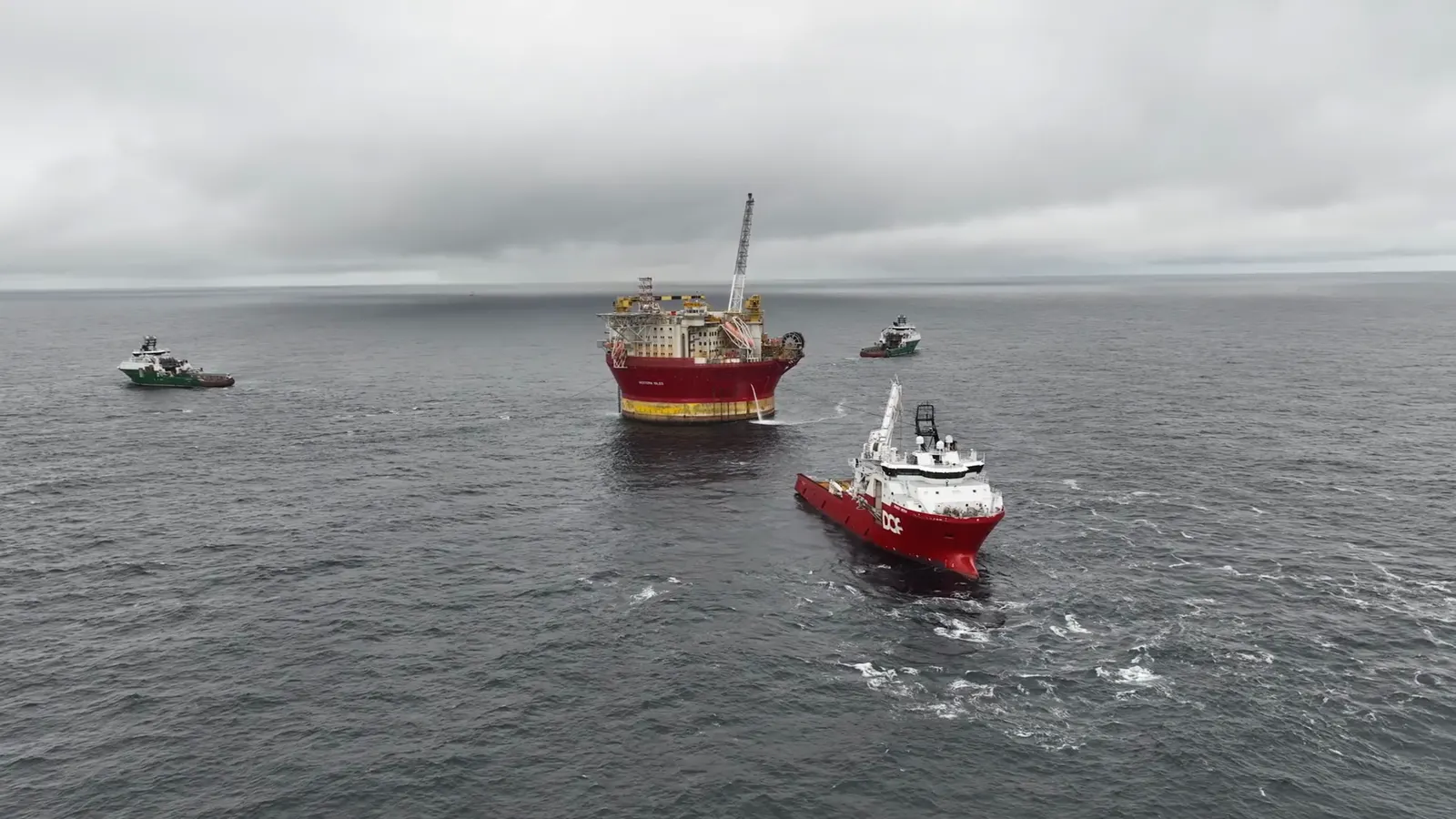
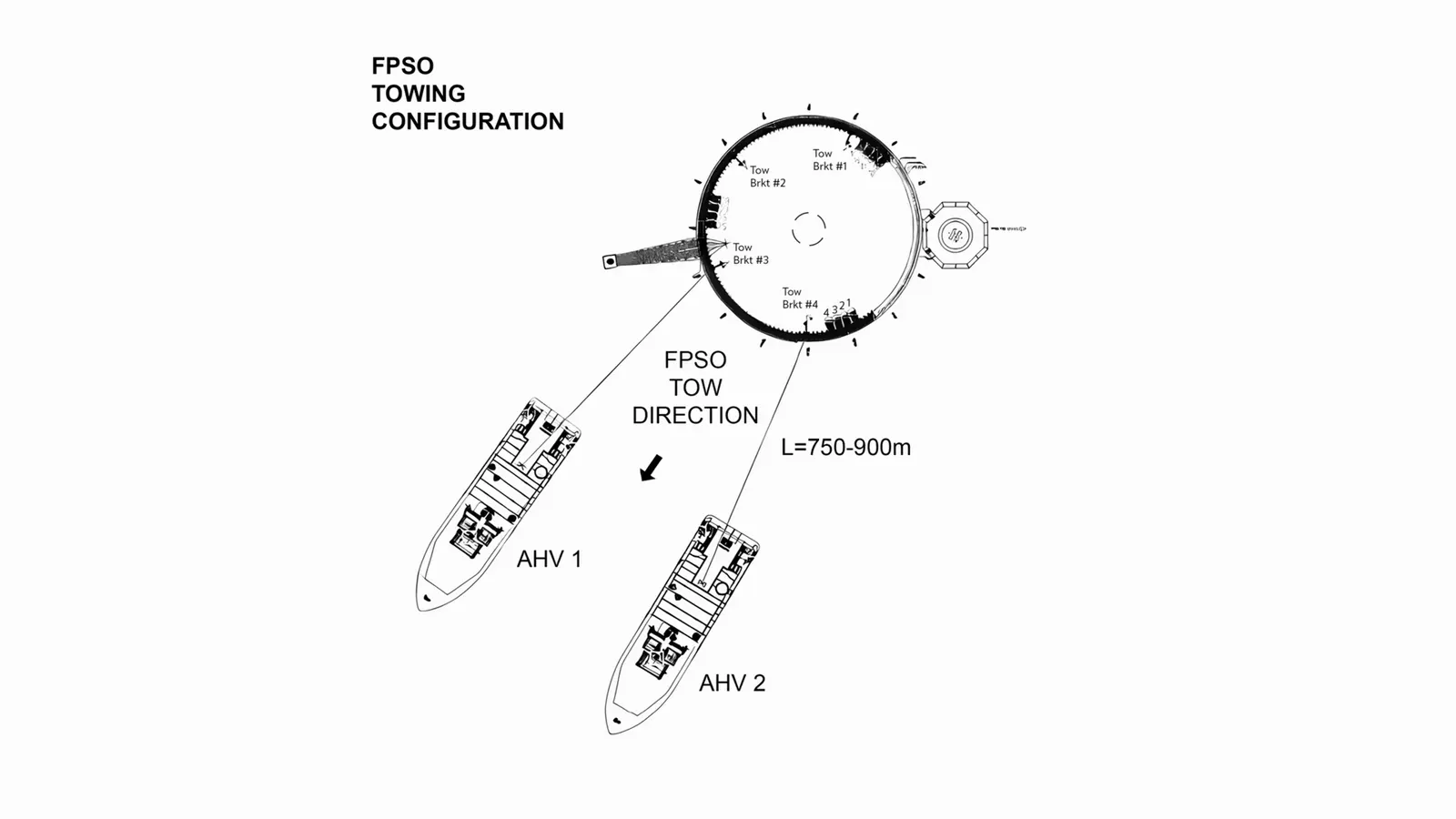
The construction vessel disconnected the last four lines and laid the lines down. One of the three tugs was then removed, and the other two moved into the towing configuration.
How is an FPSO towed to shore?
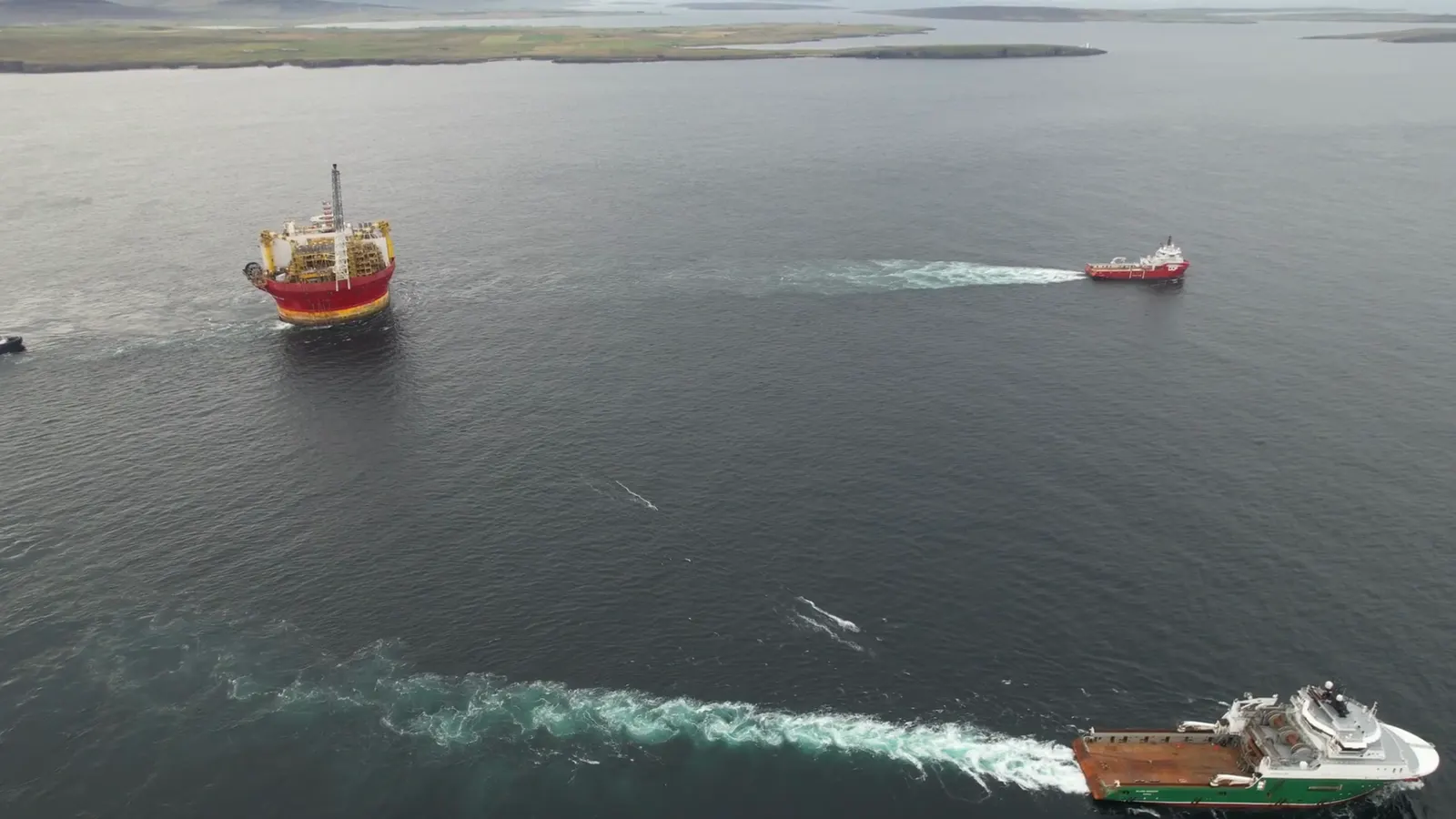
In the case study, the FPSO was towed from the field, approx. 90 km northeast of Shetland, to the Scapa Flow shelter area in Orkney. The route ran west of the Shetland Islands for two reasons. The cut risers and umbilicals were still hanging below the FPSO, so the route was chosen to reduce the risk of dragging across other infrastructure. Conditions for entering Orkney were also more favourable from the west.
Entry to Scapa Flow was restricted to tidal windows, because the tidal currents at other times would make entry much more dangerous for the vessels and the FPSO. The tidal window fed back into the go/no-go decision offshore: if the tow risked missing the entry window, the team would hold the final disconnection and stay on station with the tugs.
Two vessels towed the FPSO, because of the loads expected under tow. A third vessel followed as an escort, in case of a problem with the lead tugs.
Get your information pack
Course details and free sample lessons, emailed to you.
How are vessels selected for FPSO removal?
Mooring recovery and installation work typically uses anchor handling vessels. The right vessel, and the number of vessels, comes out of the analysis.
| Factor | Why the factor matters |
|---|---|
| Mooring make-up | Large chain, fibre rope, wire or spiral strand wire, and how much of each, can drive the choice of vessel. |
| Bollard pull | The bollard pull needed to hold station and to tow is a key factor, and depends on the water depth. |
| Cranes and ROVs | Some anchor handlers have cranes and ROVs, and some do not. |
| Deck space | A larger deck recovers more per trip, including packaged scopes such as debris, drag anchors or piles. Fewer port trips cut schedule and cost. |
| Number of vessels | Two, three or four vessels, or more for an extremely large FPSO, depending on the analysis. |
| Chain gypsies | Gypsies for large chain can have long lead times, so the size must be known early. |
In deep water, in some regions outside the North Sea, the loads are high and a much higher bollard pull is needed to hold station. The FPSO in the case study was in approx. 150 to 165 m of water. Check the station keeping loads and the chain handling equipment at tender stage.
Anchors and anchor piles
In one FPSO anchor pile removal described in the training, the piles were not exactly where the previous operator’s records said. Exploratory dredging for one or two piles used almost all of the seabed area permitted for all 12, and work stopped for a new permit. A survey beforehand, detection equipment on board or a permit contingency would have saved time.
What happens to the FPSO and the moorings after removal?
An FPSO leaves the field in one piece, towed either to a location for scrapping and recycling, or for reuse in another field or with another operator. The mooring lines, risers and umbilicals are recovered and taken ashore.
Reuse or recycling of the FPSO
UK example: the Western Isles decommissioning programme states that the FPSO would be towed to shore for potential reuse and, if not reused, recycled or disposed of under the laws of the UK or of the country where the work is done.
Ship recycling rules can apply to an FPSO. The Hong Kong International Convention for the Safe and Environmentally Sound Recycling of Ships, a treaty of the IMO, the United Nations agency for shipping, entered into force on 26 June 2025. The Convention’s definition of a ship names FPSOs, including a vessel being towed, and the Convention applies to ships entitled to fly the flag of a Party, with exceptions. A ship in scope must have an Inventory of Hazardous Materials before recycling, and may be recycled only at a ship recycling facility authorised under the Convention. Check the position for each FPSO with the flag state and the national regulator.
Reusing mooring chain
Mooring chain can still have a useful life, so reuse is worth considering with the operator during planning. In the case study, the top chains in particular had potential for reuse. In the base case, though, the time needed to take the chains off and preserve the full length outweighed the value of the full-length chains, so the chains were cut.
Material brought ashore
Onshore, the order of preference is reuse (the same item in the same application), then repurposing (a different application), then recycling (processing into a new product), with disposal kept to a minimum.
The work starts with up-to-date data: a hazardous material assessment, a survey for NORM (naturally occurring radioactive material), fluids information and visual inspections. UK example: the receiving yard needs the right permits and ground conditions, such as an impermeable surface, a NORM permit, a waste management permit for hazardous materials, interceptors and bunding.
Hazardous materials to plan for
FPSO decommissioning in the Lean Decom training
One of the case studies in the training covers a complete FPSO removal, presented by the contractor that performed the work, using real footage of the chain cutting, the recovery and the tow. Two further modules cover the cutting tools and the onshore work. Each module is online and video-based.
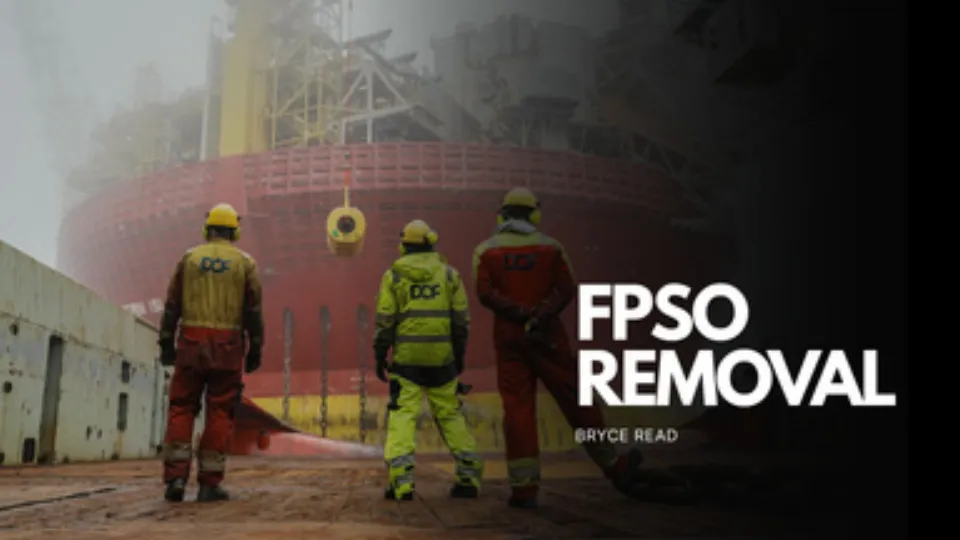
FPSO Removal: Western Isles case study
Chain preparation, cutting and recovery, station keeping, the tow and vessel selection.
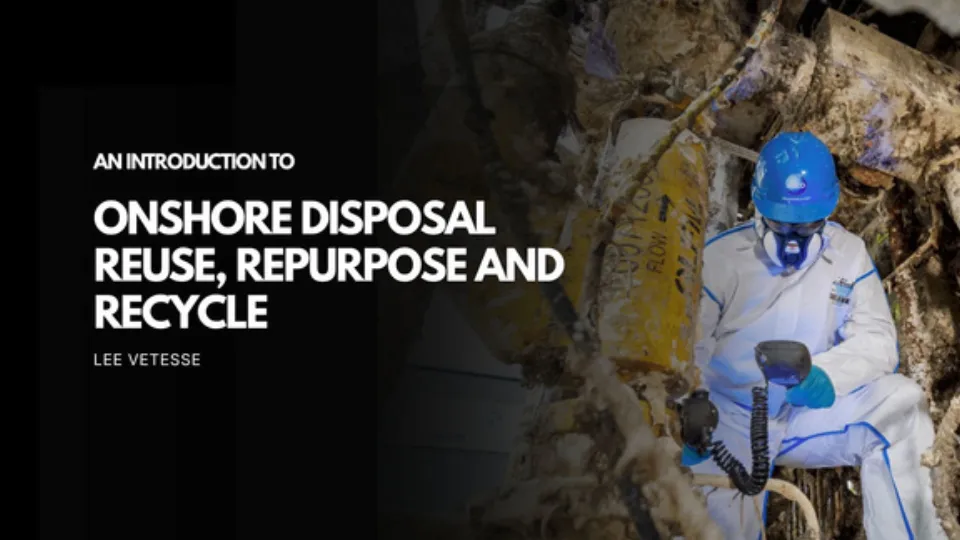
Onshore Disposal, Reuse, Repurpose and Recycle
Hazardous materials, the waste management plan and how to recover value from decommissioned material.

Specialised Tooling
The subsea cutting and recovery tools used in decommissioning, and how the right tool reduces risk and cost.
FPSO decommissioning terms
- FPSO
- Floating production, storage and offloading unit: a moored floating facility that processes well fluids from subsea wells, stores oil and offloads the oil for export.
- Mooring line
- A line of chain, rope or wire that connects a floating installation to an anchor on the seabed and holds the installation in position.
- Storm safe
- The presenter’s term for a mooring system that still has enough lines connected to hold the FPSO through bad weather.
- Station keeping
- Holding a floating installation in position. During disconnection, vessels hold the FPSO once too few mooring lines remain.
- Bollard pull
- The pull that a tug or anchor handler can exert, used to size vessels for station keeping and towing.
- Hot stab
- A hydraulic interface that lets an ROV supply hydraulic power to a subsea tool.
- Chain gypsy
- Chain handling equipment on a winch. The gypsy must be fitted to the chain size.
- Chain locker
- A large storage compartment on a vessel where recovered chain is stowed.
Sources and further reading
- Lean Decom training: FPSO Removal: Western Isles case study module, taught by Bryce Read, DOF.
- Lean Decom training: Onshore Disposal, Reuse, Repurpose and Recycle module, taught by Lee Vettese, ASCO.
- Lean Decom training, supporting modules: Decommissioning Overview: Heather and Thistle case study (Will Black and Ean Paul, EnQuest); Permitting Lessons Learned and Efficiency Strategies (Gareth Jones, Xodus); Offshore Oil and Gas Infrastructure and Locations (Lean Decom).
- Dana Petroleum (E&P) Limited: Western Isles FPSO Decommissioning Programmes, Final Version, 18 September 2023. gov.uk
- IMO: The Hong Kong International Convention for the Safe and Environmentally Sound Recycling of Ships, and IMO Frequently Asked Questions: Implementing the Hong Kong Convention. imo.org
FPSO decommissioning: common questions
How is an FPSO decommissioned?
The risers and umbilicals are disconnected, the mooring lines are released in sequence, and tugs hold the FPSO on station for the final lines. The FPSO is then towed away for reuse or recycling, and the mooring lines are recovered.
What has to be disconnected before an FPSO can leave the field?
Three things: the mooring lines that hold the FPSO in place, and the risers and umbilicals that connect the FPSO to the seabed. In one of the case studies in the Lean Decom training, with no reuse planned, the risers were cut below the FPSO and dropped to the seabed for recovery later.
How are FPSO mooring chains cut?
In one of the case studies in the Lean Decom training, a diamond wire saw operated by a remotely operated vehicle (ROV) cut each chain at a point marked in advance. The saw was deployed by crane and powered through hot stabs from the ROV. A recovery sling let the vessel hold the lower chain after the cut.
What is station keeping in FPSO decommissioning?
Station keeping means holding the FPSO in position with vessels once too few mooring lines remain for the system to be storm safe. In one of the case studies in the Lean Decom training, three tugs were connected after 8 of the 12 lines were cut.
Which vessels are used to remove an FPSO?
Anchor handling vessels are typically used for mooring recovery. The choice depends on the mooring make-up, the bollard pull needed for the water depth, cranes and ROVs on board, deck space and chain gypsies. Analysis decides how many vessels are needed for station keeping and the tow.
How long does FPSO decommissioning take?
EnQuest, in the training, says an FPSO can be decommissioned in maybe one to three years, because the risers are disconnected and the FPSO is taken ashore. The same speakers give five to nine years for a more complex northern North Sea asset.
Related topics


Get your information pack
Course details and free sample lessons, emailed to you.
Learn FPSO decommissioning from the people who plan and deliver the work
Lean Decom is a specialist decommissioning training provider. The training shares lessons from North Sea projects, taught by 18 specialists, for you to apply to your own work, wherever your assets are.