
Offshore decommissioning training courses
Explore your decommissioning training options
Browse the training content, compare the options and choose what suits you or your organisation.
Developed with specialists from


The training
Three ways to learn offshore decommissioning
Every option is built on lessons from North Sea projects. Choose a complete course, or pick the modules that suit your needs.
Introduction to Offshore Decommissioning Course
Our ECITB-approved course, built around the UK regulatory framework. For professionals who work in the UK, and for ECITB member companies.
See the ECITB-approved course →
Employers in scope of the ECITB may be able to claim grant support for the training.
Lean Decom 1.0
A library of 18 decommissioning-focused modules, sharing North Sea decommissioning experience for you to apply to projects worldwide. For international professionals and organisations.
Lean Decom 1.0 is also the library behind our team and enterprise options.
Pick and mix
Select the training modules that suit your needs. Build a package for you or your team from our library of decommissioning-focused modules.
Ask us for a quote for the modules you choose.
How the three options differ
Most of the content is shared across all three options. The differences are the order you learn in, and the market each option is built for.
ECITB-approved course
- How you learn
- From start to finish, in a set order
- Built for
- The UK market, to ECITB standards
Lean Decom 1.0
- How you learn
- 18 modules, in any order you choose
- Built for
- UK and international audiences
Pick and mix
- How you learn
- Only the modules you choose
- Built for
- Your own needs, from the modules in the training library below
How the training helps
How decommissioning training supports your organisation
We support effective decommissioning planning.
Your people are already good at what they do. The training builds on that experience in three ways. We call these medicine, supplement and risk.
Solves a problem you have today.
A defined need for training
You may need to prepare people for decommissioning, and show evidence of their training to clients or for your own competency records.
- An ECITB-approved course
- A certificate for each module completed
- Progress reports for managers
Makes a good team even better, and gets people up to speed faster.
Decommissioning knowledge transferred into your organisation
The training builds on your people’s experience, and gives every team, offshore and onshore, a shared understanding of decommissioning.
- Shared goals as the focus moves from production to decommissioning
- Knowledge of where the efficiencies lie in a project
Helps you avoid the problems you are concerned about.
Awareness of risks and lessons learned
Decommissioning has a different risk profile. The training builds awareness of the risks, the hazards and the lessons learned from other projects.
- Helps reduce the risk of repeating known issues
- Supports your reputation with clients, the regulator and the public
Learning for yourself? The same training adds decommissioning knowledge to the experience you already have.
Feedback from learners
“It has already made a huge difference in being part of conversations in meetings. There are so many new acronyms and various terminologies that are all new to me and this has helped a lot with that.”
Lee CampbellSenior Project Engineer“Super comprehensive decommissioning training delivered by the top industry voices who are actually doing the work. It’s really easy to follow and stands out from typical online training courses.”
Sabrina AtaallaConsultant, KPMG, Middle East Oil and Gas“An important investment in my career development this year.”
Carlo V. CervoAF ClaxtonThe modules
21 modules across the decommissioning lifecycle
Each module is taught by a specialist who has done the work. Three additional modules cover offshore infrastructure, UK regulation and cost. Choose a module to see what you will learn.
Names and organisations reflect those held at the time of filming. Modules 19 to 21 are part of the ECITB-approved course, and can be added to a pick-and-mix package.
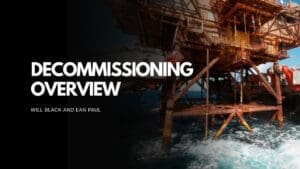
Decommissioning Overview: Heather and Thistle case study
What you will learn
This module helps learners identify and describe the key stages of offshore decommissioning, including cessation of production, early data gathering, regulatory planning, well P&A sequencing, engineering down and clean, offshore execution, topsides and substructure removal, subsea infrastructure, site remediation and post-decommissioning monitoring.
Taught by
Will Black (EnQuest), who is also a board member of Decom Mission, and Ean Paul (EnQuest).
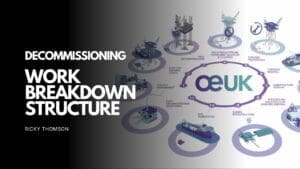
OEUK Work Breakdown Structure
What you will learn
This module helps learners identify and describe the decommissioning Work Breakdown Structure, including how the structure supports project planning, cost estimating, benchmarking, regulatory reporting and performance improvement across the 11 key decommissioning elements from project management and post-COP running costs through to well decommissioning, facilities cleaning, topsides and substructure removal, subsea infrastructure, site remediation and post-decommissioning monitoring.
Read the free guide: the OEUK decommissioning work breakdown structure.
Taught by
Ricky Thomson, OEUK.
Regulators and Regulations
What you will learn
This module helps learners identify and describe the regulator’s role in regulating offshore decommissioning (UK example), including the purpose of the decommissioning programme, supporting environmental and comparative assessment documents, approval and compliance requirements, derogation cases, progress reporting, close-out and post-decommissioning monitoring.
Taught by
Teresa Munro, OPRED.
The Decommissioning Programme
What you will learn
This module helps learners identify and describe how a decommissioning programme supports compliant offshore decommissioning, including regulator submission, public consultation, infrastructure and materials inventories, comparative assessment, stakeholder input, environmental and waste considerations, and how the approved programme supports project execution.
Read the free guide: the decommissioning programme.
Taught by
Gareth Jones, Decommissioning Division Manager at Xodus and Chair of Decom Mission.
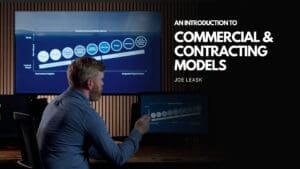
Commercial and Contracting Models
What you will learn
This module helps learners identify and describe how contracting and commercial models influence decommissioning project delivery, including how risk profile, scope uncertainty, supplier capability, day rate, lump sum, turnkey and asset ownership models can affect cost, collaboration, liability, supply chain partnerships and safe, environmentally sound, cost-effective outcomes.
Taught by
Joe Leask, bp.
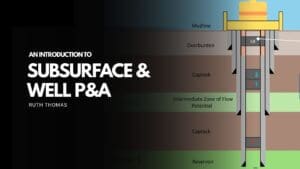
Subsurface and Well P&A
What you will learn
This module helps learners identify and describe what needs to be isolated underground and how abandonment barriers should be planned, placed and verified. This includes subsurface fundamentals, sustained flow potential, minimum safe abandonment depth, barrier placement, annular cement verification and the role of subsurface and engineering teams in developing an abandonment strategy.
Read the free guide: well plug and abandonment (P&A).
Taught by
Ruth Thomas, Well-Safe Solutions.
CCS Considerations in Well P&A
What you will learn
This module helps learners identify and describe how carbon capture and storage (CCS) is changing well plug and abandonment requirements. This includes key CCS considerations that wells, engineering, project and client-facing teams need to recognise, including CO₂ storage requirements, legacy well risks and minimum safe abandonment depth.
Read the free guide: CCS and well decommissioning.
Taught by
Emma Dawson, Equinor.
De-energisation of Offshore Installations
What you will learn
This module helps learners identify and describe how de-energisation supports safe disembarkation and handover of an offshore installation. This includes how hydrocarbons, mechanical, electrical and radioactive energy sources are removed or controlled, how stored energy registers and completions assurance packages are used, and how critical utility systems are managed through to handover.
Taught by
Mark Wilson, TAQA.
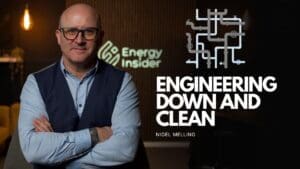
Engineering Down and Clean
What you will learn
This module helps learners identify and describe how engineering down and clean prepares an offshore installation for safe decommissioning. This includes well bay clearance, drain, clean, purge and vent activities, system segregation, P&A fluid handling, facilitation projects, ultra-late-life planning and fit-for-purpose engineering solutions.
Taught by
Nigel Melling, Nexos.
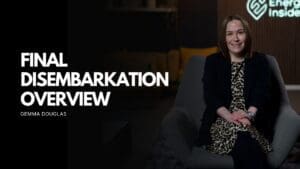
Final Disembarkation
What you will learn
This module helps learners identify and describe the key considerations for final disembarkation from an offshore asset. This includes the safe and compliant departure of personnel, regulator engagement, handover requirements, final checks and the transition of responsibility as the asset moves into the next phase of decommissioning.
Read the free guide: the disembarkation procedure.
Taught by
Gemma Douglas, TAQA.
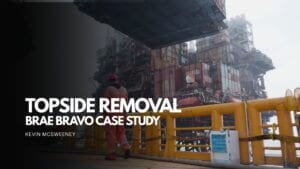
Topside Removal: Brae Bravo case study
What you will learn
This module helps learners identify and describe the key considerations for planning and executing a topsides removal campaign. This includes removal methodology selection, contract strategy, materials inventory, offshore execution, multi-asset campaign planning and lessons learned from safe and efficient topsides removal.
Read the free guide: topside preparation and removal.
Taught by
Kevin McSweeney, TAQA.
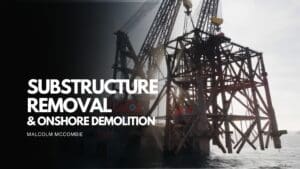
Substructure Removal and Onshore Demolition
What you will learn
This module helps learners identify and describe the key considerations for substructure removal and onshore demolition. This includes jacket removal planning, subsea cutting and lifting as well as onshore activities such as front-running activities, downsizing, material management, onshore dismantling and lessons learned from safe and efficient substructure removal.
Read the free guide: substructure removal.
Taught by
Malcolm McCombie, TAQA.
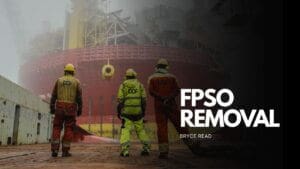
FPSO Removal: Western Isles case study
What you will learn
This module helps learners identify and describe the key considerations for safely disconnecting and removing an FPSO from location. This includes mooring line disconnection, riser and umbilical management, chain cutting, station keeping, tow planning, vessel selection, recovery operations, reuse and recycling considerations, and lessons learned from the Western Isles FPSO decommissioning project.
Taught by
Bryce Read, DOF.
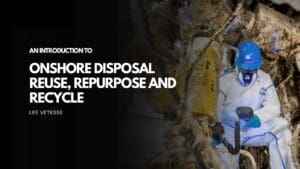
Onshore Disposal, Reuse, Repurpose and Recycle
What you will learn
This module helps learners identify and describe the key considerations for onshore materials management during decommissioning. This includes how recovered offshore materials are received, classified, cleaned, reused, repurposed, recycled or disposed of, as well as hazardous material awareness, waste management planning, consignment and transport requirements, recoverable value, supply chain planning and lessons learned for reducing risk, cost and waste.
Taught by
Lee Vettese, ASCO.
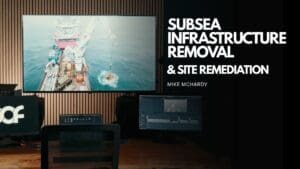
Subsea Infrastructure Removal and Site Remediation
What you will learn
This module helps learners identify and describe the key considerations for subsea infrastructure removal and site remediation. This includes recovery methods for mattresses, Christmas trees, flexibles, midwater arches and bundles, as well as seabed clearance, vessel selection, lifting and deck handling risks, NORM checks, data quality, early supply chain engagement and lessons learned for safer and more efficient subsea decommissioning.
Read the free guide: subsea infrastructure removal.
Taught by
Mike McHardy, DOF.
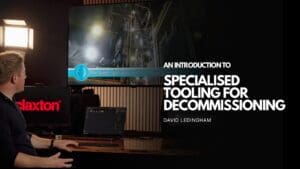
Specialised Tooling
What you will learn
This module helps learners identify and describe how specialised tools support safe and efficient decommissioning project delivery. This includes tooling used for well P&A, topsides removal, substructure removal and subsea infrastructure removal, such as suspended well abandonment tools, abrasive water jet cutting, diamond wire cutting, shear cutters, pipe grabs, internal cutting systems, dredging and excavation tools, and how selecting the right tool can reduce risk, cost, red-zone exposure and execution uncertainty.
Taught by
David Ledingham, Claxton.
Safety and Risk Management
What you will learn
This module helps learners identify and describe how risk management changes through late-life operations and decommissioning. This includes the difference between major hazard risk and personal safety risk, changes in risk profile, safety case updates, SIMOPS, topsides and subsea removal risks, schedule pressure, dropped objects, hazardous materials and the role of safety leadership and workforce engagement in maintaining safe operations.
Taught by
Graham Skinner, OEUK.
Permitting Lessons Learned and Efficiency Strategies
What you will learn
This module helps learners identify and describe how permitting and consenting decisions can affect decommissioning project cost, schedule and execution risk. This includes lessons learned from rock dumping, materials inventories, supplier changes, nesting birds, permitted seabed disturbance, minimal manning philosophy and late-life maintenance strategies, with a focus on early planning, cross-discipline engagement and practical efficiency opportunities.
Taught by
Gareth Jones, Decommissioning Division Manager at Xodus and Chair of Decom Mission.
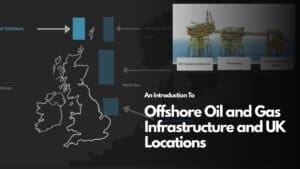
Offshore Oil and Gas Infrastructure and Locations
What you will learn
This module helps learners identify and describe the installations and infrastructure that need to be decommissioned. This includes fixed and floating installations, large integrated platforms, normally unattended installations and multi-platform installations, steel jackets and concrete gravity-based structures, platform and subsea wells, subsea tiebacks and subsea infrastructure, and how water depth, reservoir size, distance from shore, and weather and sea conditions shape decommissioning, using the UK Continental Shelf as an example.
Taught by
Lean Decom.
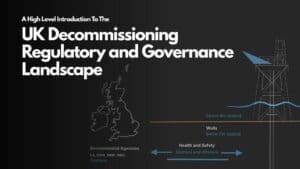
UK Regulatory and Governance Landscape
What you will learn
This module helps learners identify and describe the regulatory and governance framework for offshore decommissioning in the UK. This includes the hierarchy of legislation, the London Convention and Protocol, OSPAR Decision 98/3, the OGA Strategy and Maximising Economic Recovery, the Marine and Coastal Access Act and the Marine (Scotland) Act, and the roles of the UK regulators and the industry body that supports them.
Taught by
Lean Decom.
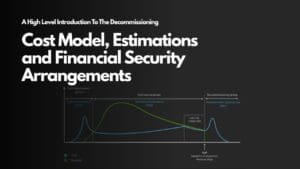
Cost Model, Estimations and Financial Security Arrangements
What you will learn
This module helps learners identify and describe where decommissioning sits within the asset lifecycle cost model, and how decommissioning liabilities are estimated and secured. This includes decommissioning trust funds, letters of credit, surety bonds and parent company guarantees, decommissioning relief deeds, asset retirement obligations (ARO), AACE estimate classes, bottom-up estimates built on a work breakdown structure, authorisation for expenditure (AFE) and NSTA cost reporting through the UKCS Stewardship Survey.
Taught by
Lean Decom.
Access and pricing
Training for one person or your whole organisation
Every option includes the same expert-led training. The more people you train, the lower the price per person.
Individual
Buy online and start the training on our platform at any time.
- Full access to the training
- 90 days to complete
- A certificate when you complete
Teams
Licences for a group of people on our platform. You choose how many people need the training.
- Licences you give out at any time within 12 months
- A dashboard for your training manager to follow progress
- Certificates and a training record for each person
Enterprise
Access to the full training library for your personnel, on our platform or on your own learning management system.
- For your employees, and for contractors while they work on your behalf
- Progress tracking for training managers
- Annual subscription or a multi-year licence
Volume discounts for teams
The more people you train, the less you pay per person
Team pricing follows a sliding scale. We confirm your exact price in a quote, based on the number of people.
Delivery
Delivered online on our platform or on your own system
Choose where your people take the training. The content is the same on both.
Our training platform
We send your people login details for our online platform. They watch the lessons in a web browser and download certificates as they complete each module.
- Nothing to install on your systems
- Progress reports for your training managers
- Our team helps with progress, completions and certificates
Your learning management system
We provide training modules as a SCORM package for your own learning management system (LMS). Your people learn in the system they already use.
- Delivered in the standard SCORM format
- Completions tracked in your own training records
- Licensed for internal training in your organisation
Both options include support from our team for any technical issues.
Common questions
Common questions about decommissioning training
Which option suits me?
The ECITB-approved course suits professionals who work in the UK and ECITB member companies. Lean Decom 1.0 suits UK and international audiences. Pick and mix suits a team that needs only some of the modules.
Is the training suitable outside the UK?
Yes. Lean Decom 1.0 shares North Sea decommissioning experience for you to apply to projects worldwide.
Is previous decommissioning experience required?
No. The training adds decommissioning knowledge to the experience you already have.
Is there a certificate?
The ECITB-approved course gives an ECITB certificate on completion. Lean Decom 1.0 and pick and mix give a certificate for each module.
Can the training run on our own learning management system?
Yes. We provide the modules as a SCORM package.
Is funding available?
Eligible oil and gas workers in Scotland can apply to the Oil and Gas Transition Training Fund.
Not sure which option suits you?
Get the free preview and our information pack by email, or tell us about your team and we will send you a quote.