
Preparing your asset teams for decommissioning.
Online training that helps your teams move from production into decommissioning, reduce project risk and deliver safe, environmentally responsible and cost-effective decommissioning.
From production to decommissioning
The Lean Decom training helps transfer decommissioning-focused knowledge into your organisation, to support planning for late life and decommissioning.
Decommissioning is a high-risk, high-cost phase of the asset lifecycle. There is no production revenue to offset the spend, so business performance depends on how safely, efficiently and compliantly the work is delivered.
Your people are experts in their disciplines, with experience built mostly in production. Decommissioning brings different activities, different risks and a different mindset, with complex links between disciplines. Past projects have shown the high cost of lessons learned and delays.
Common problems in decommissioning
- Alignment on the needs of decommissioning. People are often not aware of the different activities, tasks and preparation that decommissioning needs. This affects their alignment to the project goals and reduces efficiency.
- Changing mindset. Moving from production into decommissioning is widely recognised as needing a significant shift in mindset.
- Lessons not shared. Known risks are repeated, such as permitting and topside removal preparation, and opportunities are missed.
The training helps with each of these areas.
The North Sea Transition Authority (NSTA) names a lack of direct decommissioning experience, across operators and the supply chain, as one of the factors behind high decommissioning costs.
Source: Decommissioning Strategy, Oil and Gas Authority (now the NSTA), 2016
How decommissioning training supports your organisation
Your people are already good at what they do. The training builds on that experience in three ways. We call these medicine, supplement and risk.
Solves a problem you have today.
A defined need for training
You may need to prepare people for decommissioning, and show evidence of their training to clients or for your own competency records.
- An ECITB-approved course
- A certificate for each module completed
- Progress reports for managers
Makes a good team even better, and gets people up to speed faster.
Decommissioning knowledge transferred into your organisation
The training builds on your people’s experience, and gives every team, offshore and onshore, a shared understanding of decommissioning.
- Shared goals as the focus moves from production to decommissioning
- Knowledge of where the efficiencies lie in a project
Helps you avoid the problems you are concerned about.
Awareness of risks and lessons learned
Decommissioning has a different risk profile. The training builds awareness of the risks, the hazards and the lessons learned from other projects.
- Helps reduce the risk of repeating known issues
- Supports your reputation with clients, the regulator and the public
Why decommissioning knowledge matters to your schedule
There is no income after cessation of production (CoP), so the strategy is to shorten the time from CoP to final disembarkation. Every day saved is a direct saving.
Time from cessation of production (CoP) to final disembarkation
Half of these platforms took longer than the median. A slip from the median towards the upper quartile adds approx. 250 days.
Running cost of the asset after CoP
Every day of slip adds running cost: approx. £100,000 a day at the median.
Cost of every day
Approx. £100,000
A day, at the median, for every day after CoP.
What 1% is worth
£1.57 million
For illustration only, a 1% efficiency saving on the median running cost after CoP equals £1.57 million. The training is designed to support efficiency and help teams avoid common pitfalls.
The highest-cost days
Approx. £1 million
A day for the largest heavy-lift vessels in topside removal. A late permit or nesting birds on the platform can delay the lift.
Reputation
Regulator and public
Safe, compliant and well-planned decommissioning protects your reputation.
Indicative figures only. Quartiles and medians: NSTA UKCS Decommissioning Benchmarking Report 2026, normally-attended standalone platforms in the northern North Sea. Days, the cost of a day and the 1% example are calculated from these. Vessel day rate: the Lean Decom training.
Feedback from learners
“It has already made a huge difference in being part of conversations in meetings. There are so many new acronyms and various terminologies that are all new to me and this has helped a lot with that.”
Lee Campbell
Senior Project Engineer
“Super comprehensive decommissioning training delivered by the top industry voices who are actually doing the work. It’s really easy to follow and stands out from typical online training courses.”
Sabrina Ataalla
Consultant, KPMG, Middle East Oil and Gas
“An important investment in my career development this year.”
Carlo V. Cervo
AF Claxton
Learn from operators who have done the work
Specialists from bp, EnQuest, TAQA and Equinor share how they planned and delivered their own decommissioning projects, alongside the regulator OPRED and OEUK.
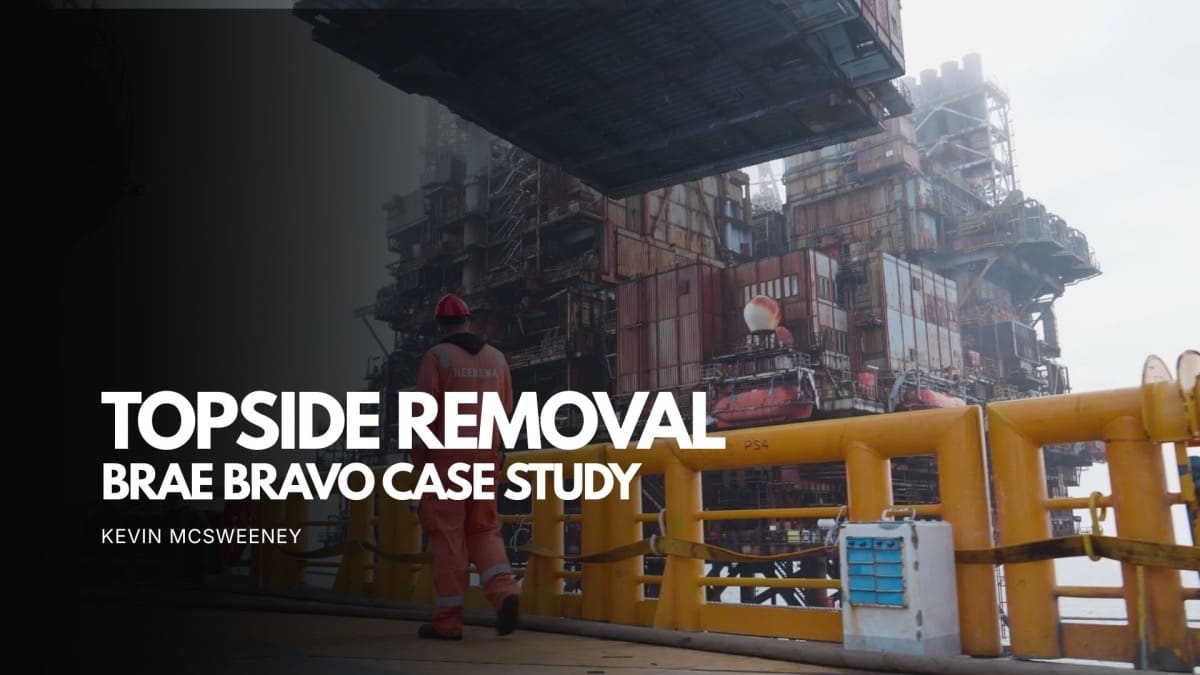
Real projects, real numbers
Footage and case studies from projects such as Heather and Thistle, the Brae Bravo topside removal and the Western Isles FPSO removal. Specialists share what worked, what did not, and what each decision cost.
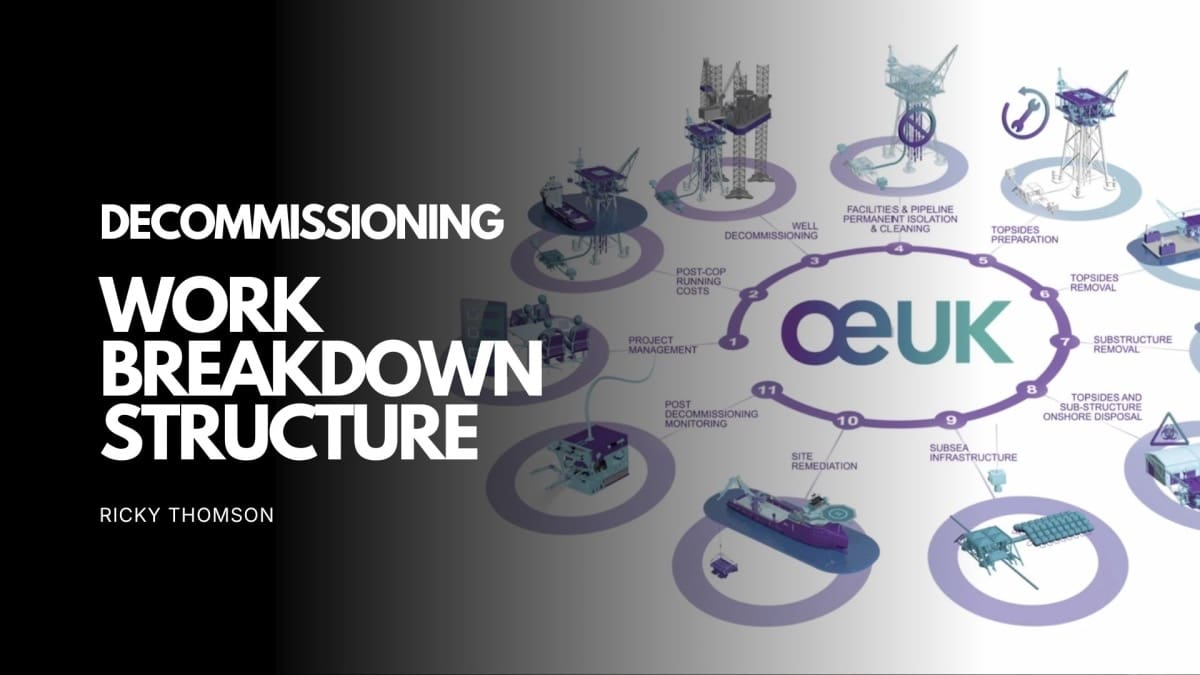
The full lifecycle
Aligned to the OEUK Work Breakdown Structure, from the decommissioning programme and wells to topside, substructure and subsea removal. Each module is short, so people can study around their workload.
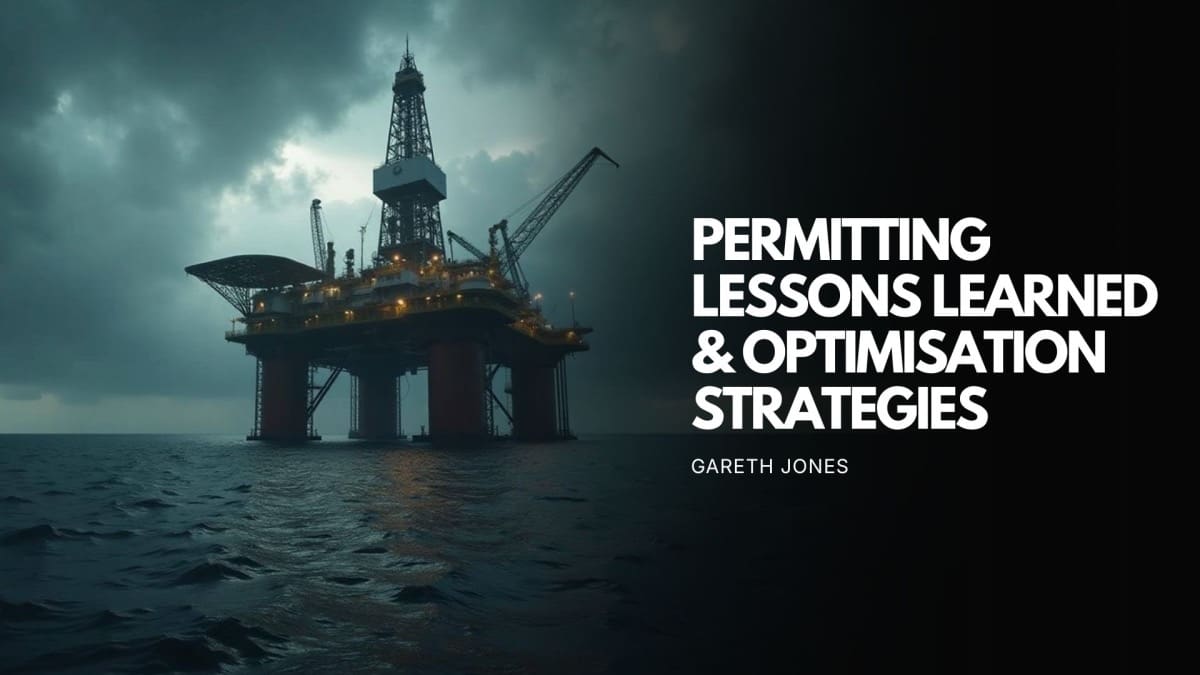
Lessons learned
Permitting lessons and efficiency strategies, such as minimal manning, help teams plan a safer and more cost-effective programme.
Value across your whole organisation
Decommissioning readiness is not owned by one department. The training builds a shared understanding across leadership, technical and workforce functions.
Asset managers
Make strategic decisions with a full view of the decommissioning lifecycle, the cost drivers and the regulatory expectations.
Project and engineering teams
Understand how activities, sequencing and interfaces between disciplines affect downstream cost and risk.
Core offshore crew
Bring vital local knowledge of the asset to decommissioning, with the mindset that supports efficient delivery.
HSEQ teams
Communicate the hazards and risks specific to decommissioning, and support disciplined sequencing and interface control.
Team leaders and supervisors
Understand the decisions behind the programme, and lead teams with a shared focus and a clear direction.
Onshore support, HR and workforce teams
Understand the transition, help prevent avoidable delays, and support people’s performance and onward destination.
Training for an asset team, a programme or your whole organisation
Start with one team and add more people as your decommissioning programme grows. The more people you train, the less you pay per person.
Volume discounts for teams
The more people you train, the less you pay per person
Team pricing follows a sliding scale. We confirm your exact price in a quote, based on the number of people.
Get your information pack
Course details and free sample lessons, emailed to you.
Prepare your organisation for decommissioning
Tell us about your assets and your teams. We will suggest the option that suits your decommissioning programme.
The pricing request and information pack forms are to be updated before these pages go live.