
KNOWLEDGE HUB
Substructure Removal
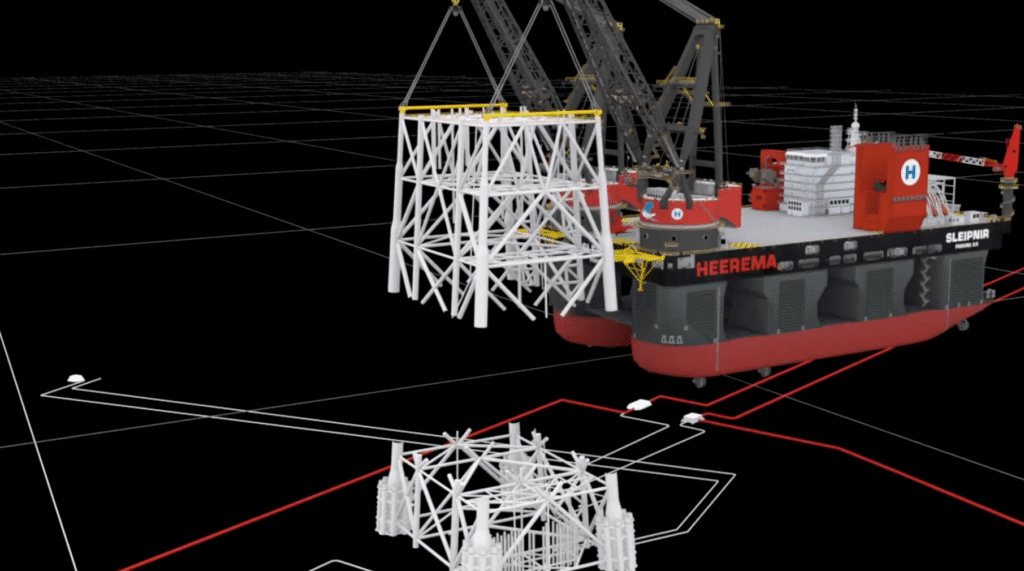
Substructure removal, classified as Phase 7 of the OEUK Work Breakdown Structure (WBS), involves the decommissioning of structures that connect platform topsides to the seabed. For major assets like the Brae Bravo (featured in the Lean Decom training course), this involves managing an 11,000-tonne steel jacket substructure, representing one of the most significant engineering and heavy-lift challenges in the North Sea.
The Regulatory Framework: Full Removal vs. Derogation
In many regions, the ultimate regulatory expectation is a clear seabed. Some structures may be eligible for a derogation under OSPAR rules. This allows operators, in certain cases, to leave the “footings” the portion of the substructure below the top of the piles, in situ, if supported by a robust Comparative Assessment that evaluates environmental, technical, and safety factors.
Substructure Preparation and Structural Readiness
Access and Habitability
Temporary work platforms are often installed to support offshore crews during the preparation window.
Heavy-Lift Interfaces
Lifting brackets must be installed on the substructure jacket legs. These require significant welding operations and Non-Destructive Testing (NDT) to ensure they can withstand the immense weight of the structure during the lift.
Dropped Object Campaigns
A major activity in substructure removal is the systematic clearing of debris and loose items. This is critical to prevent hazardous projectiles during the lift and to protect the heavy-lift contractor and any live pipelines remaining in the vicinity.
Leg Severance
If footings are permitted to be left in situ, the steel jacket legs must be cut to free the structure.
Green vs. Red Cuts
Preparatory “green cuts” are made sequentially subsea, leaving only the “red cuts” for the final lift window when the heavy-lift vessel (HLV) has taken the weight of the structure.
Venting
Drainage tubes are often installed in the legs to ensure drainage and predictable lifting weights before final severance.
Training Course Case Study
The physical removal of the 11,000-tonne substructure, as featured in the decommissioning training course case study, requires vessels with immense crane capacity, such as those equipped with dual 10,000-tonne cranes. These operations are extremely sensitive to environmental conditions and typically require a significant weather window. During the course module, you will get a walkthrough of the entire operation, from preparation to demolition.
Onshore Disposal and the Circular Economy
Once the substructure is recovered and transported to a disposal yard via Self-Propelled Modular Transporters (SPMTs), the focus shifts to WBS 8: Onshore Disposal.
Recycling Excellence
Jackets are prime candidates for the circular economy, with 97% to 98% of the steel typically recycled and returned to the supply chain.
Marine Growth
Large structures can return to shore covered in hundreds of tonnes of marine growth, which is increasingly repurposed into compost rather than sent to landfill.
Real-World Learning and Lessons Learned
Field experience highlights that early vessel procurement is vital. The requirement for specific safety vessels is often a major schedule driver.
To gain real-life insight into the realities and strategic drivers of substructure removal and onshore deconstruction, you will develop a detailed understanding of substructure execution through the Brae Bravo case study delivered by Malcolm McCombie in the Lean Decom training course. This session moves beyond technical theory to explore behind-the-scenes of one of the North Sea’s largest jacket removal projects, presented by the project manager himself.